
A round table changes everything about Thanksgiving dinner, mostly for the better. There are no head and foot seats, no one stuck at the far end shouting down the table, and every guest can see every other guest without leaning around a centerpiece. Thanksgiving table settings for a round table work best when they lean into those strengths: a low centerpiece, serving dishes in the middle, and place settings that follow the curve of the table.
The tricky part is space. A round table looks generous until you measure it. A 48-inch round seats four comfortably and six at a squeeze, a 60-inch round seats six to eight, and each place setting needs about 24 inches of rim space or elbows start colliding with plates.
Work through the list and pick the ideas that fit your table size and your guest count, not all nine. A round table rewards restraint: one strong centerpiece, one clear color thread, and place settings with room to breathe.
This post contains affiliate links. If you buy through them, Decorify Vibes may earn a small commission at no extra cost to you. As an Amazon Associate, Decorify Vibes earns from qualifying purchases.
1. Put the Turkey in the Middle and Let It Be the Centerpiece
On a round table, the turkey does not need a centerpiece competing with it. Set the carved bird, or the whole roasted turkey on its platter, dead center and build everything else around it. A turkey on a platter about 16 to 18 inches across leaves roughly 20 inches of clear table between the platter edge and the plates on a 60-inch round.
Keep everything else low once the turkey takes the center. A ring of small bowls, a scattering of herbs, and a few mini pumpkins around the platter fill the middle without rising above the rim of the serving dishes. When the centerpiece is food, guests serve themselves by turning the dishes, not by passing them around the whole table, and nobody has to stand up to reach the cranberry sauce.
Carve the turkey in the kitchen and arrange the slices on the platter before it reaches the table, or carve at the table and let the platter hold the bird whole for the first ten minutes. Set the platter on a folded towel or a cork trivet so the hot dish does not mark the wood.

2. Use an Overhead Layout With Serving Dishes in a Ring
The overhead view of a round Thanksgiving table shows why the ring layout works so well. Instead of lining dishes down a center line, which a round table does not have, arrange the serving bowls in a circle around the centerpiece with about 6 inches between each bowl. Every guest sits the same distance from at least two dishes, and the lazy Susan effect happens naturally as people turn bowls toward themselves.
Plan the ring by dish size. Large bowls such as mashed potatoes and stuffing go closest to the center, in the 8 to 10 inch band around the centerpiece, while smaller dishes such as cranberry sauce and gravy sit further out, nearer the plates.
Leave one gap in the ring, about 10 inches wide, for the bread basket or the butter dish, since those are the two items guests reach for most often. The gap is not wasted space, it is the serving lane.

3. Build a Low Pumpkin and Flower Centerpiece
Thanksgiving centerpieces for a round table need to stay low, because a tall arrangement in the middle of a circle blocks every sightline at once. Aim for a centerpiece no higher than 12 inches at its tallest point, which is low enough to see over while seated and tall enough to read as a centerpiece from across the room.
Start with a low wooden tray or a wide ceramic bowl, about 14 to 16 inches across, as the base. Fill it with three or four mini pumpkins, a few stems of fall flowers such as mums or dahlias cut to about 8 inches, and a handful of greenery tucked between them. The tray keeps the arrangement contained and lets you lift the whole centerpiece off the table in one move when the serving dishes arrive.
Work the fall colors in one thread, not three competing ones. Orange pumpkins with cream flowers and green eucalyptus is one palette, while white pumpkins with rust-colored mums and dried wheat is another.

4. Layer Each Place Setting Along the Curve
Place settings on a round table should follow the curve of the rim, which means each setting sits at a slight angle to its neighbors rather than in a straight row. Set the dinner plate about 1 inch in from the table edge, the fork on the left, the knife and spoon on the right, and the water glass just above the knife tip.
Layering is what makes a simple setting feel like Thanksgiving. Start with a charger or a large dinner plate, add the salad plate on top, and finish with a folded cloth napkin on the plate or tucked under the fork. Linen dinner napkins in a solid fall color, such as rust, olive, or warm cream, add the texture a plain white plate stack is missing, and they wash and reuse for years unlike paper napkins that shred by dessert.
Space the settings by measuring, not by eye. Mark 24 inches of rim per guest with a tape measure before you set a single plate, and if the math does not fit your guest list, remove a chair rather than squeezing a setting into 18 inches.
5. Keep the Wine and Glasses on One Side of the Circle
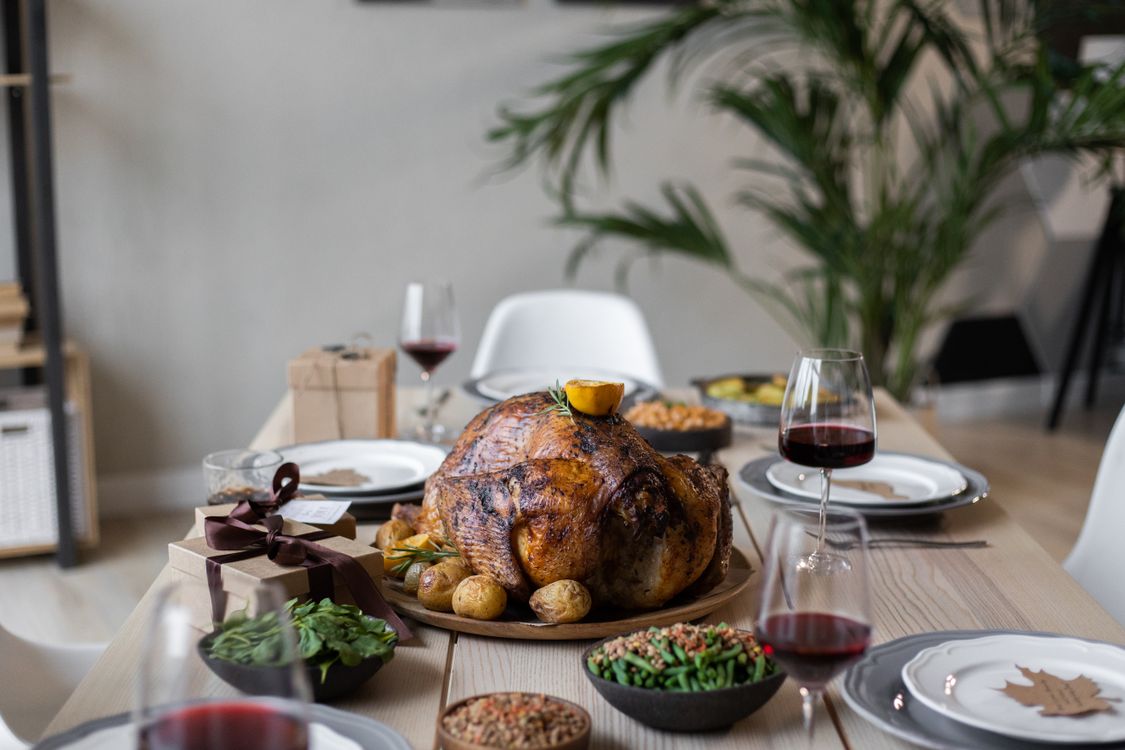
Glassware is where round Thanksgiving tables get crowded fastest, because each guest needs a water glass and often a wine glass, and two glasses per setting take up more rim space than the plate does. The fix is to cluster the glasses: set the water glass above the knife and the wine glass just to its right, angled slightly toward the center, so both glasses sit in one tight group instead of spreading across the setting.
Pour water before guests sit down and leave the wine bottle on a small side table or a serving cart, not on the dining table. A bottle on a round table eats a full place setting worth of space and forces someone to reach around it all evening.
If the table is a 48-inch round seating four, skip the wine glass entirely and serve wine in the water glass, or set one glass per person and refill it. Fewer glasses and more elbow room is the better trade on a small round table.

6. Add Gourds and a Single Candle for a Warm Glow
A candle is the cheapest way to make a round Thanksgiving table feel warm, and one candle beats three on a circle. A single pillar candle in a glass hurricane, about 6 to 8 inches tall, placed just off center beside the serving dishes gives the whole table a glow without creating a wall of flame between guests.
Surround the candle with gourds, not flowers, for a centerpiece that survives the whole meal. Mini gourds and small pumpkins in mixed shapes, roughly 3 to 5 inches across, arranged in a loose ring around the hurricane fill the middle of the table and do not wilt, shed petals, or need water. Three gourds on a 48-inch round is enough, five or six suits a 60-inch round, and any more starts to look like a produce stand.
Light the candle when guests sit down, not an hour before, so the wax lasts through dinner and the flame is still steady at dessert. Use a flameless LED candle if children are at the table. The glow matters more than the flame.

7. Scale the Setting to the Room, Not Just the Table
A round table in a large room needs a different setting than the same table in a small dining nook, because the eye reads the whole room at once. In a spacious room, a 60-inch round with six settings can look lost, so anchor it with a larger centerpiece, a full tablecloth that reaches the floor, and a rug underneath that extends at least 24 inches beyond the table edge on every side. The rug marks the dining zone and stops the table from floating in empty floor.
In a small room, the same table needs the opposite treatment: a bare wood top or a short cloth that ends at the table edge, a low centerpiece, and chairs pushed in tight when the table is set.
Measure the room before choosing the cloth. Leave at least 36 inches between the table edge and the nearest wall or furniture piece, which is the space a chair needs to pull out plus a person walking behind it. If the room cannot give 36 inches on every side, seat fewer guests.

8. Dress a Small Everyday Round Table for the Holiday
Not every Thanksgiving happens on a formal dining table. A small round kitchen table, the kind that seats four for breakfast all year, can host Thanksgiving with a few deliberate changes and no new furniture. The trick is to treat the everyday table as a blank base and add one layer of holiday on top, rather than trying to recreate a formal dining room on a 42-inch circle.
Start with a tablecloth or a round table topper in a fall color, then set just four places with the same spacing rules as a larger table: 24 inches of rim per guest, which on a 42-inch round means exactly four settings and no more. Skip the charger plates, which eat 2 inches of space each, and set the dinner plate directly on the cloth with a folded napkin on top. A centerpiece of three mini pumpkins and a small vase of greenery, no wider than 12 inches total, leaves room for two serving bowls in the middle.
Serve the rest of the meal from the kitchen counter or a nearby side table, family style in shifts, instead of crowding every dish onto the small round. Bring out the turkey and two sides first, clear them, then bring the next round.

9. Finish With a Greenery Runner Down the Middle of the Circle
A round table has no straight center line, so a traditional table runner never sits right on it. The fix is a greenery ring or a loose circle of foliage laid around the centerpiece, which follows the shape of the table instead of fighting it. Lay eucalyptus, olive branches, or cedar cuttings in a ring about 10 to 12 inches wide, stems overlapping, so the green circle frames the serving dishes like a wreath lying flat.
Build the ring on the bare table or on a round placemat, not on a tablecloth, since loose greenery slides on fabric and stays put on wood. Tuck in a few small pinecones, dried orange slices, or cinnamon sticks at intervals around the ring, about one accent every 8 inches, to keep the green from reading as plain. A ring like this takes about fifteen minutes to lay out and costs very little if the greenery comes from the garden or a single bunch from the market.
This is the idea to pair with a simple place setting, because the greenery ring carries the decoration and the plates can stay plain. The same ring technique scales up for Christmas with cedar, pine, and red berries, as these Christmas table centerpieces show. For Thanksgiving, keep the ring green and let the food and the pumpkins supply the color.


