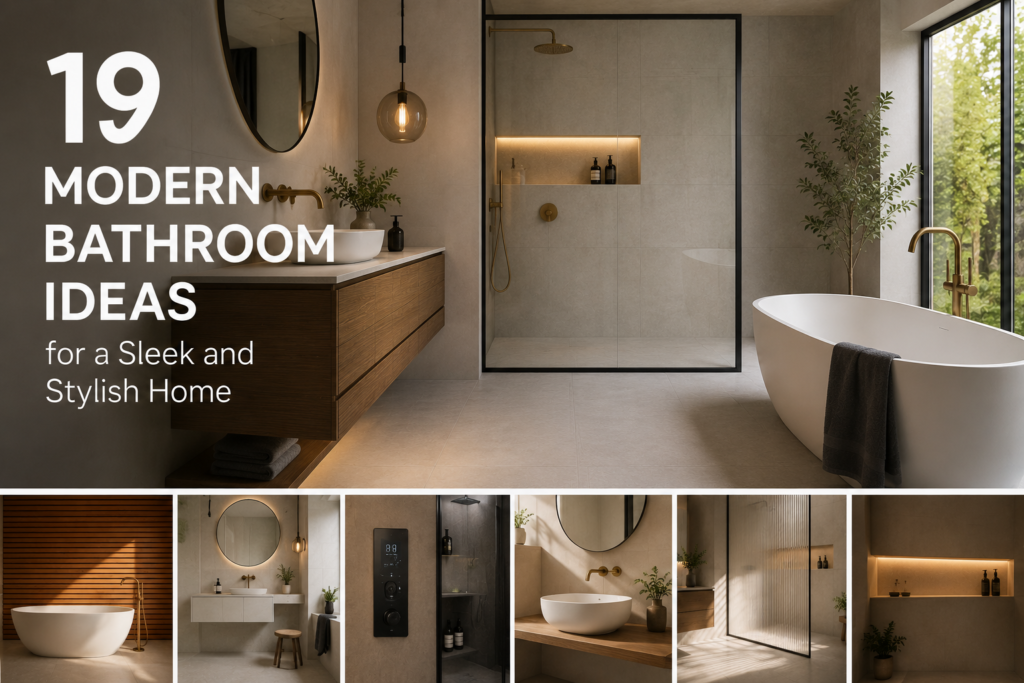

A minimalist bathroom done well feels like a quiet reset at the start and end of the day. Done badly, it feels like a hospital bathroom with better lighting. The difference usually comes down to a handful of specific choices, not a general commitment to “less stuff.” These twelve cover what actually separates a calm, considered bathroom from a cold, empty one.
1. Start With a Floating Vanity
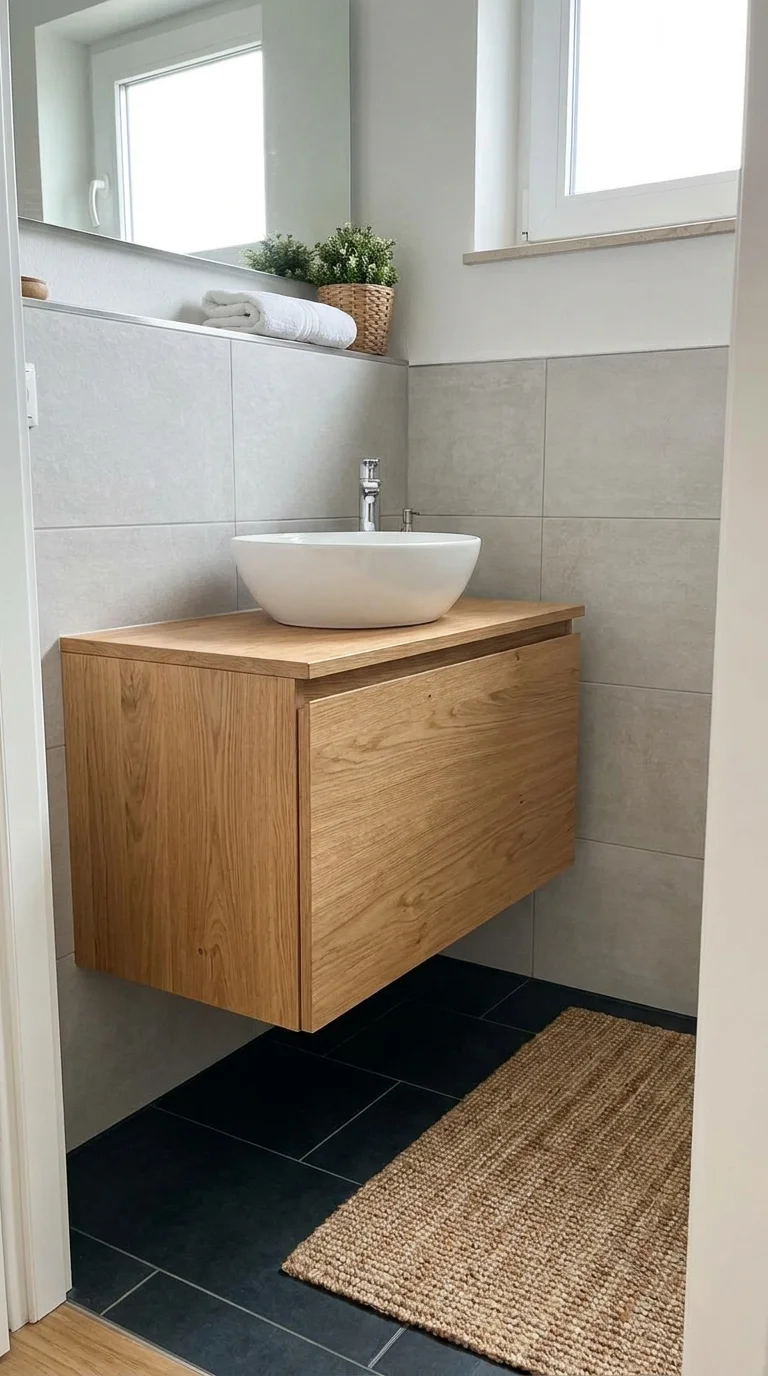
A wall-mounted vanity is one of the fastest ways to signal modern minimalist style, since the visible floor space underneath makes even a small bathroom feel less boxed in. Most floating vanities sit 30 to 34 inches off the ground, and the gap underneath also makes cleaning the floor genuinely easier, which matters more day to day than most style choices do. Expect to pay somewhere between $300 and $900 for a mid-range floating vanity, depending on size and whether it comes with a built-in sink or a separate vessel bowl. Installation is also more involved than a standard vanity, since the wall needs enough structural support to hold the weight, so it’s worth checking with a contractor before assuming this is a straightforward swap.
2. Pick One Dominant Neutral, Not a Full Grayscale Room
A truly minimalist bathroom rarely means pure white on every surface. Warm white, soft greige, or a light warm gray as the dominant tone avoids the cold, clinical look that an all-white or all-gray room tends toward. Pair it with one contrasting material, like matte black fixtures or natural wood, and the room reads as considered instead of just blank. The contrast is what keeps the room from reading as empty rather than intentional. A bathroom with three or more competing neutral undertones tends to look mismatched rather than calm. A cool gray tile next to a warm beige vanity next to stark white walls is a common way this happens, even though every individual color chosen is technically neutral on its own.

3. Choose Matte Black or Brushed Brass Hardware, Not Chrome
Chrome fixtures read as slightly dated in a lot of current minimalist bathrooms. Mostly because they’re shiny in a way that competes with the room’s clean lines instead of supporting them. Matte black hardware has become the default modern minimalist choice, since it reads as intentional and grounds a mostly light-colored room. Brushed brass is the warmer alternative and pairs especially well with wood tones. A basic matte black faucet runs $80 to $200, and swapping just the faucet and showerhead, without a full remodel, is often enough to modernize an older bathroom’s whole feel. Brushed nickel sits somewhere in between chrome and black, and it’s worth considering if a fully black bathroom feels too stark for the rest of the room’s palette. Whichever finish gets chosen, staying consistent across the faucet, showerhead, towel bar, and cabinet hardware matters more than which specific finish wins, since a room with three different metal tones scattered around rarely reads as intentional.

4. Use Large-Format Tile to Reduce Visual Noise
Small tiles mean more grout lines, and more grout lines mean more visual noise, which works against the calm a minimalist bathroom is going for. Large-format tile, typically 12×24 inches or bigger, on the floor or shower wall reduces the number of visible seams significantly compared to standard subway or mosaic tile. It costs somewhat more per square foot, usually $4 to $10 versus $2 to $5 for basic subway tile. The visual payoff in a small bathroom is often worth the difference, especially in the shower where grout lines are most noticeable and hardest to keep looking clean over time. One practical tradeoff worth knowing: large-format tile requires a flatter subfloor to install correctly. Any unevenness shows up more obviously across a bigger piece than it would across several small ones. A contractor may need to do extra leveling work first if the existing floor isn’t perfectly flat.

5. Go Frameless on the Shower Glass
A framed shower door with visible metal edges breaks up the visual line of a bathroom in a way that works against the minimalist goal. Frameless glass, even just a fixed panel instead of a full enclosure, keeps sightlines open and makes a small bathroom feel less segmented. Frameless glass costs more than framed. Generally $700 to $1,500 installed versus $300 to $600 for a framed unit. So this is one of the pricier individual upgrades on this list. But it’s also one of the most visually impactful in a genuinely small space, since removing that metal frame line does more to open up the room than almost any other single change.

6. Keep Countertop Surfaces Genuinely Clear
Minimalist bathrooms fail most often not because of a wrong color choice but because the counter ends up covered in daily-use items anyway. A closed vanity drawer or a small concealed cabinet for daily toiletries, rather than open shelving, keeps the actual visible surface clear without requiring anyone to be more disciplined than normal. This matters more than it sounds like, since open shelving photographs well when empty but almost never stays that way in a bathroom that people actually use daily. Toothbrushes, a razor, deodorant, and skincare products all need to live somewhere, and hiding them behind a door does more for the room’s actual day-to-day look than any single decorative choice. One tray with two or three items, a soap pump, a small plant, is the realistic ceiling for what stays out permanently. That’s true if the goal is a genuinely clean-looking counter day to day, not an aspirational photo taken right after cleaning.

7. Choose a Wall-Mounted or Concealed Toilet
A wall-mounted toilet hides the tank inside the wall, so only the bowl is visible. It’s one of the more expensive changes on this list. But it’s also one of the most distinctly “modern minimalist” details, since it removes an entire visible fixture component.
Installation typically runs $1,000 to $2,500 including the in-wall tank system, well above a standard floor-mounted toilet’s $150 to $500. This is realistically a full-remodel decision rather than a weekend upgrade, since it requires wall modification. Still, it’s worth knowing about even if it’s not in budget right now, since it’s one of the details that most clearly separates a genuinely custom minimalist bathroom from one that’s just painted a neutral color.

8. Add Exactly One Textural Element
A bathroom built entirely from hard, smooth, cool-to-the-touch surfaces (tile, glass, chrome, stone) can feel sterile even with a warm color palette layered on top. One genuinely textural element, a woven bath mat, a wood stool, a linen hand towel, breaks that up without adding visual clutter. The goal is one, not three or four. A bathroom with a woven mat, a wood shelf, a rattan basket, and a linen curtain all at once starts to drift from minimalist toward boho, which is a different style with different goals. If it’s genuinely unclear which single texture to pick, a wood element tends to be the safest starting point. It pairs naturally with almost any of the neutral palettes and hardware finishes covered earlier in this list. Something like rattan or woven jute leans more specifically toward a warmer, more casual look, which not every minimalist bathroom is actually going for.

9. Install Recessed or Integrated Lighting
Surface-mounted light fixtures, even simple ones, add a visual element that a truly minimalist room often does better without. Recessed ceiling lights, or a light bar integrated into the vanity mirror itself, provide the same functional brightness without an additional object competing for attention on the wall or ceiling. A backlit or edge-lit mirror, which functions as both the mirror and the light source in one fixture, is a popular choice specifically because it does two jobs with one visible object. These run $150 to $400 for a decent-sized version, comparable to buying a mirror and a separate light fixture individually, and installation is usually simpler too, since there’s one power connection to run instead of two separate fixtures to wire and mount.

10. Skip the Shower Curtain If You Can
A shower curtain, even a nice one, introduces fabric texture and a visible rod into a room that’s otherwise built from hard, clean surfaces. It’s one of the more common details that quietly undercuts an otherwise minimalist bathroom, mostly because it’s easy to overlook while focused on bigger fixtures.
A glass panel or door, even just a single fixed pane rather than a full enclosure, avoids this without requiring a full walk-in shower conversion. Where a curtain is genuinely necessary, whether for budget or plumbing reasons, a solid-color linen or heavy cotton curtain reads as far more intentional than a printed or patterned one. The weight of a heavier fabric also hangs straighter and looks less flimsy than a thin plastic liner on its own.

11. Choose One Plant That Actually Tolerates Bathroom Conditions
Bathrooms are humid, often low on natural light, and easy to forget about during a busy week, which rules out a lot of popular houseplants. A snake plant or a ZZ plant tolerates low light and inconsistent watering better than almost anything else, and either genuinely thrives in bathroom humidity rather than just surviving it. A small one costs $10 to $20 and adds a single point of real green. That’s usually enough. A whole plant collection would start working against the restrained, edited feeling minimalist design is going for in the first place. If the bathroom genuinely has no window at all, it’s worth being honest that even these hardy plants will eventually struggle without any natural light. A well-made faux version is a more realistic long-term choice than replacing a real plant every few months.

12. Resist Adding a Second Accent Color
The most common way a minimalist bathroom stops looking minimalist is a slow accumulation of small decorative choices. A colored soap dispenser here, a patterned towel there. Before long, the originally restrained palette has quietly grown to include four or five different colors, and nobody added them all at once on purpose.
Picking one accent, black hardware, or brass, or a single sage green towel, and deliberately not adding a second is what keeps the room feeling edited rather than just sparse. This is less about buying anything and more about a habit of restraint that has to be maintained over time, not just achieved once during a redecorate. It’s worth doing a quick mental audit every few months: count the actual colors visible in the room, and if it’s crept past two, something probably needs to go.

Closing thought: A modern minimalist bathroom isn’t really about how little is in the room. It’s about how consistent the choices are, one dominant neutral, one accent, one texture, so nothing competes for attention. Get that consistency right, and even a small, inexpensive bathroom can feel genuinely calm instead of just empty.