

I redecorated my living room in what I thought was a modern style twice before actually landing on something that read the way I intended. The first attempt was mostly just minimal, empty rather than sleek, a room with very little in it that felt unfinished rather than intentional. The second attempt overcorrected in the other direction, glossy black furniture, sharp angles everywhere, chrome accents on nearly every surface, and the result felt more like a furniture showroom from a decade ago than anything I’d actually want to live in.
What I eventually understood is that modern doesn’t mean minimal, and it doesn’t mean cold or overly sharp either. It’s a specific combination of clean furniture lines, a controlled material palette, and genuine warmth introduced through texture and lighting rather than through pattern or ornamentation. A modern living room that actually works still feels comfortable to sit in, it just achieves that comfort through different means than a more traditional or maximalist room would.
These twelve ideas are what finally got the balance right for me, the furniture proportions, material pairings, and layout decisions that create a genuinely current, sleek feeling without tipping into either the sterile emptiness of my first attempt or the showroom coldness of my second one.
1. Choose Furniture With Clean, Low-Profile Silhouettes
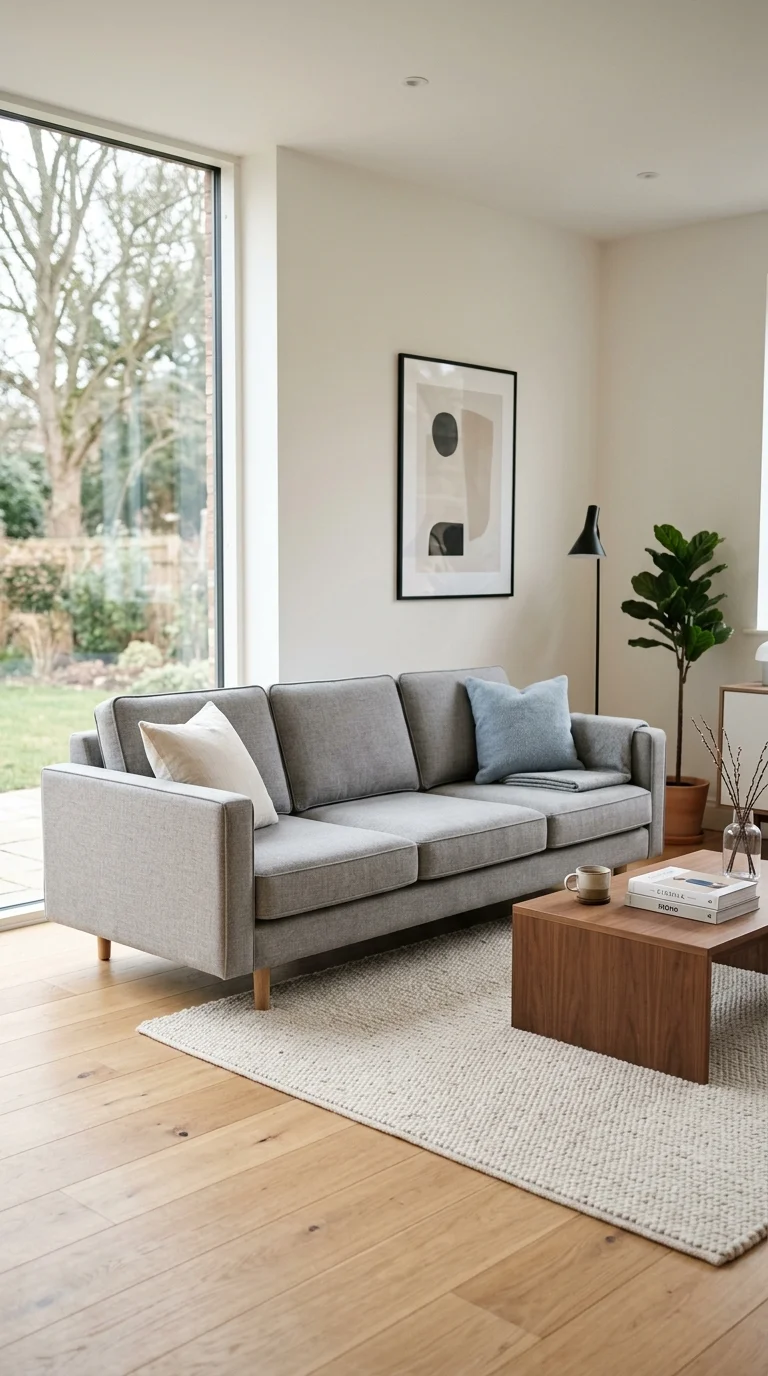
Modern furniture design favors clean lines and relatively low profiles over the ornate detailing, curved silhouettes, and higher backs associated with more traditional styles. A sofa with straight arms, a simple tailored back, and a lower overall height reads as considerably more current than one with rolled arms, tufted detailing, or an exaggeratedly high back, even when both pieces are otherwise similar in size and comfort level.
This preference for cleaner lines extends to nearly every piece of furniture in a modern living room, coffee tables, media consoles, accent chairs. Sharp, defined edges paired with minimal applied ornamentation create the visual simplicity that defines the style, though this doesn’t mean every edge needs to be perfectly geometric. Many successful modern rooms soften pure minimalism with occasional organic, curved shapes, a rounded coffee table or a curved accent chair, used deliberately as a single counterpoint rather than throughout the whole room.
2. Commit to a Controlled, Limited Color Palette
Modern living rooms typically work from a smaller, more disciplined color palette than more eclectic or maximalist styles, often built around two or three core colors used consistently throughout the space rather than a wider range of competing tones. A base of white, black, or a warm neutral, paired with one or two accent colors used deliberately rather than scattered randomly, creates the sense of control and intention that defines the modern aesthetic.
This doesn’t mean the palette needs to feel cold or sterile. Warm neutrals, camel, terracotta, warm gray, work just as well within this disciplined approach as cooler tones do, and often read as more inviting while still maintaining the same sense of restraint. The key distinguishing factor isn’t warm versus cool, it’s whether the palette feels genuinely controlled and considered rather than accumulated piece by piece without an overarching plan.

3. Introduce Genuine Material Contrast
A modern living room benefits significantly from real material contrast, pairing smooth, cool surfaces like glass, metal, or polished stone against warmer, more tactile materials like wood, leather, or boucle upholstery. This contrast is what keeps a modern room from feeling one-dimensional or overly cold, since relying purely on hard, smooth materials throughout tends to read as sterile regardless of how well-proportioned the furniture itself might be.
A glass or metal coffee table paired with a warm wood media console, or a leather accent chair against a smooth plaster or painted wall, achieves this balance effectively. The specific materials matter less than the fact that genuine contrast exists somewhere in the room, since even a fairly simple, restrained modern space benefits enormously from at least one meaningful material juxtaposition rather than uniform texture throughout.

4. Use Statement Lighting as a Genuine Design Element
Lighting in a modern living room often functions as sculptural decor in its own right, not purely as a functional necessity handled with whatever fixture happens to fit the space. A striking pendant light, an architectural floor lamp with clean geometric lines, or a sculptural table lamp introduces visual interest and a sense of considered design that a purely utilitarian fixture doesn’t provide.
This is one of the more effective ways to introduce personality into a room that’s otherwise working from a fairly restrained material and color palette, since a genuinely striking light fixture can serve as a room’s focal point in a way that feels appropriate to modern design principles, unlike a busier pattern or more traditional ornamentation might. A well-chosen statement fixture in this category typically runs $200 to $600 depending on scale and material, a worthwhile investment given how much visual work a single well-placed piece can do.

5. Choose an Area Rug With a Simple, Geometric Pattern or None at All
Busy, densely patterned rugs work against the clean visual language that defines modern living rooms, while a solid-colored rug, or one with a simple, restrained geometric pattern, supports the overall sense of intentional simplicity. This doesn’t mean the rug needs to be plain or uninteresting, subtle texture, like a flat-weave or a low-pile wool in a solid tone, provides visual and tactile interest without introducing the kind of busy pattern that would compete with the room’s overall restraint.
Where pattern does appear, keeping it simple and geometric, clean stripes, a subtle grid, rather than florals or more ornate traditional motifs, keeps the rug consistent with the room’s broader design language. Sizing follows the same logic as any living room rug, at minimum the front legs of every seating piece should rest on it, ideally all four legs of the sofa specifically.

6. Prioritize Negative Space as a Genuine Design Choice
Modern design treats empty space as an active, deliberate element rather than simply unused area waiting to be filled. A living room with a few genuinely empty stretches of wall, some uncluttered floor space, and surfaces that aren’t packed with objects reads as considerably more sophisticated and more genuinely modern than a room where every available inch has been put to some decorative use.
This is worth treating as an ongoing discipline rather than a single decision made once during the initial decorating process. The natural tendency over time is to gradually add more, another decorative object here, another piece of art there, until the negative space that originally defined the room’s modern feeling has slowly disappeared. Periodically stepping back and editing what’s actually present, removing rather than only adding, keeps a modern room feeling genuinely modern well beyond the initial decorating phase.

7. Select Window Treatments That Support Clean Lines
Heavy, ornate drapery works against the streamlined aesthetic that defines modern living rooms. Simple roller shades, clean panel curtains in a solid fabric, or minimal linen drapes support the room’s overall sense of restraint far better than elaborately layered or heavily patterned window treatments would. Where curtains are used, hanging them from a simple, unobtrusive rod rather than an ornate traditional one keeps the detail consistent with the room’s broader design language.
This is a relatively low-cost decision relative to its visual impact, since the difference between an ornate traditional curtain treatment and a clean, simple modern one often comes down more to fabric choice and hardware style than to any significant difference in actual cost.

8. Use Warm Metal Accents to Prevent the Room From Feeling Cold
Modern design has a real tendency to lean cool, chrome, glass, polished concrete, if not deliberately balanced with warmer elements. Introducing warm metal finishes, brass, bronze, or a warm-toned black rather than a stark, cold black, in lighting fixtures, hardware, or decorative accents helps prevent the overall space from tipping into the sterile, showroom-like feeling that can undermine an otherwise well-executed modern room.
This single detail, choosing warm rather than cool-toned metals throughout, does a considerable amount of work toward making a modern room feel genuinely livable rather than simply photogenic. It’s worth applying this preference consistently across every metal element in the room, lighting, hardware, decorative objects, rather than mixing warm and cool metals randomly throughout the space.

9. Choose a Media Console With a Floating or Leggy Silhouette
A heavy, boxy media console with a solid base sitting directly on the floor works against the visual lightness that defines modern living rooms. A console with visible legs, or one that’s genuinely wall-mounted and floating above the floor entirely, maintains the sense of openness and clean lines that heavier, grounded furniture pieces undermine. This detail matters more than people initially assume, since the media console is often one of the largest single pieces of furniture in the room and disproportionately affects the overall visual weight of the space.
Floating consoles specifically require confirming the wall can support the necessary weight before installation, and this is generally a task worth hiring a professional for rather than attempting without proper wall anchors rated for the console’s full loaded weight, including whatever electronics and decor will eventually sit on it.

10. Introduce Organic Shapes as a Deliberate Counterpoint
While modern design generally favors clean, geometric lines, a room built entirely from sharp angles and perfectly straight edges can start to feel rigid rather than genuinely sophisticated. Introducing one or two organic, curved elements, a rounded coffee table, a curved accent chair, an irregularly shaped piece of art or a sculptural decorative object, softens the room’s overall geometry without abandoning the clean-lined foundation that defines the style.
This works best as a single deliberate counterpoint rather than scattered throughout the room. One curved element against an otherwise clean-lined, geometric room reads as an intentional design choice, while several competing organic shapes throughout the space starts to dilute the clarity that makes modern design effective in the first place.

11. Keep Decorative Accessories to a Genuinely Curated Few
Modern living rooms depend on restraint in decorative styling as much as in furniture choice. A small number of carefully chosen objects, a sculptural vase, a single meaningful art piece, one or two considered books rather than a full stack, does more for a room’s sense of modern sophistication than a larger collection of pleasant but ultimately interchangeable decorative items. This principle runs through nearly every idea on this list in some form, fewer, more considered choices consistently outperform a larger volume of decent but unremarkable ones.
This requires ongoing discipline rather than a single decluttering pass completed once, since surfaces naturally accumulate additional items over time in any lived-in home. Returning periodically to edit what’s actually on display, keeping only what genuinely earns its place, is what keeps a modern living room feeling considered rather than simply empty when first decorated and gradually cluttered afterward.

12. Let Function Drive at Least a Few Key Decisions
Genuinely successful modern design isn’t purely about visual style, it’s also about furniture and layout choices that support how a room actually gets used day to day. A coffee table sized appropriately for its seating area, storage solutions that actually accommodate what needs storing, seating arranged to support real conversation rather than purely photogenic staging, these functional considerations matter as much as any purely aesthetic choice covered elsewhere on this list.
The most successful modern living rooms balance clean, considered aesthetics with genuine daily functionality rather than sacrificing one for the other. A visually striking room that’s genuinely uncomfortable or impractical to actually live in ultimately fails at its core purpose, regardless of how well it photographs, while a room that balances both achieves something more durable and more satisfying to actually spend time in over years, not just in the weeks immediately after it’s first decorated.
A modern living room that succeeds doesn’t feel cold or unfinished, and it doesn’t feel like a showroom either. It feels genuinely current, clean lines balanced with real warmth, restraint balanced with genuine comfort, and every choice made with actual intention rather than simply following a trend without understanding why it works.