

Warmth in a bedroom gets attempted two different ways, and only one of them tends to actually work. The first approach layers in warm color, wood tones, and soft texture with real intention, choosing each element deliberately so the room builds toward a cohesive, considered feeling. The second approach just adds more, more blankets, more pillows, more decorative objects, assuming that volume alone will create coziness. It rarely does. A room can be genuinely full and still feel cold if the specific colors and materials chosen don’t actually carry warmth on their own.
The difference matters because warmth is a fairly specific design outcome with fairly specific inputs, warm color temperature both in the literal lighting sense and in the color palette itself, natural materials that carry real tactile warmth, and enough restraint that the warm elements read as chosen rather than accumulated. A room built around these specific inputs feels warm even with relatively little in it, while a room stacked with pillows and throws in the wrong colors and materials can still feel surprisingly cold despite all that added volume.
These sixteen ideas focus on the specific choices that actually produce genuine warmth, not simply more stuff, but the right colors, materials, and lighting decisions that make a bedroom feel like a place worth spending real time in.
1. Choose Wall Colors With Genuinely Warm Undertones
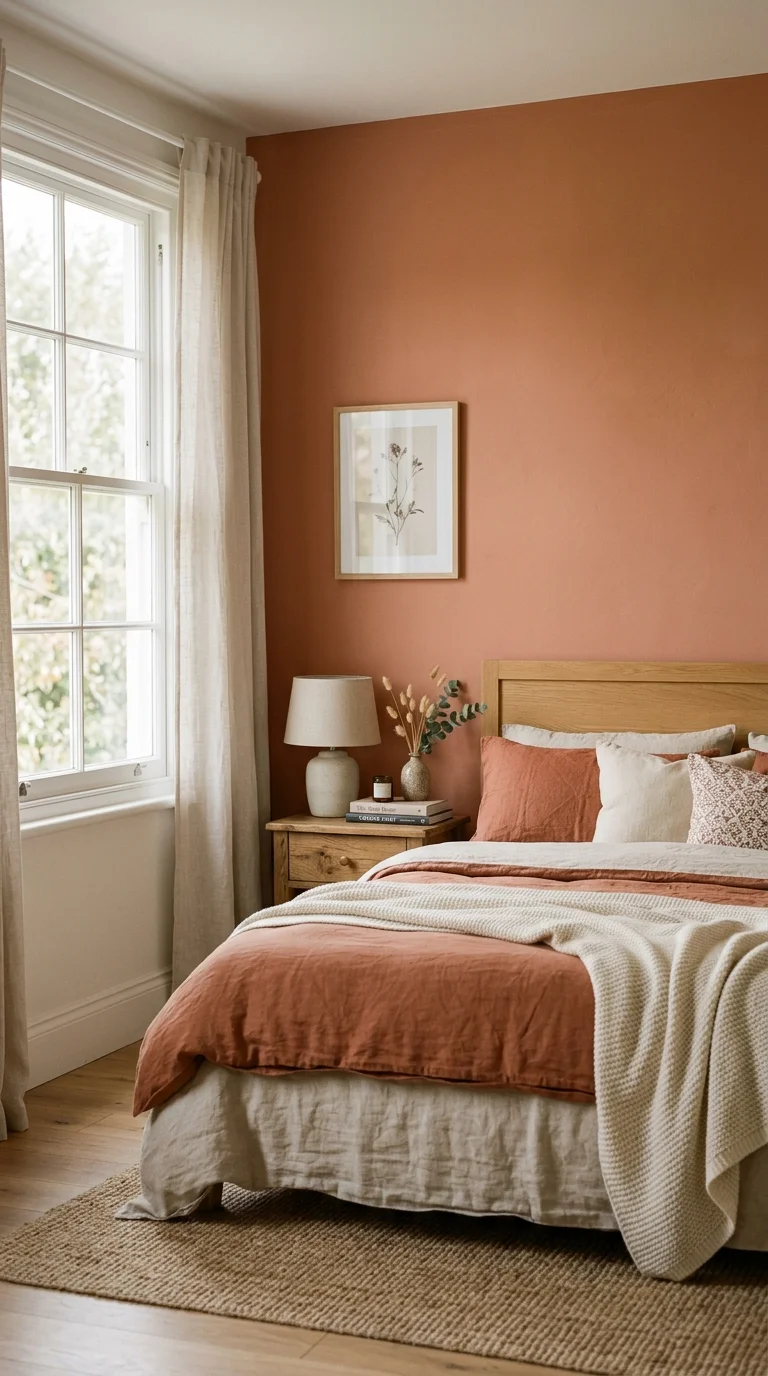
Warmth starts with the wall color itself, and even colors that seem neutral can carry either a warm or cool undertone that significantly affects how the finished room actually feels. Soft terracotta, warm greige, buttery cream, and rich caramel all carry genuine warmth, while colors with even a subtle blue or gray undertone, however neutral they might appear on a paint chip, tend to read as cooler once applied across an entire wall.
Testing actual paint samples in the room, rather than judging from a small chip alone, matters considerably here, since undertones become more apparent across a larger painted surface than they do in a small sample, and a color that looked appropriately warm on the chip can read surprisingly cool once it covers an entire wall.
2. Layer Genuinely Tactile Natural Materials
Wool, linen, wood, and wicker all carry real physical warmth in a way that smoother, cooler materials like glass, chrome, or high-gloss laminate simply don’t replicate. A wool throw, linen bedding, a solid wood nightstand, and a woven wicker basket working together create a room that feels warm to the touch throughout, not just warm in its color palette alone. This tactile dimension matters as much as color, since a room can be painted in warm tones and still feel cold if every surface within it is smooth and hard.

3. Use Warm, Low Color Temperature Lighting Throughout
Lighting affects a room’s actual warmth more directly than almost any other single decision, and this is a purely technical detail that’s easy to get wrong even after choosing beautiful fixtures. Bulbs in the 2700K to 3000K range read as genuinely warm and cozy, while anything above 3500K starts to shift toward a cooler, more clinical feeling regardless of how attractive the light fixture itself might be. This is worth checking specifically when purchasing bulbs, since the same fixture can feel completely different depending purely on which bulb temperature gets installed in it.

4. Choose Bedding in Warm, Earthy Tones
Terracotta, warm rust, soft caramel, and rich cream all read as inherently cozier than cooler tones like icy blue or stark white, even when the actual fabric quality and weight are identical between the two options. This doesn’t mean the whole room needs to be built from a single warm color, but the bedding specifically, given how much visual real estate it occupies, benefits significantly from leaning warm rather than cool.

5. Add a Substantial Wool or Shearling Throw
A genuinely substantial throw blanket, wool or shearling specifically rather than a thin decorative throw, adds real functional warmth alongside its visual contribution. Draped across the foot of the bed or over an accent chair, it signals coziness in a way that’s immediately apparent both visually and through actual use, since a throw that’s genuinely warm enough to use gets used, while a purely decorative one tends to just sit there without contributing much beyond appearance.

6. Introduce Warm Wood Tones Through Furniture
Wood furniture in warm tones, honey oak, walnut, warm cherry, contributes genuine visual and tactile warmth that painted or cooler-toned furniture doesn’t achieve. This works particularly well for a bed frame or nightstands, pieces that occupy significant visual space and benefit from the warmth wood grain naturally provides, especially when paired with the warm wall colors and lighting covered earlier on this list.

7. Choose a Substantial Rug That Feels Warm Underfoot
A thin, low-quality rug undermines a room’s overall sense of coziness regardless of how well the rest of the space has been decorated, while a substantial rug, wool or a wool blend with genuine pile height, contributes real warmth both visually and physically underfoot. This matters especially in a bedroom, where bare feet make direct contact with the floor daily, and a genuinely soft, warm rug affects the room’s actual daily comfort more than almost any purely decorative choice would.

8. Add Warm Metallic Accents in Brass or Aged Gold
Brass and aged gold finishes carry an inherent warmth that cooler metals like chrome or brushed nickel don’t replicate, and introducing these tones through lighting fixtures, mirror frames, or drawer hardware contributes to the room’s overall warm palette even in small doses. Consistency matters here as it does with any metal finish choice, applying one warm metal tone throughout rather than mixing warm and cool metals randomly across different pieces.

9. Layer Multiple Warm Light Sources Rather Than One Overhead Fixture
A single central ceiling fixture creates flat, even light that reads as considerably less cozy than a room with several lower, warmer light sources working together. Bedside lamps, a floor lamp in any seating area, and possibly a plug-in wall sconce create the kind of layered, warm glow associated with genuinely inviting bedrooms, while relying solely on overhead lighting tends to flatten the room’s sense of warmth regardless of how well the color palette has been chosen.

10. Choose Curtains in a Warm, Substantial Fabric
Curtain fabric affects a room’s overall sense of coziness more than people typically expect while shopping for window treatments. Warm-toned linen or a substantial cotton blend in terracotta, rust, or warm cream contributes to the room’s overall palette while also adding real fabric weight and texture that thinner, cooler-toned alternatives don’t provide. Floor-length curtains extend this warmth further, adding visual substance to what might otherwise be a fairly plain window treatment.

11. Introduce Warm-Toned Greenery and Natural Elements
Plants, particularly those with warm-toned pots, terracotta specifically, extend the room’s earthy, warm palette while adding genuine organic life. A substantial plant in a simple terracotta or warm ceramic pot contributes both real color warmth and the kind of natural, tactile quality this entire aesthetic depends on, working considerably better within this specific style than a plant in a cool white or gray pot would.

12. Add Candles or Warm Ambient Lighting for Evening Coziness
Real or flameless candles introduce a specific warm, flickering quality that fixed lighting fixtures don’t fully replicate, and this ambiance contributes significantly to a bedroom’s evening coziness. Grouped at varying heights on a dresser or nightstand, candles add both genuine warm light and a sense of considered, intentional styling that a room without any candle-style lighting often lacks.

13. Choose an Accent Chair in a Warm, Textural Fabric
A dedicated seating area, even just a single accent chair, benefits considerably from a warm, textural fabric choice, boucle, corduroy, a substantial wool blend, rather than a smooth, cool material like leather or a slick synthetic. This chair, positioned somewhere it invites actual use, contributes both functional and visual warmth to the room, particularly when paired with a warm throw and adequate nearby lighting.

14. Use Warm-Toned Artwork as a Genuine Focal Point
Art in warm color palettes, rich terracotta, warm ochre, deep rust tones, reinforces the room’s overall warm aesthetic more effectively than art in cool blues or stark black and white would, even when the subject matter itself is unrelated to color temperature. A single substantial piece, properly scaled to its wall, contributes considerably more to the room’s cohesive warm feeling than a scattered collection of smaller pieces in unrelated color palettes.

15. Keep the Overall Palette Cohesive Rather Than Scattered
A room with warm elements scattered among cooler, unrelated ones, a warm wood nightstand beside a cool gray accent chair beside stark white bedding, undermines the cohesive warmth this style depends on. Committing to a genuinely consistent warm palette throughout, rather than mixing warm and cool tones somewhat randomly across different pieces, is what ultimately determines whether a room reads as intentionally cozy or simply inconsistent.
16. Resist Overfilling the Room in Pursuit of More Coziness
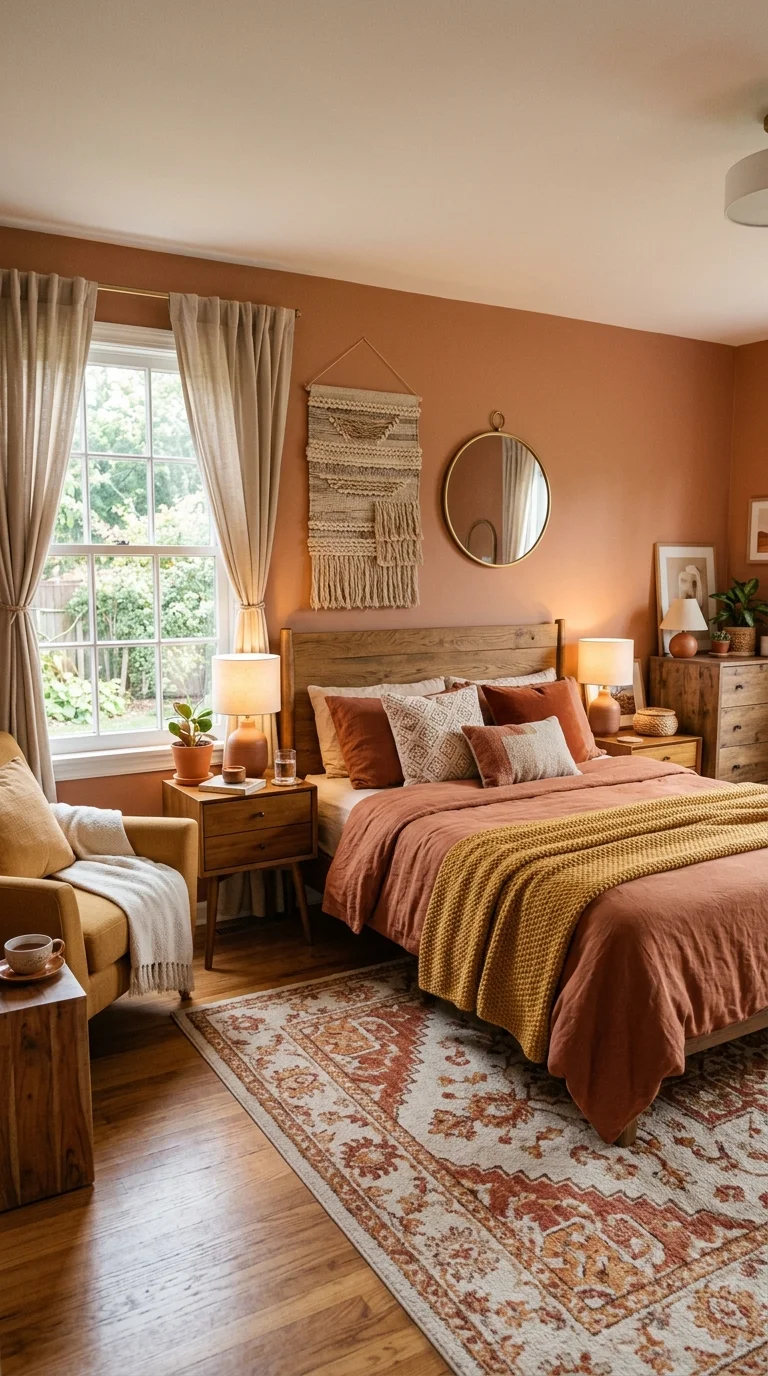
The instinct to keep adding, another throw, another pillow, another decorative object, in pursuit of maximum coziness often works against the goal rather than toward it. A room genuinely built from the right warm colors, materials, and lighting feels cozy with relatively little added volume, while a room stacked with mismatched warm-adjacent items but lacking the foundational color and lighting choices can still feel oddly cold despite all that accumulated stuff. Restraint applied to a well-chosen foundation produces better results than volume applied without that same underlying consideration.
A genuinely warm bedroom comes down to specific, deliberate choices, color temperature in both the literal lighting sense and the palette itself, real tactile materials, and enough cohesion that everything reads as part of one considered whole rather than an accumulation of individually cozy-seeming items. Built that way, a room feels warm and inviting with far less volume than the alternative approach typically requires.


