
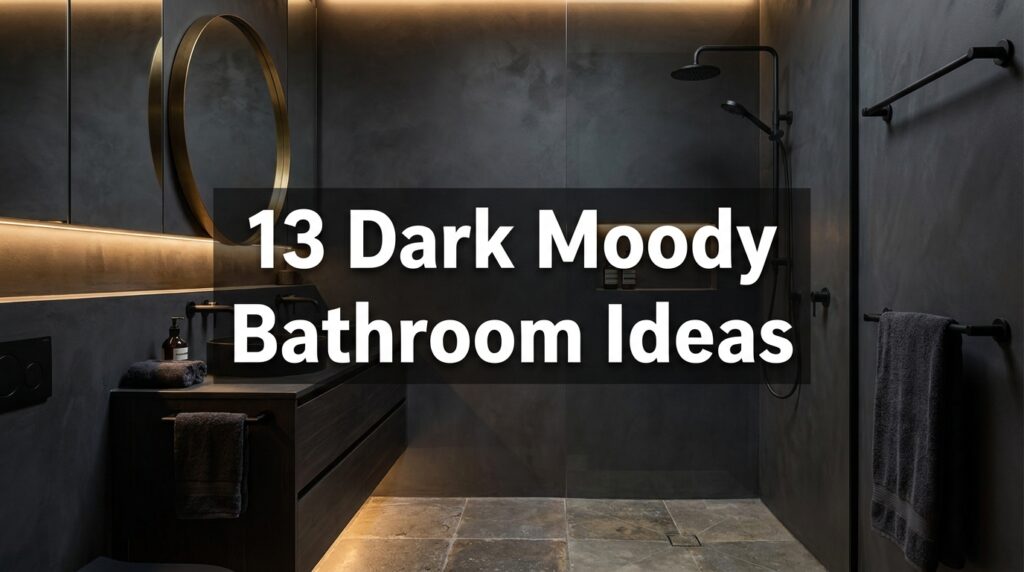
A dark bathroom is a genuinely riskier decorating decision than most rooms in the house, mostly because a bathroom has fewer windows and less natural light to begin with, and a poorly executed dark palette can turn what should feel intimate and dramatic into something that just reads as dim and uninviting. The line between the two outcomes is narrower than people expect, and it depends on a fairly specific set of choices around lighting temperature, material finish, and how much genuine contrast gets built into the room.
The color itself is rarely the actual mistake. Most people can commit to a dark wall color without much hesitation once they’ve decided to try the look. What separates a genuinely striking dark moody bathroom from a disappointing one is almost entirely about what happens after that color goes on the wall, the specific warmth of the lighting chosen, the materials paired against the dark backdrop, and whether enough reflective or metallic detail exists to keep the room from absorbing every bit of available light.
These thirteen ideas cover that full range, the foundational color and lighting decisions along with the smaller material and styling choices that ultimately determine whether a dark bathroom reads as bold and intentional or simply underlit.
1. Choose a Genuinely Saturated Dark Color, Not a Halfway Gray
A common mistake when attempting this style is choosing a color that’s only moderately dark, a medium charcoal instead of a genuine near-black, out of hesitation about committing fully to the look. This half-measure often produces a room that reads as simply dim rather than intentionally dramatic, since the color isn’t dark enough to feel like a deliberate design statement but is dark enough to reduce the room’s brightness.
Committing to a genuinely saturated color, deep charcoal, true black, or a rich dark green or navy, tends to photograph and feel more confident than a color caught in between. The commitment itself matters more than which specific dark tone gets chosen, since a fully dark room reads as considered while a partially dark one can read as an uncertain compromise. Testing an actual paint sample across a genuine 2×2 foot section of wall, rather than judging from a small chip, matters considerably here, since dark colors shift more noticeably depending on lighting than lighter ones do.

2. Use Matte Black Fixtures Rather Than Anything Glossy
Matte black faucets, showerheads, and cabinet hardware read as considerably more current and more intentional than a glossy black finish, which can look plasticky or cheap depending on the specific product and lighting. This matters more in a dark moody bathroom specifically than it would in a lighter room, since the fixtures are one of the few visual elements that will actually stand out against an otherwise dark, unified backdrop.
A basic matte black faucet typically runs $80 to $200, and swapping just the faucet, showerhead, and cabinet hardware, without touching the wall color or tile, is often enough to shift an existing bathroom noticeably toward this style before any larger renovation gets considered. Consistency across every metal element in the room matters as much here as it does with any other finish choice, since mixing matte black with chrome or brushed nickel undermines the cohesive, considered feeling a genuinely dark room depends on.

3. Layer Warm Lighting From Multiple Sources
A dark bathroom depends more heavily on considered lighting than almost any other room style, since the wrong lighting choice can turn an intentionally dramatic space into one that simply feels dim and difficult to actually use. Warm bulbs, generally in the 2700K to 3000K range, read as inviting against dark walls, while anything cooler starts to feel clinical and works directly against the mood this style is going for.
A single central overhead fixture, even with the right bulb temperature, tends to flatten the room and cast shadows that make dark walls feel even darker and less dimensional. Combining an overhead fixture with sconces flanking the mirror, and possibly a dimmer on the whole system, creates the kind of layered warmth that makes a dark room feel genuinely atmospheric rather than simply underlit. Installing dimmable lighting specifically is worth the modest additional cost, since the ability to brighten the room fully for actual grooming tasks while dimming it for a more ambient evening feel solves the practical tension this style otherwise creates.

4. Introduce Warm Brass or Gold Accents to Catch Available Light
Warm metallics reflect and scatter whatever light is available in a genuinely dark room, adding a sense of glow and richness that a purely matte, dark space can lack on its own. Brass or aged gold light fixtures, mirror frames, and drawer hardware catch even modest ambient light in a way that cooler metals like chrome or brushed nickel don’t achieve nearly as effectively against a dark backdrop.
This works particularly well because dark rooms tend to absorb light rather than bounce it around the way lighter rooms naturally do, so anything with genuine reflective quality does disproportionate work toward keeping the space from feeling like it’s swallowing all its available light. A brass-framed mirror in particular does double duty here, since it’s both a reflective surface in its own right and a metallic accent that catches light along its actual frame.

5. Choose Large Format Tile to Minimize Visible Grout Lines
Small tile creates more grout lines, and in a dark bathroom specifically, light-colored grout against dark tile creates a visible grid pattern that can undercut the intended sense of a unified, immersive dark space. Large-format tile, generally 12×24 inches or larger, reduces the number of visible seams considerably, and choosing a dark or charcoal-toned grout rather than white or light gray keeps the whole surface reading as more continuous.
This costs somewhat more per square foot than standard subway tile, typically $4 to $10 versus $2 to $5, but the visual payoff matters more in a dark room than it would in a lighter one, since visible grout lines interrupt the sense of depth and immersion that a genuinely successful dark bathroom depends on. Dark grout specifically also shows less visible staining and discoloration over years of regular use than light grout does, a practical benefit beyond the purely visual one.

6. Add Textural Contrast Through Natural Stone or Wood
A bathroom built entirely from smooth, flat dark surfaces, painted walls, tile, glass, can start to feel monotonous even when the color commitment itself is executed well. Introducing genuine texture, a natural stone vanity top, a wood shelf or stool, breaks up that flatness and adds a tactile dimension that pure color and paint finish alone can’t achieve.
Natural stone in particular tends to catch light differently depending on the angle, adding subtle variation across its surface that a uniform painted wall doesn’t have. A wood element, whether a small stool, a shelf, or even just a cutting-board-style tray on the vanity, introduces warmth against what can otherwise be an entirely cool, hard-surfaced room, and this single textural addition often does more to keep a dark bathroom feeling inviting than any single color decision would on its own.

7. Use a Statement Mirror With a Substantial Frame
A plain, frameless mirror tends to disappear against a dark wall in a way that undercuts its potential as a genuine focal point, while a mirror with real presence, whether an arched shape, a substantial frame, or an interesting silhouette, stands out clearly against the dark backdrop and reflects light back into the room. This dual function, genuine visual interest plus real reflective benefit, makes a statement mirror one of the more efficient design investments available in this style.
Frame material matters here as much as shape does. A warm wood or brass frame adds the same reflective and textural benefits covered in earlier ideas, while a plain black frame, though still striking as a shape, misses the opportunity to introduce additional warmth and light-catching quality that the room genuinely benefits from.

8. Choose a Vanity in Warm Wood Rather Than Matching the Dark Walls
A vanity painted the same dark color as the walls can cause the whole lower portion of the room to visually disappear, reducing contrast in a way that makes the space feel smaller and less dimensional rather than more dramatic. A vanity in warm wood, walnut or oak specifically, introduces genuine contrast against the dark walls and grounds the room with a material that reads as substantial rather than simply matching into the background.
This contrast does real work toward making the room feel intentionally designed rather than uniformly dark for its own sake. A wood vanity also naturally coordinates with the warm brass or gold accents covered earlier, since both materials share an underlying warmth that a purely black-on-black vanity and wall combination doesn’t offer.

9. Add Deep Greenery That Genuinely Tolerates Low Light
A dark bathroom often has less abundant natural light than a lighter room might, which rules out a lot of popular houseplant choices that need bright, indirect sunlight to actually thrive. A snake plant or a ZZ plant tolerates genuinely low light conditions far better than most alternatives, and either reads as visually substantial enough to hold its own against a dramatic dark backdrop rather than looking lost or undersized.
Dark, deep green foliage specifically tends to suit this style better than a plant with pale or variegated leaves would, since the deeper green tone echoes rather than contrasts against the room’s overall dark palette. A plant in this category costs relatively little, generally $15 to $30 for a reasonably sized specimen, and adds a genuine sense of life to a room that could otherwise read as purely hard-surfaced and cool.

10. Use Candles or Warm Flameless Lighting for Bath Time Ambiance
Real or quality flameless candles introduce a specific quality of warm, flickering light that fixed fixtures don’t fully replicate, and this ambiance works particularly well within the dramatic, intimate feeling a dark moody bathroom is going for. Grouped on a windowsill, a shelf, or the edge of a tub, candles add both genuine warm light and a sense of considered, intentional styling beyond the room’s fixed lighting alone.
This is one of the more affordable ways to enhance the room’s overall mood without any structural or material change, and it’s particularly effective during an actual bath, when the room’s typical overhead lighting can feel too bright for the intended relaxing atmosphere. Where open flame isn’t practical, a quality flameless option with a realistic flicker effect achieves much of the same visual impact.

11. Choose Black or Dark Bronze Grout for Tile Consistency
Beyond the large-format tile choice covered earlier, the specific grout color throughout the room, on the floor, in the shower, around the vanity backsplash, benefits from consistency in a genuinely dark bathroom. Using the same dark grout tone across every tiled surface, rather than defaulting to standard white or light gray in some areas, keeps the whole room reading as unified rather than having certain zones feel like an afterthought relative to the rest.
This is a detail that’s easy to overlook during a renovation, since grout color often gets chosen separately by whatever installer or contractor happens to be working in each specific area at the time. Being deliberate about specifying dark grout everywhere, rather than assuming it will be handled consistently by default, prevents a genuinely disappointing inconsistency from showing up only after installation is already complete.

12. Add a Single Bold Pattern in a Deliberate, Contained Location
A dark moody bathroom benefits from a single moment of pattern, a patterned wallpaper on one wall, patterned tile in the shower alone, rather than pattern scattered across multiple competing surfaces throughout the room. This concentrated approach lets the pattern read as a genuine design statement rather than diluting its impact by spreading it too thin.
Dark, richly colored patterns, deep botanical prints or geometric designs in tones that echo the room’s overall palette, tend to suit this style better than anything pale or delicate would, since the pattern’s own color story should generally reinforce rather than fight against the room’s established dark, saturated mood.

13. Resist Adding Too Many Competing Focal Points
The instinct to layer in more once the major dark, moody foundation is established, another statement piece, another bold pattern, another dramatic light fixture, can push a genuinely striking dark bathroom past bold and into visually chaotic if left unchecked. A room with a statement mirror, a patterned accent, and a dramatic light fixture all competing for attention at once undermines the impact each individual element would have on its own.
Choosing one or two genuine focal points, rather than treating every possible design opportunity as one to take, is what keeps a dark moody bathroom feeling confidently edited rather than simply overloaded. This restraint matters more in this specific style than in a lighter, more neutral room, since dark backgrounds naturally make every added element read with more visual weight than the same object would against a paler backdrop.
A dark moody bathroom that succeeds holds real tension between drama and warmth, committing fully to a genuinely saturated color while layering in enough light, texture, and metallic detail that the room never tips into feeling like a cave. Getting that balance right takes more deliberate attention to lighting and material choice than a lighter room typically requires, but the result is a bathroom that feels genuinely intimate and considered rather than simply dark for its own sake.