
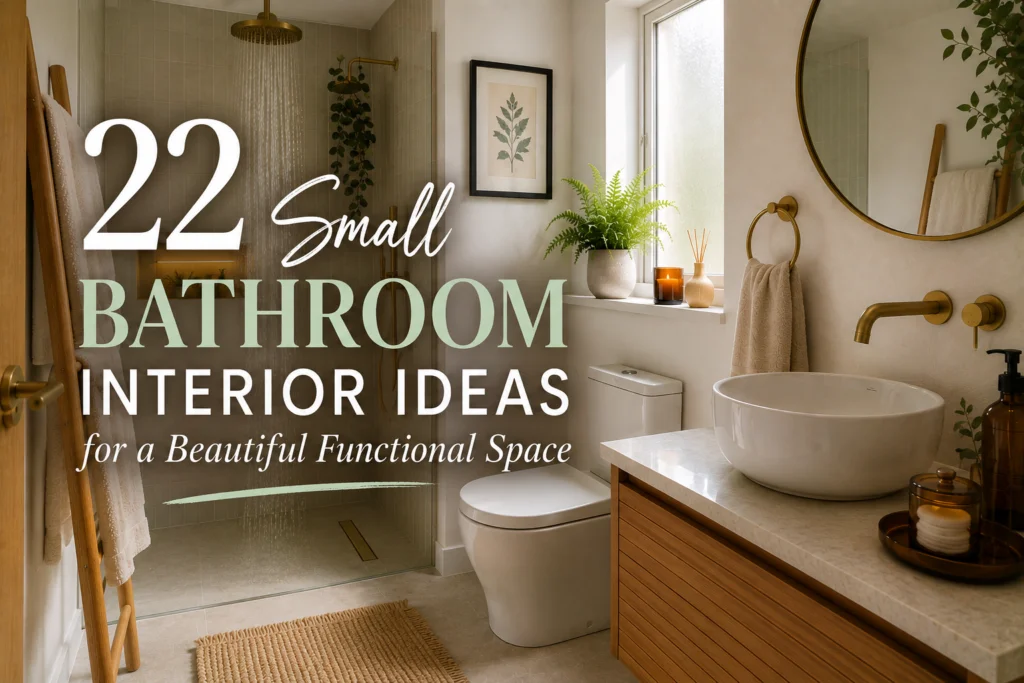
I have a complicated relationship with small bathrooms. My current one is just under forty square feet, which sounds impossible until you realize that with the right decisions, forty square feet can feel like a genuinely lovely space rather than a problem to be survived.
The version I moved into was not lovely. Beige tiles from floor to ceiling. A single harsh overhead light. A mirror that was technically a mirror but practically useless. A pedestal sink with nowhere to put anything. The room worked in the most basic possible sense. You could wash your hands and take a shower. That was genuinely all it offered.
What changed it was not a renovation. It was a series of considered decisions made within the existing architecture. New fixtures. Better light. Smarter storage. A few choices about color and material that shifted the room from somewhere I rushed through to somewhere I actually did not mind spending ten minutes in the morning.
Small bathrooms reward thoughtful decorating more than almost any other room. There is no space for anything accidental. Every choice either works for the room or against it. These 22 ideas are the ones worth making deliberately.
1. Choose Vertical Subway Tiles for Height and Movement
Subway tiles are one of the most consistently used bathroom tile choices for good reason. They are clean, versatile, and genuinely beautiful. But the orientation of the tile changes the room’s atmosphere completely. Horizontal subway tiles, the default in most bathrooms, read as settled and calm but they can also make walls feel wider and ceilings feel lower in an already small room.
Vertical subway tiles do the opposite. They draw the eye upward, make walls feel taller, and create a sense of visual movement that adds energy to a small space without adding any additional complexity. In a soft warm white or pale grey, vertical subway tiles make a small bathroom feel considerably more generous than its measurements suggest.
Key Design Tips
- Stack vertical subway tiles in a straight joint rather than a brick pattern for the cleanest vertical effect
- Use a grout color close to the tile tone for a seamless, tall-reading wall surface
- Vertical tiles work best on the main wall of a small bathroom rather than every surface
- Pair with large-format floor tiles to balance the vertical wall with a calm horizontal floor

2. Install a Curved Shower Curtain Rod
This is one of those changes that sounds too simple to make a meaningful difference. A curved shower curtain rod, bowing outward rather than running straight across the shower opening, adds approximately thirty percent more interior space to the shower enclosure without touching any plumbing, tiles, or fixed elements.
The functional benefit is genuine. The aesthetic benefit is equally significant. A curved rod gives the shower a more generous, considered silhouette. It looks like a deliberate design choice rather than a default fitting. Paired with a linen or textured shower curtain in a warm neutral tone, the curved rod transforms an ordinary shower enclosure into something that reads as intentionally styled and spa-adjacent without any construction required.
Key Design Tips
- Choose a curved rod with a generous bow of at least fifteen centimeters at its widest point
- Warm brushed nickel, matte black, and antique brass curved rods all suit different bathroom palettes
- A weighted shower curtain hem prevents billowing and maintains a clean silhouette in the enclosure
- Replace a clear plastic liner with a fabric-weighted version for a warmer, more considered look overall

3. Add a Floating Shelf Above the Toilet
The wall above the toilet is the most consistently underused storage surface in a small bathroom. Most people leave it blank or hang a single piece of artwork that does nothing practical. A slim floating shelf at a comfortable height above the tank changes this entirely.
One shelf provides space for rolled towels, a small plant, a candle, and a couple of small decorative objects without consuming any floor space whatsoever. Two shelves, staggered in height, create a small but genuinely useful storage and styling column that contributes both function and warmth to what is typically the most forgotten corner of the bathroom.
Key Design Tips
- Mount the first shelf at least twenty-five centimeters above the toilet tank to allow comfortable access
- Natural timber, painted MDF in a warm tone, and simple black metal brackets all work well here
- Style the top shelf decoratively and use the lower shelf for practical rolled towels or small baskets
- Keep the shelves narrow, no more than twenty centimeters deep, to preserve the sense of openness

4. Use a Warm Timber Vanity Instead of White
White vanities are the default in most small bathrooms and for understandable reasons: they reflect light, they suit any palette, and they disappear visually in a way that dark furniture does not. But white vanities in a predominantly white bathroom create a room that looks clean and nothing more. A warm timber vanity changes the room’s emotional temperature completely.
Natural oak, honey-toned pine, and warm walnut veneer all introduce an organic warmth that white cabinetry cannot provide. The timber grain adds texture and visual richness at the room’s most-used surface. And against white or pale tiles, warm timber creates a contrast that makes the bathroom feel designed rather than simply installed.
Key Design Tips
- Sealed and moisture-resistant timber vanities or timber-effect finishes perform equally well in humid bathrooms
- Pair warm timber with matte black or brushed brass hardware for the most considered look
- Natural oak with white subway tiles and warm brass taps is one of the most timeless small bathroom combinations
- A timber vanity needs slightly more regular maintenance than painted MDF but rewards the effort visibly

5. Create an Eucalyptus Shower Ritual Corner
This is one of those additions that costs almost nothing, requires no installation, and transforms the sensory experience of the bathroom completely. A small bundle of fresh eucalyptus stems tied together and hung from the shower head or the shower curtain rod releases its essential oils in the steam of a warm shower, creating a genuinely spa-like fragrance and atmosphere.
Beyond the sensory quality, a eucalyptus bundle looks beautiful. The deep green stems against white tiles create a contrast that reads as both natural and deliberately styled. The bundle lasts for several weeks before the stems dry and need replacing. When dried, eucalyptus retains its subtle fragrance and its visual warmth, making it a low-maintenance and beautiful small bathroom addition.
Key Design Tips
- Tie three to five stems together with a simple cotton cord or a leather tie for the most elegant bundle
- Hang from the shower head or curtain rod so the steam reaches the leaves during the shower
- Replace fresh bundles every two to three weeks or allow to dry in place as dried eucalyptus is equally beautiful
- Silver dollar eucalyptus has the most attractive leaf shape and the strongest fragrance for shower use

6. Install Under-Cabinet Lighting Beneath the Vanity
Under-cabinet lighting in a bathroom serves two purposes simultaneously and does both of them well. Practically, it illuminates the floor directly in front of the vanity during nighttime bathroom visits without requiring a bright overhead light that disrupts the transition back to sleep. Aesthetically, it creates the impression that the vanity is floating even when it is wall-mounted, adding a quality of considered design that elevates the entire room.
A simple warm LED strip mounted beneath the vanity cabinet, directed toward the floor, takes about an hour to install and costs very little. The effect in the evening, with only that warm amber strip glowing at floor level, is genuinely beautiful and makes the bathroom feel considerably more luxurious than its square footage suggests.
Key Design Tips
- Use warm white LED strips rated between 2700K and 3000K for the warmest under-cabinet glow
- Connect to a separate switch from the main bathroom light for full independent control
- Ensure the LED strip is rated for bathroom use as moisture resistance matters in this environment
- Under-cabinet lighting works best on a floating vanity where the floor beneath is fully visible

7. Add a Statement Vessel Sink
A vessel sink sits above the vanity surface rather than being recessed into it, which means the vanity counter remains largely uninterrupted and the sink itself becomes a genuine design object rather than a functional installation that disappears into the counter. In a small bathroom where every visual element matters, a vessel sink that is genuinely beautiful earns its place entirely.
A chunky white ceramic vessel. A hand-formed matte stone-effect basin. A deep black ceramic bowl above a warm timber counter. Each of these turns the vanity into the bathroom’s primary design statement. The trade-off is slightly less counter space, which in a small bathroom requires honest consideration but often proves worthwhile for the visual impact.
Key Design Tips
- Vessel sinks require a taller faucet to account for the raised basin height, plan this when purchasing
- A matte ceramic vessel in white or warm ivory suits most small bathroom palettes most naturally
- The vanity counter should be lower than standard to compensate for the vessel sink’s added height
- Keep the counter beneath a vessel sink completely clear for the most striking visual effect

8. Use Two-Tone Wall Color for Visual Depth
A single flat color across all walls in a small bathroom creates a uniform backdrop that reads as complete but occasionally flat. A two-tone wall treatment, where the lower third of the wall is painted or tiled in a slightly deeper tone than the upper portion, creates a visual depth and dimension that single-color walls do not achieve.
The classic version is painted tongue-and-groove or flat paneling in a warm deep tone below a painted or tiled upper wall in a lighter version of the same color family. Deep warm sage below pale sage above. Warm clay below cream above. The horizontal division gives the room a sense of considered architecture that makes a small bathroom feel thoughtfully designed rather than minimally decorated.
Key Design Tips
- Divide the wall at roughly one third of the height from the floor for the most proportional two-tone result
- Keep both tones within the same warm color family to prevent the room feeling visually divided
- A simple timber rail or tile divider strip at the join creates a clean, considered transition between tones
- The deeper lower tone grounds the room while the lighter upper tone keeps the ceiling feeling high

9. Choose a Round Mirror Rather Than Rectangular
Rectangular mirrors are the most common choice in small bathrooms and they function perfectly well. But a round mirror introduces a softness of form that rectangular alternatives do not carry. In a room full of hard angles, tile grids, and geometric fixtures, a circular mirror interrupts the sharp lines gently and creates a moment of visual relief that the eye responds to warmly.
Round mirrors also suit a wider range of bathroom styles than rectangular ones. From minimal to eclectic, from modern to vintage-inspired, a round mirror in the right frame finds its place without effort. In a warm antique brass frame, a round mirror becomes the room’s most characterful detail rather than simply its most functional surface.
Key Design Tips
- Choose a round mirror large enough to reflect comfortably from the normal standing position at the sink
- Warm brass, brushed nickel, natural timber, and matte black frames all suit round bathroom mirrors
- A round mirror sits most comfortably centered above a single basin vanity regardless of the vanity width
- Backlit round mirrors in a frameless style create the most spa-like and contemporary bathroom look

10. Install Open Shelving on One Wall
Open shelving in a small bathroom is a commitment that requires genuine ongoing editing. It shows everything. Clutter on open shelves is clutter on full display, which works directly against the sense of calm a bathroom needs to provide. But when edited well, open shelving creates a warmth and accessibility that closed cabinetry never achieves.
Three or four open shelves on the wall beside the vanity, styled with rolled white towels, a small plant, two or three warm ceramic objects, and the practical items neatly decanted into matching containers, create a bathroom that feels like a boutique hotel bathroom rather than a storage-challenged small room. The key is the editing. Everything visible needs to be both useful and beautiful.
Key Design Tips
- Style open shelves with a strict ratio of two thirds practical items to one third purely decorative
- Decant shampoo, soap, and cotton products into matching dispensers and glass jars for a cohesive look
- A small trailing plant on the highest shelf adds organic warmth that softens the utilitarian items below
- Edit open shelves monthly and remove anything that has accumulated without being genuinely needed

11. Add Matte Black Fixtures Throughout
Fixture consistency in a small bathroom is one of the most effective and most overlooked improvements available. A bathroom where the towel rail is chrome, the taps are brushed nickel, the toilet flush is silver, and the mirror frame is white reads as assembled from separate decisions made at separate times. The room never settles.
Choosing one fixture finish and applying it consistently across taps, towel rail, toilet flush, shower fittings, and hardware creates a bathroom that reads as deliberately designed. Matte black is currently the most popular choice for this approach because it reads as confident and modern against both white and warm-toned tiles, and it does not show water spots in the way that chrome and polished finishes do.
Key Design Tips
- Replace existing fixtures one at a time rather than all at once to manage budget across multiple bathroom updates
- Matte black pairs most beautifully with white, warm grey, and terracotta tile palettes
- Ensure all black fixtures are sourced from the same finish category as matte black varies between manufacturers
- Brushed brass is an equally effective single-finish choice for a warmer, more traditional small bathroom look

12. Create a Decorative Accent Tile Strip
A single row or narrow band of decorative tiles running horizontally across the main bathroom wall creates a design feature that elevates the entire tile scheme without requiring the expense or commitment of tiling a full feature wall. The accent strip sits at eye level, or at the height where the eye naturally rests when standing in the shower or at the vanity, and turns what would otherwise be a plain tiled surface into one with genuine visual interest.
Warm terracotta encaustic tiles. Handmade zellige tiles in a soft watery glaze. A row of small mosaic tiles in warm gold or dark charcoal. Geometric border tiles in a muted warm tone. Any of these creates a moment of intentional pattern that changes how the entire bathroom reads.
Key Design Tips
- Position the accent strip at roughly 120 to 150 centimeters from the floor for the most natural eye-level impact
- Keep the accent strip to one row or a narrow band rather than a full section for the most refined result
- Zellige, encaustic, and handmade tiles in warm earthy tones suit the accent strip format most beautifully
- The accent strip should contain a color or tone already present elsewhere in the bathroom palette

13. Bring In a Slim Rolling Storage Cart
A slim rolling cart, the kind originally designed for kitchen or office use, is one of the most practically effective small bathroom storage solutions available and one of the most aesthetically adaptable. A narrow cart in warm timber, white painted steel, or natural rattan fits into gaps that no fixed furniture can occupy: beside the toilet, between the vanity and the wall, in the corner beside the shower.
The rolling function means it can be moved for cleaning and repositioned as needed. Styled with rolled towels on one shelf, bathroom products in small baskets on another, and a small plant or candle on the top surface, a rolling cart becomes a piece that contributes to the bathroom’s warmth and organization simultaneously.
Key Design Tips
- Measure the specific gap the cart needs to fill before purchasing as widths vary significantly between models
- Warm timber effect and white powder-coated steel carts suit most small bathroom palettes
- Style each shelf deliberately rather than filling shelves with every available product
- Wicker or rattan baskets on cart shelves hide smaller items while contributing natural texture

14. Use Large Format Tiles on the Floor Only
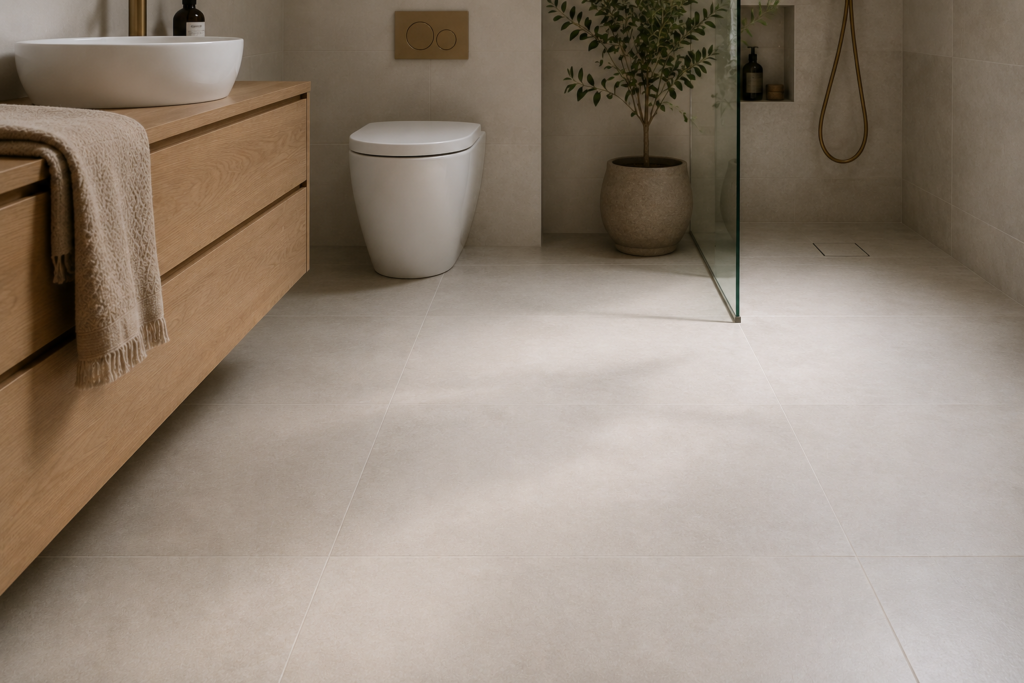
Large-format floor tiles in a small bathroom create one of the most significant spatial improvements available without touching a wall. The fewer grout lines the floor contains, the more continuous and calm the floor surface reads. A calm, continuous floor makes a small bathroom feel noticeably larger than a floor broken up by small tiles and frequent grout lines.
Thirty by sixty centimeter tiles, or larger, in a warm light tone laid in a long horizontal format create a floor that draws the eye across the room rather than directing it downward to count lines. The effect is subtle but genuine. A floor that reads as one smooth plane makes the entire bathroom breathe more freely, which is exactly the quality a small bathroom needs most.
Key Design Tips
- Use rectified large-format tiles for the thinnest possible grout lines on the bathroom floor
- Warm light grey, pale greige, and soft ivory large-format tiles reflect the most light in a small space
- Extend the same large-format tile into the shower base for a continuous floor plane that reads seamlessly
- Warm grout color matched to the tile reduces the visual frequency of the grid on the floor significantly
15. Install a Rainfall Showerhead for Daily Luxury
A rainfall showerhead is the single bathroom upgrade that has the most consistent and immediate positive impact on the daily experience of the space. It does not make the bathroom larger. It does not add storage. It changes how the bathroom feels to use every single day, which is ultimately what every bathroom decision should be measured against.
The wide, even fall of water from a ceiling-mounted or top-mounted rainfall head creates a shower experience that is genuinely different from a standard fitting. It is quieter. More even. More immersive. In a small bathroom where the shower is often the primary feature, a rainfall head elevates the experience of the room without changing anything about its architecture or size.
Key Design Tips
- Ceiling-mounted rainfall heads require adequate water pressure, check this before purchasing
- A head diameter of at least twenty to twenty-five centimeters creates the most genuine rainfall experience
- Pair a rainfall head with a handheld attachment on a separate slider for full flexible functionality
- Matte black, brushed brass, and brushed nickel rainfall heads all read as premium in a small bathroom

16. Style the Windowsill as a Mini Spa Shelf
Most bathroom windowsills hold a bottle of cleaning spray and a bar of soap that has been there since before anyone can remember. A bathroom windowsill is one of the most naturally lit, most visible, and most opportunity-rich surfaces in the room. What it holds changes how the entire bathroom feels from the moment you enter.
A small plant that appreciates steam and humidity, a simple ceramic dish holding one bar of beautiful soap, a small candle in a warm glass vessel, and one slim bud vase with a dried stem. These four objects turn a utility ledge into something that looks deliberately considered and genuinely warm. Natural light falls across them during the day. They catch candlelight in the evening. The whole bathroom benefits.
Key Design Tips
- Choose plants that thrive in high humidity environments: pothos, ferns, and small orchids all do well here
- Keep the windowsill to four or five objects at most to prevent the ledge feeling cluttered and functional
- A ceramic soap dish rather than a plastic soap holder immediately elevates the styling of the sill
- Wipe the windowsill regularly as steam residue builds faster there than on other bathroom surfaces

17. Create a Wet Room Feel With Continuous Flooring
A wet room, where the shower has no defined enclosure and the floor is one continuous waterproofed surface across the entire bathroom, creates the most spacious and seamlessly beautiful small bathroom layout available. It removes the visual boundary between the shower area and the rest of the room completely, which makes even very small bathrooms feel like one generous space rather than a small room divided into even smaller zones.
Even without a full wet room conversion, using the same tile across the shower base and the bathroom floor creates a partial version of this effect. The eye does not stop at a shower tray edge or a glass boundary. The floor reads as a single continuous surface and the room reads as considerably larger than it measures.
Key Design Tips
- Proper waterproofing of the shower zone is the most critical technical aspect of a wet room floor
- Linear drains rather than standard floor drains suit wet room layouts aesthetically and practically
- The continuous tile choice needs to be slip-resistant in the shower area without being visually rough
- A slight floor gradient toward the drain in the shower zone keeps water flowing without a defined shower tray

18. Use a Towel Ladder Instead of a Traditional Rail
A towel ladder, a slim timber or metal frame leaning against the wall at a slight angle, is one of the most aesthetically warm and practically effective towel storage alternatives available in a small bathroom. It holds multiple towels on different rungs, takes up almost no floor space, requires no drilling when leaned against the wall, and reads as a decorative object in its own right rather than purely as a towel holder.
In a small bathroom where every item needs to justify its presence visually as well as practically, a towel ladder in natural timber or matte black metal earns its place through both qualities simultaneously. Three towels of slightly varying sizes hung across different rungs, with one small cloth draped over the lowest rung, creates a bathroom styling moment that is genuinely beautiful.
Key Design Tips
- A timber ladder in warm natural wood suits any bathroom with warm or neutral tones beautifully
- Lean the ladder at a consistent angle and position it in the corner nearest the shower for practical reach
- Hang towels on alternate rungs rather than every one to prevent a crowded, overlapping look
- A slim metal ladder in matte black suits more minimal, contemporary small bathroom aesthetics naturally

19. Add a Built-In Shower Bench
A shower bench is one of those bathroom features that announces its usefulness the moment it exists and is immediately wondered about during all the years it did not. It holds the shampoo bottles that used to live on the floor. It provides a surface for shaving without awkward balancing. It makes the shower feel considerably more generous and considered regardless of its actual size.
In a small bathroom where a separate built-in bench might seem like a luxury rather than a necessity, a slim tiled bench at one end of the shower, no more than thirty to forty centimeters deep, occupies almost no additional space and contributes both practical daily value and a visual weight and permanence that makes the shower look finished and intentional.
Key Design Tips
- Position the bench at one end of the shower rather than along the side to preserve the shower’s usable width
- Tile the bench surface with the same tile as the shower walls for a fully integrated, seamless look
- A bench height of around forty-five centimeters suits most users for comfortable seated use
- Cap the bench front with a contrasting tile or timber edge detail for a more designed, considered finish

20. Hang a Small Piece of Artwork in an Unexpected Spot
Most people do not hang art in the bathroom. The humidity concerns are real but manageable with the right framing and finish choices, and the impact of one thoughtfully chosen piece in a small bathroom is genuinely significant. It signals that this is a room someone has decorated rather than simply installed. That distinction changes how the room feels to spend time in.
A simple botanical illustration in a slim frame above the toilet. A small abstract print in matte black frame beside the mirror. A ceramic tile as art mounted on the wall beside the towel rail. None of these are expensive or risky investments and all of them contribute a quality of personality and warmth that no fixture or tile choice can provide in quite the same way.
Key Design Tips
- Choose artwork printed on canvas or behind glass in a sealed frame for the most moisture-resistant option
- Position art where it is protected from direct shower steam rather than immediately beside the shower enclosure
- Simple, minimal artwork in warm tones suits small bathrooms better than busy or colorful pieces
- A single small framed piece contributes more personality to a small bathroom than a gallery of prints

21. Use Warm Amber Glass Accessories
Accessories in a bathroom are often chosen for function first and appearance as an afterthought. A plastic toothbrush holder. A chrome soap dispenser. A clear acrylic tray. These items work but they contribute nothing to the atmosphere of the room. Replacing them with warm amber glass equivalents changes the quality of the bathroom’s daily aesthetic completely.
Warm amber glass soap dispensers. An amber glass toothbrush holder. A small amber glass tray on the vanity holding everyday objects. An amber glass vessel for cotton balls. Each piece catches the warm bathroom lighting and glows slightly, contributing an amber warmth to the room’s overall light quality. Together they create a vanity surface that looks genuinely considered and spa-adjacent.
Key Design Tips
- Replace plastic or chrome accessories with amber glass equivalents one piece at a time as the budget allows
- Warm amber glass pairs most beautifully with warm timber vanities and brushed brass or gold fixtures
- Refillable amber glass pump dispensers for soap and lotion are more sustainable and look significantly better
- Group amber glass accessories on one small tray to organize and display them as a considered collection

22. Make the Bathroom Smell Like It Looks
A bathroom can be decorated beautifully and still feel like a bathroom rather than a spa because of one overlooked element: scent. The visual decisions in a small bathroom get enormous attention. The sensory ones almost none. But walking into a bathroom that smells warm and clean and slightly botanical shifts how the entire room is experienced before a single design detail is consciously registered.
A natural reed diffuser in cedar or eucalyptus on the shelf above the toilet. A beeswax candle on the windowsill lit during a long shower. A small dish of dried lavender beside the sink. These additions cost little and contribute something that no tile or fixture can: the immediate sensory signal that this room was designed for comfort and care rather than purely for function.
Key Design Tips
- Choose one scent family and use it consistently so the bathroom develops a signature sensory identity
- Natural scents like eucalyptus, cedar, lavender, and sandalwood suit bathroom environments most naturally
- A reed diffuser provides continuous background scent without requiring daily attention or lighting
- Replace dried botanical scent elements every few months as they lose potency and can become musty


