

There was a winter morning a few years ago when I got out of bed, walked to the window, and stood there for a moment before realizing I had no desire to go back. Not because the day looked inviting. It was grey and cold. But because the bedroom behind me felt even less inviting than the weather outside it.
That moment stayed with me. The room looked fine in photographs. The bedding was coordinated. The furniture was matched. On paper, nothing was wrong. But standing in it every morning felt like standing in a room that had not quite decided what it wanted to be. Warm in theory. Flat in practice.
The gap between a bedroom that looks warm and one that actually feels warm is where most decorating efforts get lost. Visual warmth and sensory warmth are two entirely different things. One reads well in photographs. The other is what you actually experience when you walk in barefoot at seven in the morning.
These 21 ideas are built around that distinction. Not how a bedroom photographs but how it feels to live inside it every day.
1. Commit to a Japandi-Inspired Warmth
Japandi is the design approach that combines Japanese simplicity with Scandinavian warmth, and it creates some of the most genuinely soft and relaxing bedroom aesthetics available. The philosophy is simple: clean lines, natural materials, warm neutrals, and nothing unnecessary. What remains is carefully chosen and placed with intention rather than filled to capacity.
In practice, this looks like a low natural timber bed frame with beautifully folded linen bedding. A single ceramic lamp. One plant in an unglazed pot. A woven rug on bare timber or pale stone flooring. The room does not feel empty despite having very few objects. It feels considered. That quality of deliberate restraint creates a warmth that maximized, fuller rooms rarely achieve.
Key Design Tips
- Choose furniture in natural timber with clean, unornamented lines rather than decorative profiles
- Limit each surface to two or three objects maximum and ensure each one is genuinely beautiful
- Natural linen in warm white or oatmeal is the most Japandi-aligned bedding choice available
- A single large plant always works harder in this aesthetic than multiple small ones scattered around

2. Build a Dedicated Morning Ritual Surface
A morning ritual surface is a small, deliberately styled area of the bedroom designed specifically for the objects and activities that belong to the first quiet moments of the day. Not a general shelf. Not a catch-all surface. A specific, intentional location for the things that make a morning feel slow and warm before the day accelerates.
A slim wooden shelf beside the window holding a ceramic mug, a journal, a small candle, and one meaningful object. The ritual surface works because it gives the morning a physical anchor. When those objects are always in the same place, always ready, always warm in their arrangement, the act of reaching for them becomes a signal to the body that there is space to breathe before the day begins.
Key Design Tips
- Position the morning ritual surface where natural light reaches it earliest in the day
- Keep it to five objects at most, the candle, the mug, the journal, one plant, one personal piece
- Use a small wooden or stone tray to define the surface area and prevent it expanding over time
- The ritual works best when the surface is cleared and reset each evening as a closing habit

3. Use Light Rattan and Bamboo for Organic Texture
Light rattan and bamboo bring a specific quality of organic warmth that heavier or darker natural materials do not. Where walnut and dark timber read as grounded and rich, rattan and bamboo read as light, airy, and quietly cheerful. They contribute warmth without weight, which makes them particularly effective in smaller bedrooms where every material decision affects how the room breathes.
A rattan bedside table paired with a timber bed frame. Bamboo photo frames on the shelf. A rattan mirror surround above the dresser. A woven rattan pendant shade above the bed. These pieces work across a wide range of bedroom palettes from warm white through to dusty sage and soft terracotta, adding an organic lightness that sits naturally in any warm bedroom aesthetic.
Key Design Tips
- Light rattan complements almost every warm bedroom palette without competing for visual attention
- A rattan pendant shade above the bed creates the warmest, most organic bedside lighting available
- Mix rattan with heavier timber pieces for a combination that reads warm without becoming heavy
- Rattan weathers and softens over time, developing a character that makes it more beautiful with age

4. Paint One Piece of Furniture in a Muted Warm Tone
When painting the walls is not possible or not desired, painting one piece of furniture transforms the room’s palette in a way that nothing else quite replicates. A dresser painted in warm dusty sage. A bedside table in muted terracotta. A small bookcase in warm clay or soft mushroom. The painted piece becomes the room’s quiet color anchor without requiring any wall commitment.
This approach works particularly well in rental bedrooms or rooms where the existing furniture is functional but visually uninspiring. A simple pine dresser painted in a muted warm tone stops looking like a temporary piece and starts feeling like a considered, permanent part of the room’s aesthetic. The investment is a tin of paint and an afternoon. The result can last for years.
Key Design Tips
- Sand the furniture surface lightly and prime before painting for the smoothest, most durable result
- Matte or eggshell finish suits bedroom furniture better than gloss for a warm, considered look
- Dusty sage, warm clay, mushroom, and muted terracotta are the most versatile warm furniture paint tones
- Paint only one or two pieces in a room to avoid the space feeling like a patchwork of different color decisions

5. Use a Weighted Blanket as a Visual and Sensory Anchor
Weighted blankets have become genuinely well understood for their sleep and anxiety benefits, but their role as a visual and tactile element in a warm bedroom aesthetic is equally significant. A high-quality weighted blanket in a deep, textured fabric, whether matte cotton, heavy linen, or knit jacquard, adds both visual substance and physical warmth to the bed in a way that lighter throws cannot replicate.
The weight itself signals something. It tells the body that lying down here will feel genuinely different from sitting up somewhere else. That physical promise contributes to the cozy atmosphere of the room before the blanket is even touched. Folded across the lower third of the bed, it also adds a visual layer of depth and substance that makes the entire bed look more generously appointed.
Key Design Tips
- Choose a weighted blanket in a heavy-weave cotton or knit jacquard for warmth and visual texture
- A weight of around four to six kilograms suits most adults for comfortable daily use
- Fold the weighted blanket across the lower third of the bed rather than covering the entire surface
- Deep oatmeal, warm grey, and muted sage work beautifully as weighted blanket tones in warm bedrooms

6. Create an Intentional Bedside Evening Ritual Setup
The bedside setup for the morning has been considered in many decorating guides. The bedside setup for the evening rarely receives the same attention, despite being the one that directly shapes how quickly and completely a person transitions from the demands of the day into genuine rest.
An evening ritual setup on the nightstand includes everything needed to signal the transition: a candle that gets lit at the same time each night, a glass of water in a beautiful carafe, a small dish for jewelry or phone, a book or journal, and a lamp that dims to the lowest possible setting. These objects together create a physical routine that the bedroom itself supports. The room becomes an active participant in rest rather than simply a container for it.
Key Design Tips
- A small glass or ceramic carafe of water on the nightstand is one of the quietest daily luxuries available
- A candle lit at the same time each evening becomes a genuine transition signal for the body over time
- Keep the evening ritual setup separate from the morning one if the nightstand has space for both
- A lamp on a dimmer that reaches near-darkness is the most important single object in this setup

7. Grow a Small Herb Garden on the Bedroom Windowsill
A small herb garden on the bedroom windowsill contributes warmth and sensory richness to the room in a way that ornamental plants alone do not. The fragrance is gentle and constant. The green is living and daily. The act of tending to a few small pots in the morning light, trimming a stem or checking the soil, creates a brief daily connection to something growing and alive that grounds the morning in a quietly meaningful way.
Lavender, rosemary, lemon thyme, and small basil plants all thrive on a sunny windowsill and all carry fragrances that suit a bedroom environment. Small terracotta pots in a gentle row across the sill, mismatched in a charming way rather than uniformly matched, create a lived-in warmth that no ornamental arrangement quite replicates.
Key Design Tips
- Lavender is the most bedroom-appropriate herb for scent, growth habit, and visual warmth on a windowsill
- Use small terracotta pots rather than plastic containers for the most natural, warm visual result
- Water herbs sparingly in the bedroom as overwatered herbs attract moisture and can develop mold
- A herb garden works best on an east or south-facing windowsill where morning light is most consistent

8. Place a Reclaimed Wooden Trunk at the Foot of the Bed
A wooden trunk at the foot of the bed is one of those furniture additions that contributes more than its square footage suggests. It provides meaningful storage without any visible presence on the floor or wall. It creates a visual anchor at the foot of the bed that gives the sleeping area a sense of completion. And a genuine vintage or reclaimed trunk specifically contributes a quality of history and character that new pieces rarely carry.
The trunk does not need to be large. Even a modest-sized vintage timber box at the foot of the bed changes the room’s visual composition meaningfully. It breaks up the length of the bed in a way that makes the bedroom feel more furnished and considered. A throw draped over the top, a small tray with a candle, or simply the clean surface of good old timber all work beautifully above it.
Key Design Tips
- Look for genuine vintage trunks at estate sales, antique markets, and second-hand furniture stores
- Size the trunk to roughly two thirds of the bed width for the most proportional appearance
- A flat-topped trunk creates a useful surface for a folded throw and one or two styled objects
- Natural timber trunks need very little treatment beyond occasional waxing to maintain their warmth

9. Create a Journaling and Reflection Corner
A journaling corner asks something specific of a bedroom that most other cozy additions do not: it asks for a kind of deliberate stillness. A small chair or cushioned seat beside a window or in a quiet corner. A surface for the journal and a pen. A warm lamp. Nothing else competing for attention.
What makes a journaling corner genuinely cozy rather than simply purposeful is the quality of enclosure it creates. A reading nook offers a place to receive a story. A journaling corner offers a place to tell one. Both create the same quality of dedicated intimacy within the larger room, a pocket of warmth with a specific use that gives the bedroom a second identity beyond sleeping.
Key Design Tips
- A small cushioned window seat is the most naturally warm journaling corner available in any bedroom
- Keep the surface completely clear of objects except the journal, a pen, and one warm light source
- A low armchair works equally well in a corner where no window seat is architecturally possible
- The corner becomes more effective as a habit forms around it, use it at the same time each day

10. Build a Warm Dressing Nook
A dressing nook creates one of the most practically useful and visually warm additions available in a bedroom. A full-length free-standing mirror in a warm frame. A small row of wall-mounted hooks for daily clothing. A narrow shelf or surface for accessories. Together these elements create a dedicated dressing area that contains the visual noise of daily clothing rather than allowing it to spread across chairs and floor space.
When the dressing nook is styled beautifully, it contributes to the bedroom’s overall warmth rather than working against it. A few hooks holding tomorrow’s outfit, a small tray for jewelry, a warm lamp catching the mirror’s reflection. It is one of the most practical additions a bedroom can have and one of the most visually rewarding when done with care.
Key Design Tips
- A free-standing mirror in a warm rattan or timber frame suits a dressing nook more naturally than a wall-mount
- Three or four hooks in matching warm metal is all the daily clothing storage this kind of nook needs
- Position the nook near the wardrobe so morning dressing happens within one cohesive area of the room
- A small ceramic dish or wooden tray on the shelf below the hooks keeps accessories organized and visible

11. Use a Braided Wool Rug for Grounded Warmth
A braided wool rug brings a quality of handmade warmth and visual richness that machine-made rugs rarely replicate. The braiding itself is visible texture: concentric rings or oval rows of warm wool creating a surface that reads as genuinely artisanal from across the room. The material absorbs sound softly, adds physical warmth underfoot, and ages in a way that makes it look more characterful rather than less.
Oval braided rugs in warm cream, oatmeal, and natural undyed wool work particularly beautifully in a soft and relaxing bedroom aesthetic. They reference a slower, more crafted way of making things that suits the overall sensibility of a warm, unhurried bedroom. And unlike flatter weave options, the braided pile has a dimensional quality that catches light differently at different times of day.
Key Design Tips
- Natural undyed or lightly toned braided wool rugs suit warm bedroom palettes most naturally
- An oval braided rug beneath a rectangular bed creates a soft shape contrast that reads beautifully
- Wool rugs benefit from regular gentle vacuuming with a suction-only setting to maintain the braid quality
- Layer a smaller sheepskin on top of the braided rug beside the bed for maximum morning softness underfoot

12. Add a Subtle Warm Stenciled Ceiling Pattern
The ceiling is one of the last surfaces people consider in a bedroom and one of the few with genuine untapped decorating potential. A subtle stenciled pattern on the ceiling in a tone just slightly warmer than the base ceiling white creates pattern and visual depth above the bed that reads as quiet and considered rather than bold or busy.
A simple repeating botanical motif in warm cream over a soft ivory ceiling. A loose geometric in warm terracotta over a pale clay ceiling. A subtle tonal star or diamond repeat in oatmeal over a natural white. None of these are dramatic. All of them change how the room feels when lying in bed looking upward, which is one of the most overlooked perspectives in bedroom design and one of the most worth considering.
Key Design Tips
- Stencil in a tone only two or three shades warmer or deeper than the base ceiling color for the most subtle result
- Practice the stencil pattern on a large piece of card before committing to the ceiling surface
- A simple botanical leaf repeat is the most forgiving stencil motif for a first ceiling stenciling project
- Seal the finished stencil with a very light matte varnish to protect it from the slight humidity of a bedroom

13. Establish a Linen Spray Scent Ritual
A linen spray applied to the pillowcases, duvet, and curtains before bed does something to the bedroom atmosphere that neither candles nor diffusers quite achieve in the same way. The scent is at body level. It surrounds the sleeper rather than filling the room from a fixed point. And when used consistently, the same scent becomes psychologically associated with sleep and rest in a way that accelerates the transition between waking and sleeping.
Lavender is the most researched for sleep benefit but warm combinations of chamomile and vanilla, sandalwood and bergamot, or cedar and rose create equally effective associations over time. The ritual of applying the spray to the bed as the final act before turning off the lamp gives the bedroom a sensory closing ceremony that the morning ritual surface opens.
Key Design Tips
- Apply linen spray lightly from at least 30 centimeters away to prevent wet patches on the fabric
- Lavender, chamomile, and cedar are the most effective sleep-associated bedroom scents
- Make linen spray application the last act before turning off the lamp for the strongest ritual association
- A beautiful spray bottle in glass or ceramic on the nightstand makes the ritual feel more intentional

14. Style a Warm Bed Tray for Morning In-Bed Rituals
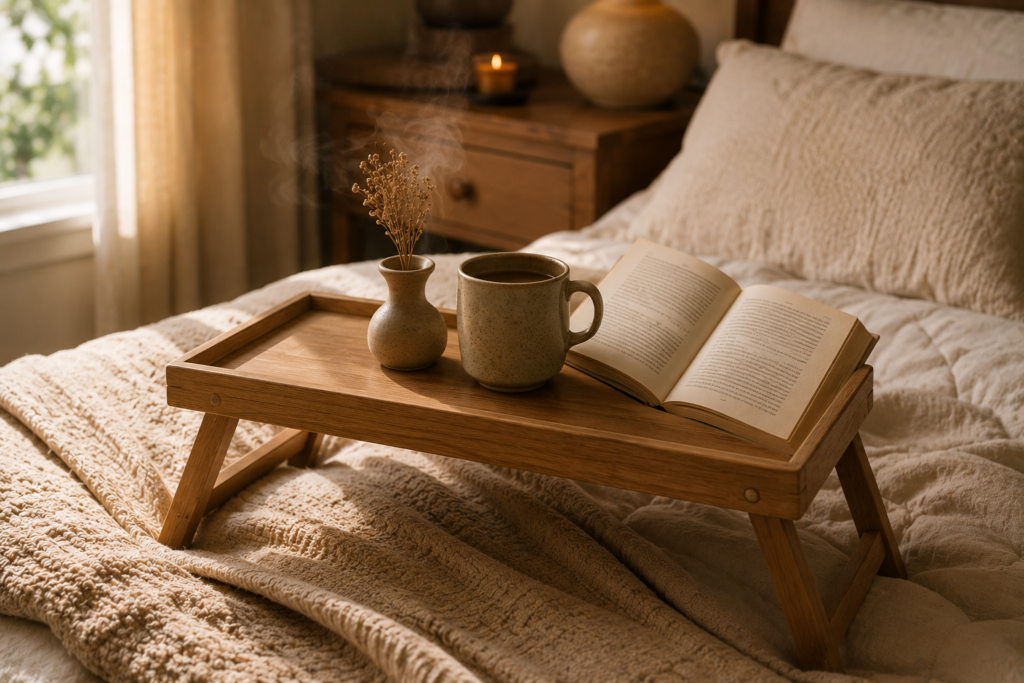
A bed tray is one of the most underrated cozy bedroom accessories available. Not in the sense of a flimsy plastic breakfast tray but a proper wooden or bamboo tray with fold-out legs that sits stably across the lap and creates a genuine surface for morning reading, journaling, or a slow breakfast in a warm bedroom.
When not in use, a beautiful wooden bed tray leans against the wall or rests on the blanket bench at the foot of the bed, contributing to the room’s visual warmth as a decorative object in its own right. A tray with warm timber grain and simple, clean proportions looks like it belongs in the room. It signals that this bedroom is designed for lingering rather than simply for sleeping.
Key Design Tips
- Choose a tray in natural timber with adjustable fold-out legs for the most practical in-bed use
- A small ceramic vase with a single stem on the tray beside the morning coffee elevates the experience significantly
- Store the tray visibly when not in use as it contributes to the room’s cozy aesthetic even when empty
- A tray with a lip or raised edge prevents cups and small objects from sliding during use
15. Upgrade Hardware and Switch Plates to Warm Tones
Small hardware details across a bedroom accumulate into a significant part of the room’s overall aesthetic and almost nobody considers them deliberately. Light switch plates in cold white plastic. Drawer handles in chrome or brushed steel. Door hinges in silver tones. Each of these small details is working against the warmth of the room without being noticed individually.
Replacing switch plates with versions in warm antique brass or brushed gold. Swapping drawer handles for ceramic knobs in matte earth tones or warm brass pulls. Adding door stopper covers in natural materials. None of these changes are expensive. All of them contribute to a subtle but genuine shift in the room’s material warmth, particularly when the existing hardware has been cold and visually discordant.
Key Design Tips
- Warm antique brass switch plates are available inexpensively online and replace standard fittings in minutes
- Replace all hardware in a room in the same metal finish for the most cohesive result
- Ceramic knobs in cream, warm clay, and sage suit bedroom drawer furniture most naturally
- Small hardware upgrades have an outsized effect because they appear at the points the eye most naturally travels

16. Hang a Macrame or Knitted Panel as a Soft Room Feature
A large macrame or hand-knitted textile panel hung on the main wall of the bedroom creates warmth and organic texture in a way that framed art and wallpaper do not. The dimensional quality of macrame, the way the fibres cast soft shadows in warm lamplight, the slight natural movement in the piece when air moves through the room, all contribute a living quality that flat surfaces cannot replicate.
A large macrame piece in natural cotton rope above the bed. A hand-knitted rectangular panel in chunky oatmeal wool hung from a slim timber rod beside the wardrobe. A smaller woven piece grouped with framed prints on the gallery wall. Each creates a moment of genuine textural warmth that makes the room feel handmade and personal in the most appealing sense.
Key Design Tips
- Natural cotton, undyed jute, and chunky wool are the most warm and organic macrame and knit materials
- Hang from a slim natural timber dowel rather than a metal rod for the warmest and most cohesive look
- A large single piece reads stronger and calmer above the bed than several smaller woven pieces grouped
- Commission from an independent maker if possible as handmade pieces carry a quality that manufactured ones lack

17. Create a Small Morning Coffee Corner
A dedicated morning coffee or tea corner in the bedroom is a small luxury that changes the daily experience of the room in a way that is genuinely difficult to replicate with any other single addition. A slim console or small table. A small electric kettle and one or two beautiful mugs. A tin of ground coffee or loose tea. One small plant. The corner is entirely about the ritual of a warm drink in a warm room before the day has fully started.
The coffee corner works best when it is genuinely beautiful as well as functional. A timber surface with warm ceramic objects and a small plant contributes to the bedroom’s overall aesthetic even when the kettle is cold and the mugs are clean. It is a corner designed for a specific moment of warmth and it earns its place in the room around the clock through its visual contribution.
Key Design Tips
- A slim console table or small floating shelf at standing height works perfectly as a bedroom coffee corner
- Two beautiful mugs in warm ceramic are more than enough as the corner is for one person or two at most
- A small electric kettle in a warm-toned finish rather than stainless steel suits the bedroom aesthetic better
- Position the coffee corner near a window if possible so the morning ritual happens beside natural light

18. Use Cork as a Natural Warm Texture Accent
Cork is one of the most underappreciated natural materials in bedroom decorating. It is warm to the touch in a way that stone, glass, and most ceramics are not. It has a distinctive texture that is simultaneously soft and structured. And in its natural pale honey tone, it contributes warmth to a bedroom palette in a subtle and unexpected way that more commonly used natural materials do not.
A cork bulletin board above the desk styled as a personal display rather than a functional pinboard. A cork-topped tray on the dresser. A small cork pot cover for a bedside plant. Cork coasters on the nightstand. None of these are grand gestures. Together they introduce a material into the room that reads as natural, warm, and quietly distinctive in a way that distinguishes a room from one that simply uses the most obvious material choices throughout.
Key Design Tips
- Natural honey-toned cork suits warm bedroom palettes in the same way terracotta and light rattan do
- A large cork board styled with personal photographs and small objects reads as warmer than a standard gallery wall
- Cork pot covers for small plants bring a warm, organic, and unexpected material to bedroom plant styling
- Avoid painted or heavily coated cork as the natural unfinished surface carries the most genuine warmth

19. Build a Personal Memory Wall
A personal memory wall is fundamentally different from a gallery wall, though the two look similar from a distance. A gallery wall is styled for visual effect. A personal memory wall is curated for emotional resonance. The difference is in the selection process and the result is a wall that feels unmistakably personal and warm in a way that even the most beautifully composed gallery wall rarely achieves.
Photographs printed in warm tones and simply framed. A small dried flower from a significant occasion mounted under glass. A postcard from somewhere meaningful. A child’s drawing framed alongside a professional print. A ticket stub behind glass. A handwritten note. These objects together on one wall create a surface that tells a specific story and makes the bedroom feel irreversibly, warmly personal.
Key Design Tips
- Group the memory wall in one focused area rather than spreading mementos across multiple walls
- Simple matching frames in one warm tone unify very different objects into a cohesive display
- Include at least one three-dimensional or tactile object mounted flat for texture variety within the wall
- Refresh the memory wall occasionally as life adds new meaningful objects worth displaying

20. Rotate Bedroom Textiles and Styling Seasonally
One of the most underused sources of sustained warmth in any bedroom is the seasonal rotation of textiles, objects, and small styling details. A bedroom that looks exactly the same in August and December is a bedroom that has stopped being actively tended. A bedroom that shifts with the seasons feels alive, responsive, and personally curated in a way that static spaces do not.
In practice this means heavier linen and chunky knit throws arriving in autumn and lighter cotton and woven pieces returning in spring. Warm amber and rust accents in winter replaced by softer greens and pale terracotta in summer. A richer, more enclosed feeling with heavier curtains in the darker months and a lighter, more open feeling in the warmer ones. The bedroom reflects the season. The season makes the bedroom feel current.
Key Design Tips
- Store off-season textiles in a large woven basket or wooden trunk in the bedroom for easy seasonal access
- Change cushion covers and throws first as they have the highest visual impact with the least effort
- Seasonal plants bring a natural calendar to the bedroom: spring hyacinths, summer herbs, autumn dried stems
- Rotating two or three signature pieces seasonally refreshes the room without requiring a full re-style

21. Layer Bedroom Scent Through Multiple Channels Simultaneously
The most deeply relaxing bedrooms are rarely the ones that smell most strongly of any single thing. They are the ones where scent builds gradually from multiple sources into a complete, warm, ambient background that the nose stops consciously registering and the body simply responds to as comfort.
A beeswax candle burning on the nightstand provides one warm layer. A linen spray on the pillowcases provides another at body level. Dried lavender tucked behind the headboard provides a constant, very quiet background note. A reed diffuser on the dresser fills the room’s air gradually and persistently. None of these individually creates the effect. Together, they build a scent environment that makes walking into the bedroom feel immediately and genuinely like arriving somewhere warm and private that belongs entirely to the person who sleeps there.
Key Design Tips
- Limit all scent sources to the same family of notes to prevent competing fragrances creating dissonance
- The quietest scent layer, dried botanicals behind the headboard, is often the most persistently effective
- Refresh reed diffusers monthly and replace dried botanicals every few months to maintain their subtle potency
- A bedroom with layered scent does not smell strongly of anything specific but unmistakably of comfort


