

The word makeover sets unrealistic expectations from the beginning. It suggests a dramatic before and after, a complete transformation achieved over a weekend with a fresh budget and unlimited energy. Real bedroom makeovers rarely work like that, and the ones that do often produce a room that looks different but does not feel any better than the one before it.
The bedroom I am most proud of did not happen in a weekend. It happened over the course of about four months of small, deliberate decisions, each one moving the room slightly closer to the warm, settled feeling I was aiming for. A new lamp one month. A different rug the next. A wall color that took three attempts to get right. A shelf above the bed that changed the entire headboard wall without touching the headboard at all.
What I learned through that process is that a warm cozy bedroom makeover is really a series of individual improvements made in the same direction. Each one earns its place not because it looks good in isolation but because it contributes to a cumulative atmosphere that builds gradually until the room finally feels complete.
The 18 ideas below are the kinds of decisions that move a bedroom meaningfully toward warmth and genuine coziness. Some are quick. Some take planning. All of them work.
1. Paint With a Warm Clay or Greige Tone
Clay and greige occupy a specific tonal territory that makes them some of the most effective bedroom colors available. Greige sits between grey and beige in a way that reads neither cold nor obviously warm at first glance but feels deeply right once it is on the wall and the lamplight falls across it in the evening. Clay carries more pigment and warmth, closer to terracotta but quieter and more versatile.
Both tones create a bedroom that feels grounded and enveloping without the commitment of a dark room or the visual coldness of grey. They shift subtly between morning light and evening warmth in a way that makes the room feel alive throughout the day. This is the kind of wall color that makes people pause when they first walk in and say the room feels different without being able to immediately explain why.
Key Design Tips
- Choose greige with warm brown or yellow undertones rather than cool or purple-tinged versions
- Clay tones work most beautifully on the headboard wall only as a warm, grounded backdrop
- Test paint in a large swatch and observe it across a full day before committing to the full room
- Pair clay and greige walls with cream and warm white textiles rather than bright white for cohesion
- Matte finish on greige and clay walls creates the most atmospheric, light-absorbing effect

2. Add Sheepskin and Faux Fur Textures
Few textures signal warmth and luxury as immediately as sheepskin and faux fur. They are the tactile equivalent of a warm embrace, physically soft to the touch, visually generous and inviting, and deeply connected in the human imagination to warmth and shelter in a way that woven or knit textures do not quite replicate.
A genuine sheepskin draped over the reading chair. A faux fur throw folded at the foot of the bed. A small sheepskin used as a bedside floor accent in place of a traditional bath mat. These additions change the physical experience of the room before any design decision is fully registered. The bedroom becomes somewhere the body wants to be, not just somewhere the eye finds pleasing from the doorway.
Key Design Tips
- Natural sheepskin in cream, warm ivory, and light caramel tones works beautifully in most bedroom palettes
- Faux fur in high-quality options is virtually indistinguishable from real fur and is more practical for daily use
- Drape a sheepskin over a reading chair arm for both visual warmth and practical comfort
- A small sheepskin beside the bed as a floor accent adds the softest possible surface for morning bare feet
- Avoid heavy faux fur in warm climates where the texture will feel uncomfortable rather than cozy seasonally

3. Choose a Velvet Upholstered Bed Frame
A velvet bed frame is one of the single most impactful individual investments available in a bedroom makeover. Unlike a headboard alone, a full upholstered frame changes the visual presence of the bed from floor to headboard top. The velvet pile absorbs and catches light simultaneously, creating a depth of surface that no other upholstery material achieves in quite the same way.
The colour choice matters enormously. Dusty sage velvet creates a quietly sophisticated bedroom with timeless appeal. Warm mushroom or caramel velvet reads as deeply cozy and grounded. Deep forest or teal velvet makes a bold, considered statement. Whatever the tone, the material itself carries a quality of warmth and intention that transforms the bed into something genuinely beautiful.
Key Design Tips
- Choose velvet in dusty, muted tones rather than bright or saturated versions for a cozy bedroom look
- A full upholstered frame in velvet reads more luxurious and complete than a headboard panel alone
- Brush velvet upholstery gently with a soft cloth regularly to maintain the pile and prevent flattening
- Pair a velvet bed frame with linen bedding for a beautiful contrast between the two different soft surfaces
- Warm mushroom, dusty sage, caramel, and muted teal are the most versatile velvet frame colours for cozy spaces

4. Bring in Warm Copper and Bronze Accents
Copper and bronze occupy a different corner of the warm metallic spectrum than brass or gold. Where brass reads as bright and polished, copper and bronze carry a deeper, more oxidized warmth that suits a cozy bedroom aesthetic particularly well. These tones suggest age, patina, and quiet character rather than newness or formality.
A copper-toned bedside lamp base. A small bronze candle holder on the dresser. Bronze drawer pulls on a painted cabinet. These pieces work by introducing warmth through material rather than color. They catch lamplight in a way that feels antique and considered, like objects that have been in the room for years and have earned their place through slow accumulation of character rather than recent purchase.
Key Design Tips
- Aged and oxidized copper reads warmer and more characterful than polished bright copper in bedrooms
- Bronze and dark copper tones pair most beautifully with warm cream walls and natural timber furniture
- Group copper and bronze accents in two or three locations rather than distributing them across every surface
- Copper lamp bases with cream or warm amber shades create some of the warmest bedside lighting available
- Avoid mixing copper and bronze with chrome or silver as the warm and cool metal tones compete directly

5. Style With Handmade Chunky Ceramics
There is a quality in handmade ceramics that manufactured objects consistently fail to achieve. The slight irregularity of the form. The variation in the glaze across the surface. The visible evidence of human hands in the making of the piece. These qualities contribute a warmth and authenticity to a bedroom that polished, factory-made objects never quite carry.
Chunky ceramic objects specifically suit a warm cozy bedroom aesthetic because their substantial weight and tactile surfaces read as grounded and honest. A large matte ceramic lamp base on the nightstand. A wide-rimmed ceramic bowl for keys and small objects on the dresser. A handmade ceramic vase holding a single dried stem on the floating shelf. Each piece is quietly distinctive and contributes genuine character to every surface it occupies.
Key Design Tips
- Shop local pottery markets, small ceramics studios, and independent makers for the most characterful pieces
- Warm earth tones in matte glazes including cream, warm ivory, dusty sage, and clay suit cozy bedrooms best
- One significant handmade ceramic piece per surface is enough, more creates visual competition
- Chunky ceramic lamp bases are the most impactful single handmade ceramic investment in any bedroom
- Allow slight imperfections in handmade pieces to remain visible as they contribute genuine authenticity

6. Create a Soft Blush and Warm Peach Palette
Blush and warm peach are among the most underused warm bedroom palettes precisely because people associate them with a specific aesthetic that feels either very feminine or very dated. Done thoughtfully, however, a blush and warm peach bedroom is one of the softest, most genuinely warm and comfortable spaces imaginable.
The key is using muted, dusty versions rather than bright or saturated pinks. Dusty blush wall paint. Warm peach linen cushions among cream ones. A soft terra-warm throw in a peach-adjacent tone. Natural timber and rattan accessories that ground the softness. The result is a bedroom that feels like morning light made permanent, endlessly warm, endlessly gentle, and entirely welcoming regardless of the time of day or season.
Key Design Tips
- Choose dusty blush and muted warm peach rather than bright pink or cool rose for the coziest result
- Pair blush and peach with warm cream, natural timber, and rattan rather than white or grey accessories
- Introduce the palette gradually through textiles first before committing to blush wall paint
- Warm brass and antique gold accents complement a blush and peach bedroom palette most beautifully
- A single blush or peach element in an otherwise neutral bedroom reads as warmly personal rather than themed

7. Add Warm Floor Lanterns for Ground-Level Glow
Floor-level lighting is one of the most effective and least used atmospheric tools in bedroom design. Most bedroom lighting exists at table height or above. A warm light source at or near floor level, casting its glow upward from the ground, changes the room’s visual character in a way that higher lights simply cannot replicate.
Warm lanterns placed directly on the floor, in the corner, beside the reading chair, or flanking the bed create a pool of amber light at the room’s lowest level. The effect is simultaneously dramatic and deeply cozy, the room appears to glow from within rather than being lit from above. Moroccan-style punched metal lanterns, simple glass hurricane lanterns with pillar candles, and warm LED lanterns in dark metal all work beautifully.
Key Design Tips
- Position floor lanterns in corners and beside seating rather than in the middle of open floor space
- Warm amber or candlelight-toned LED inserts make floor lanterns safe and adjustable for daily use
- Punched metal lanterns create beautiful patterned light on surrounding walls and floors when lit
- A pair of matching floor lanterns on each side of the bed creates a striking low symmetrical glow
- Combine floor lanterns with higher light sources for the most complete layered lighting atmosphere

8. Use Wall Paneling for Architectural Warmth
A bedroom without any architectural detail, four flat walls and a ceiling, can feel comfortable but rarely feels distinctive. Wall paneling introduces an architectural quality that elevates the room from simply decorated to genuinely designed. It gives the walls a sense of depth, dimension, and permanence that paint alone cannot achieve.
Painted timber paneling in a warm tone on the headboard wall changes the nature of that surface completely. The shadows created by the panel edges shift throughout the day as light moves across them. The room gains the character of a space that was intentionally built rather than simply furnished. Shaker-style paneling painted in clay, warm white, or dusty sage is one of the most consistently beautiful bedroom makeover investments available.
Key Design Tips
- Install paneling on the headboard wall only for maximum impact with minimum material and effort
- Shaker-style or simple vertical board paneling suits most bedroom styles from classic to contemporary
- Paint paneling in the same tone as the wall for a subtle architectural effect or in a contrasting warm tone for more drama
- Paneling painted in a deep tone like forest green or warm charcoal creates a striking and cozy headboard backdrop
- Pre-made MDF paneling kits make DIY installation relatively accessible for most confident home improvers

9. Style With Earthy Mushroom and Warm Taupe Tones
Mushroom and warm taupe occupy a decorating territory that feels simultaneously sophisticated and deeply comfortable. These are not the cool, slightly purple-grey tones of traditional greige but warmer, more organic shades that reference bark, soil, dried grass, and natural stone. They are earthy without being terracotta, neutral without being cold.
A mushroom-toned bedroom, where walls, bedding, and soft furnishings all sit within this warm, muted brown-beige family, creates a space that feels like stepping into a calm, sheltered natural environment. The palette works in both natural daylight and warm artificial light, softening and deepening as the evening lamps come on in a way that feels deliberately atmospheric rather than accidentally dim.
Key Design Tips
- Choose mushroom and taupe tones with warm brown or yellow undertones rather than cool grey undertones
- Layer multiple shades within the mushroom family, from pale warm beige to deeper taupe, for tonal depth
- Natural timber, rattan, and linen textiles complement mushroom and taupe palettes most naturally
- Warm brass and bronze accents add the only metallic warmth these tones genuinely need
- Mushroom walls with cream bedding create a softer tonal relationship than mushroom walls with white bedding

10. Add Floating Wooden Shelves Above the Headboard
The wall space above the headboard is one of the most consistently underused surfaces in the bedroom. Most people hang one piece of artwork there and consider the decision made. But a pair of floating wooden shelves positioned above the headboard creates something more functional, more personal, and more visually interesting than a single hanging piece typically achieves.
Two slim shelves in natural timber, staggered at slightly different heights above the pillows, create a layered backdrop for the sleeping area that is styled rather than decorated. Books, small plants, a ceramic object or two, a candle at a safe height. The shelves make the headboard wall feel inhabited rather than arranged, which is precisely the quality that transforms a bedroom from looking cozy to genuinely feeling it.
Key Design Tips
- Mount shelves at a comfortable height above the pillow line, at least 50 to 60 centimeters above the headboard
- Natural timber in walnut, oak, or pine suits warm bedroom aesthetics and ages beautifully in the space
- Keep shelf styling restrained: three to five objects per shelf maximum to avoid a cluttered overhead look
- Ensure shelves are securely wall-mounted with appropriate fixings as objects above a sleeping area must be stable
- Warm ambient lighting directed upward toward the shelves from the bedside lamps creates a beautiful evening effect

11. Hang a Large Textile as a Bedroom Backdrop
A large textile hung behind the bed serves all the functions of a headboard, defining the sleeping area and anchoring the bed visually, without any of the structural or financial commitment. A woven blanket, a vintage quilt, a handmade tapestry, or a large piece of embroidered fabric hung from a simple wooden dowel transforms the headboard wall into something genuinely personal and warm.
Textile backdrops also introduce warmth and sound absorption into the room that hard wall surfaces cannot provide. The fabric softens both the visual and acoustic environment simultaneously. And unlike a headboard or wall art, a textile backdrop can be changed easily and seasonally as taste and mood evolve, making it one of the most flexible warm bedroom makeover decisions available.
Key Design Tips
- Use a slim wooden dowel and curtain clips or rings to hang the textile cleanly without damaging the fabric
- A large vintage quilt or hand-woven blanket in warm earth tones creates the most characterful backdrop
- The textile should be wide enough to extend beyond the bed frame on each side for balanced proportions
- Layer the textile backdrop with a simple headboard in front for a rich, layered headboard wall composition
- Change the textile seasonally, heavier woven pieces in winter and lighter printed fabrics in warmer months

12. Swap Table Lamps for Bedside Pendant Lights
Replacing bedside table lamps with pendant lights hung from the ceiling or wall above the nightstand is one of the most space-saving and aesthetically impactful changes available in a bedroom makeover. The nightstand surface is freed entirely for personal styling. The pendant hangs exactly where the light is needed without any base consuming surface space.
Bedside pendants also introduce a more intentional, considered quality to the sleeping area than table lamps typically achieve. They look architectural. They suggest that the room was designed rather than simply furnished. A pair of rattan or ceramic pendants hanging at the right height on each side of the bed, with warm amber bulbs inside, creates some of the most beautiful and cozy bedside lighting available.
Key Design Tips
- Hang bedside pendants so the base of the shade sits at approximately shoulder height when sitting up in bed
- Rattan, linen, and handmade ceramic pendant shades emit the warmest and most atmospheric bedside glow
- Hardwired pendants look the most considered but plug-in pendant options are available for renters
- Choose pendants with enough cord length to allow height adjustment after installation
- A dimmer switch on bedside pendants transforms their atmospheric usefulness significantly

13. Use Oversized Artwork as the Room’s Main Statement
One large, genuinely impactful piece of artwork changes the emotional register of a bedroom more decisively than any other wall decision. It gives the room a focal point that is personal, atmospheric, and visually rich in a way that no other single decorating choice quite replicates.
The artwork does not need to be expensive. A large canvas print in warm earth tones. An oversized photograph printed on a matte surface. A single large abstract piece in tones that resonate personally. What matters is scale. An artwork that fills the headboard wall from nightstand height upward creates a bedroom backdrop that makes the entire sleeping area feel like it was designed around a specific vision rather than assembled from available options.
Key Design Tips
- Choose artwork that is at least as wide as the headboard and extends to within comfortable reach of the ceiling
- Warm earthy tones in terracotta, burnt sienna, warm ochre, and soft cream suit cozy bedroom aesthetics most naturally
- Matte printing surfaces rather than glossy finishes suit bedroom artwork as they absorb light softly
- A simple natural timber or thin metal frame prevents the artwork from competing with itself for attention
- Lean very large pieces against the wall rather than mounting them for an effortless, editorial look

14. Layer Your Window Treatments for Warmth and Depth
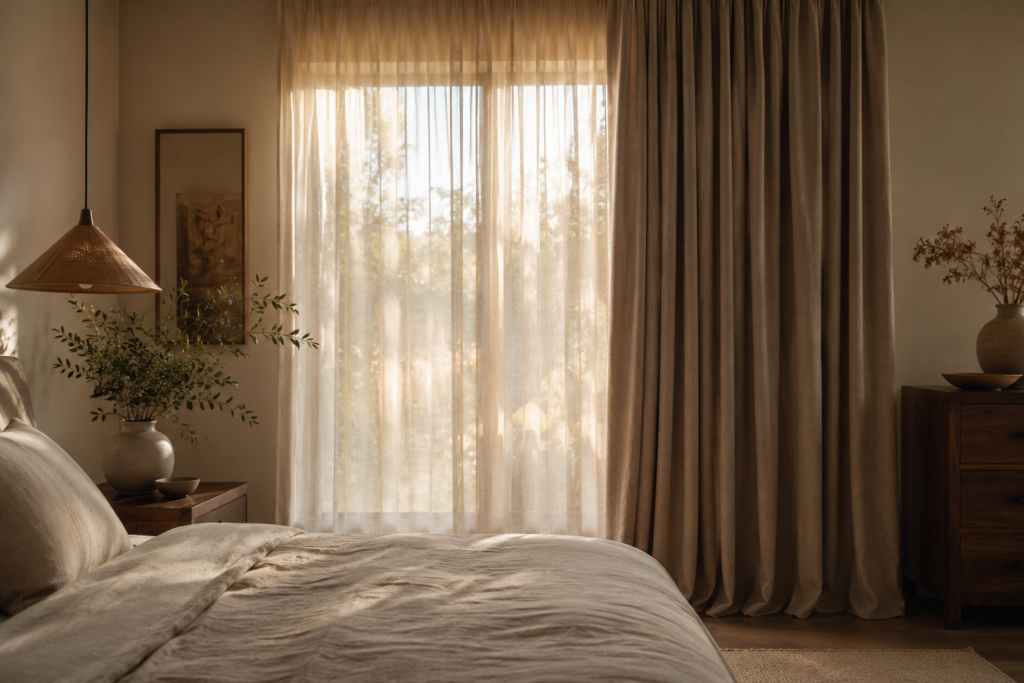
A single window treatment, whether blind or curtain, rarely achieves the warmth and depth that a layered window creates. Layering means combining two elements: a functional layer for light control and privacy, and a decorative layer for warmth, texture, and atmosphere.
A sheer linen curtain sitting against the glass, filtering and softening direct light throughout the day, combined with a heavier outer curtain in a warm neutral tone that can be drawn closed for privacy and full darkness at night. The two layers move and light differently, creating a sense of depth and softness at the window that a single curtain simply cannot generate. In a cozy bedroom, that window depth contributes meaningfully to the overall atmospheric warmth of the space.
Key Design Tips
- Layer a sheer linen or cotton voile panel closest to the glass beneath a heavier outer curtain
- Choose the outer curtain in a warm tone that complements rather than matches the wall color exactly
- Mount both curtain tracks as high as possible and extend them well beyond the window frame on each side
- Velvet outer curtains over sheer linen creates the warmest and most luxurious layered window combination
- Ensure the outer curtain is wide enough that when drawn open, both layers stack neatly beside the window
15. Create a Natural Beeswax and Honey Material Palette
Beeswax, natural honey tones, unbleached linen, raw timber, aged leather, and unglazed ceramics share a specific quality of warmth that comes directly from their connection to natural, organic processes. Building a bedroom material palette around these tones and textures creates a room that feels genuinely connected to the natural world in a deeply restful way.
This is not a visual palette in the traditional sense. It is a material philosophy. Choosing objects made from natural materials with warm, unprocessed tones consistently rather than choosing the most convenient or inexpensive option. The bedroom that results from this approach accumulates a quality of warmth and authenticity that purely visual decorating decisions rarely achieve regardless of how carefully they are made.
Key Design Tips
- Beeswax candles on the nightstand contribute both warm scent and the most natural flame light available
- Unbleached and undyed linen in its natural warm ivory tone is one of the most beautiful material choices for bedding
- Raw timber furniture with minimal finishing allows the natural grain and warmth of the wood to read most honestly
- Aged leather accents in warm caramel or cognac add a material richness and depth to cozy bedroom spaces
- Unglazed or lightly glazed ceramics in warm earth tones carry a tactile rawness that suits this material palette perfectly

16. Add a Hanging Chair or Swing Seat
A hanging chair or swing seat in a bedroom creates one of the most immediately cozy and distinctive seating experiences available. It moves slightly when sat in. It creates a sense of suspension and ease that no four-legged chair replicates. And it introduces a playful, uninhibited quality to a space that is otherwise built around rest and quietness, in the best possible way.
A rattan egg chair hung from a ceiling-mounted hook in the corner, with a sheepskin draped over the inside and a small cushion for support, becomes the most used and most photographed corner of the bedroom almost immediately after installation. It is the kind of addition that changes daily habits because it creates a reason to sit in a specific spot and simply be still.
Key Design Tips
- Ensure the ceiling hook and fixing are rated for at least twice the weight that will use the chair
- Rattan and woven hanging chairs suit warm cozy bedroom aesthetics most naturally
- Add a sheepskin and two cushions inside the chair for the most comfortable and visually warm result
- Position the hanging chair in a corner with good natural light for a genuinely pleasant daytime seating experience
- A small floor tray beside the hanging chair creates a practical surface within easy reach when seated

17. Use Warm Tonal Stripes for Understated Pattern
Pattern in a cozy bedroom requires a careful hand. Too bold and it disrupts the restful atmosphere the room is designed to create. Too absent and the room can feel tonally flat despite having excellent individual elements. Warm tonal stripes occupy the ideal middle ground: they introduce visual rhythm and gentle pattern while remaining so close in tone that the eye registers warmth rather than contrast.
A ticking stripe pillow cover in cream and warm ivory. A wide-stripe linen throw in two tones of oatmeal. A subtle stripe in the rug that reads as texture from a distance and pattern only on closer inspection. These elements add variety to the room’s surface detail without demanding attention or competing with the overall atmosphere of warmth and rest.
Key Design Tips
- Choose tonal stripes where the two tones are close in value, high contrast stripes are too visually active for bedrooms
- Ticking stripe pillow covers in cream and warm white are the most versatile and historically cozy stripe option
- A wide stripe in the rug in two neutral tones adds pattern at floor level where it reads quietly from above
- Vertical stripes on curtains or walls suggest height and spaciousness in rooms where both are welcome
- Limit stripe pattern to two or three pieces in the room to prevent the rhythm from becoming visually dominant

18. Style the Room to Feel Like a Boutique Hotel Stay
Boutique hotels understand something about bedroom comfort that most people do not apply in their own homes: the experience of the room matters more than the appearance of it. A boutique hotel bedroom is designed to be experienced first and observed second. The bedding is impossibly soft and generously layered. The lighting is perfectly warm and effortlessly adjustable. Every object on the nightstand serves a genuine purpose. The room smells clean and subtly warm. Nothing is there by accident.
Recreating this in a personal bedroom is not about expense. It is about the same intentional attention to daily experience that boutique hotel designers apply professionally. Fresh, high-quality bedding. A genuinely good pillow selection. Warm layered lighting on dimmers. A small tray of considered nightstand objects. A clean, edited room with no unnecessary clutter. The experience of sleeping there should feel like a gift to the person who does it every night.
Key Design Tips
- Invest in the highest quality bedding the budget allows as it is the most used and most noticed element daily
- A dimmer switch on every light source in the room is the single most hotel-like upgrade available
- Fold the top sheet back over the duvet each morning in a neat turndown for a consistently luxurious visual
- A small welcome tray on the dresser with a candle, a glass carafe of water, and one beautiful object sets the tone
- Edit the room completely of unnecessary objects to give every remaining piece the space to be properly noticed


