

For a long time, my own living room existed in an odd in-between state. It wasn’t unfinished exactly, all the major furniture was there, the walls were painted, the basics were covered. But it also didn’t feel like a room anyone particularly wanted to spend time in. Guests would sit, be polite about it, and gravitate toward the kitchen within twenty minutes. I couldn’t figure out what was actually wrong until a friend pointed out that everything in the room matched a little too perfectly, and nothing in it looked like it had actually been chosen by a person who lived there.
That observation turned out to be the real problem. A living room that’s technically complete and a living room that’s genuinely comfortable to spend time in are two different things, and the gap between them usually comes down to specific, fairly small decisions rather than anything structural. Texture, layering, the particular way a coffee table gets styled, whether the lighting comes from one source or several, these details do more to make a room feel warm and inviting than the actual furniture pieces themselves.
These sixteen ideas are what actually closed that gap for me, the practical, occasionally unglamorous decisions that turn a technically furnished room into one that people genuinely want to sit in. Some of them cost real money. Most of them just require paying closer attention to choices you were already making anyway.
1. Start With a Sofa That’s Genuinely Comfortable, Not Just Attractive
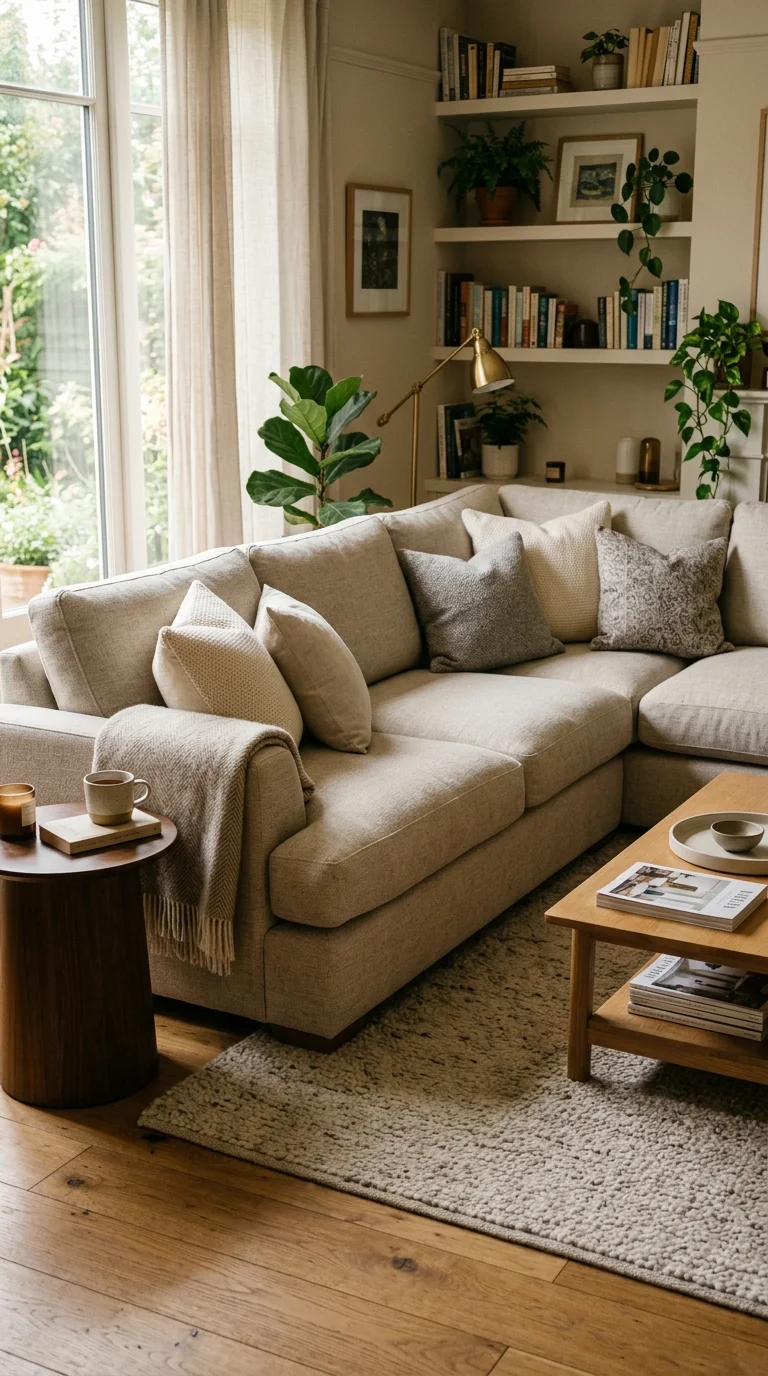
The sofa is the single piece of furniture most people will actually spend time on, which makes it worth prioritizing comfort as seriously as appearance when choosing one. A sofa that photographs beautifully but sits too firm, too shallow, or at an awkward height quietly undermines a room’s coziness in a way that’s hard to fix with decor afterward, since no amount of styling compensates for furniture nobody actually wants to sit on for more than a few minutes.
Cushion depth matters more than most people initially consider when shopping. A seat depth of 22 to 24 inches suits most people well for both sitting upright and lounging, while anything shallower can feel cramped for taller people and anything deeper can leave shorter people unable to sit back comfortably with their feet on the floor. Testing this in person, actually sitting for several minutes rather than a quick perch, reveals problems that browsing online simply can’t.
Neutral upholstery in a durable performance fabric tends to be the safer long-term choice, since it provides flexibility for changing decorative elements over time without committing to a bold color or pattern on the room’s largest and most expensive piece of furniture.
2. Layer Throw Pillows in Genuinely Different Materials
A sofa styled with several identical throw pillows in the same fabric and color reads as flat and slightly impersonal, closer to a furniture showroom display than a room someone actually lives in. Mixing materials, a linen pillow alongside a velvet one alongside something in a nubby bouclé or woven texture, creates the kind of visual and tactile depth that makes a sofa feel genuinely styled rather than simply decorated.
Varying pillow sizes matters as much as varying materials here. A common effective approach uses two larger pillows, roughly 20 to 22 inches, at each end of the sofa, with one or two smaller accent pillows, closer to 16 to 18 inches, layered in front. This creates a sense of visual rhythm that a row of identically sized pillows doesn’t achieve, regardless of how well the colors and patterns coordinate.
Keeping the total count reasonable matters too, generally no more than four to five pillows total on a standard three-seat sofa, since beyond that point the pillows start to compete with actual usable seating space rather than enhancing the room.

3. Choose an Area Rug Sized for the Whole Seating Arrangement
An undersized rug is one of the more common and most visually disruptive mistakes in living room decor, since it makes an otherwise well-chosen furniture arrangement look disconnected, as though everything is floating on an island in the middle of the floor rather than anchored as one cohesive zone. The general guideline is that at minimum, the front legs of every seating piece should rest on the rug, and ideally all four legs of the sofa specifically do.
This often means the rug needs to be considerably larger than initial instinct suggests, particularly in a room where the natural inclination is to size down every element to avoid feeling like the furniture is overwhelming the space. A properly sized rug, even one that extends nearly to the walls on one or two sides, does more to make a room feel intentionally furnished than almost any other single decorating decision available.
Material genuinely affects how the rug performs over years of actual use. Wool holds its shape and resists crushing far better than most synthetic alternatives, though it costs meaningfully more, typically $300 to $800 for a living room sized rug compared to $100 to $250 for a comparable synthetic option.

4. Add Warm, Layered Lighting Rather Than One Overhead Fixture
Lighting affects how a living room feels more than almost any other single decision, and yet it’s frequently the most overlooked element while furniture and decor absorb most of the attention and budget. A single central ceiling fixture creates flat, even light that photographs adequately but feels noticeably less warm and inviting in person than a room with multiple, lower light sources working together.
Combining a floor lamp, one or two table lamps, and possibly wall sconces or accent lighting creates the kind of layered warmth associated with genuinely cozy rooms. Bulb temperature matters considerably here as well, warm white bulbs in the 2700K to 3000K range read as inviting, while cooler bulbs above 4000K tend to feel more clinical regardless of how attractive the actual light fixtures are.
This is worth treating as a genuine priority rather than an afterthought handled with whatever bulbs happened to come with each fixture, since the difference between a well-lit warm room and a harshly overhead-lit one is often more noticeable to actual visitors than any single piece of furniture or decor.

5. Choose One Substantial Piece of Artwork Over Several Small Ones
A single large-scale piece of art tends to create more visual impact and read as more deliberately chosen than a scattered collection of smaller pieces, even when the smaller pieces are individually attractive. This isn’t a rule that applies universally, a well-executed gallery wall can absolutely work, but for a straightforward, high-impact decorating decision, one substantial piece properly scaled to its wall generally outperforms several disconnected smaller ones.
Proportion matters considerably in how this actually plays out. Art hung above a sofa should generally span roughly two-thirds the width of the furniture beneath it, not significantly less, since undersized art above a large piece of furniture is one of the more common proportion mistakes in living room decorating, even when the art itself is beautiful and well-chosen.
Large-format prints have become considerably more affordable in recent years, with plenty of quality options in the $50 to $150 range for a substantial 30×40 inch or larger piece, which puts genuine visual impact within reach even on a modest decorating budget.

6. Style the Coffee Table With Intention, Not Just Objects
An empty coffee table feels unfinished, but a coffee table covered in too many decorative objects feels cluttered and undermines its actual function as a usable surface. A simple, repeatable formula works well here, a stack of two or three books, one small plant or fresh greenery, one decorative object like a candle or small sculpture, and enough remaining open surface for someone to actually set down a drink or a plate.
Varying height within this arrangement matters more than people initially consider, a stack of books at one height paired with a taller vase or plant creates visual interest in a way that several objects all sitting at the same height doesn’t achieve. This is a small detail, but it’s the kind of thing that separates a coffee table that photographs and feels considered from one that simply has stuff on it.
Resisting the urge to add more here specifically is worth calling out, since the natural tendency once a table has three or four objects on it is to keep adding until it feels fully decorated, when in most cases the restrained version actually reads as more intentional and more elegant than a fuller one.

7. Bring In at Least One Genuinely Large Plant
A living room without any greenery at all often feels slightly sterile even when every other decorating decision has been handled well, while a single well-placed large plant introduces real organic life and softens the hard lines of furniture and architecture in a way that decorative objects alone can’t replicate. Larger specimens, a fiddle leaf fig, an olive tree, a substantial monstera, tend to have more visual impact positioned in a genuinely empty corner than several smaller plants scattered without a clear plan.
Choosing a plant based on the room’s actual light conditions matters more than choosing based purely on visual preference, since even the most beautiful plant will struggle and eventually decline in a room that can’t support its specific light needs. Lower-light-tolerant options, a snake plant, a ZZ plant, or a pothos trained up a small trellis, work considerably better in rooms without abundant direct natural light than the more dramatic but more light-demanding fiddle leaf fig that shows up constantly in decorating photos.

8. Introduce Natural Wood to Balance Cooler or Harder Surfaces
A living room built primarily from cooler materials, glass, metal, certain stone finishes, tends to benefit noticeably from the introduction of natural wood somewhere in the room, whether through a coffee table, a media console, floating shelves, or simply a few smaller wood-framed accessories. Wood introduces a warmth and organic texture that purely hard, cool surfaces don’t achieve on their own, regardless of how attractive those individual pieces might be.
Walnut and oak remain particularly popular choices specifically because they pair well with both lighter and darker overall color palettes, offering more flexibility than some other wood tones that lean more strongly warm or cool. This flexibility matters especially in a room where the rest of the palette might shift over time as decor gets updated, since a wood tone that only works with one specific color scheme limits future changes more than a more universally compatible one would.

9. Create a Small, Dedicated Reading or Relaxation Corner
A dedicated corner, even a modestly sized one, gives a living room a sense of purpose beyond simply facing a television or serving as a general gathering space. A comfortable accent chair, positioned near a window if possible, paired with a floor lamp and a small side table, creates a secondary zone within the room that reads as considered and genuinely used rather than purely decorative.
This kind of secondary seating area also breaks up what can otherwise become a somewhat predictable single-sofa-facing-a-television layout, giving the room more visual and functional variety without requiring significant additional square footage. Even in a relatively compact living room, carving out a modest corner for this purpose tends to add more genuine character to the space than an equivalent amount of floor area used for anything else.

10. Use Mirrors Deliberately to Add Light and Depth
A well-placed mirror does genuine functional work beyond its decorative value, reflecting available natural light deeper into a room and creating a sense of visual depth that makes the space feel larger than its actual dimensions. Positioning matters considerably here, a mirror placed to reflect a window brings real additional light into the room, while a mirror facing a blank wall or an unremarkable corner wastes much of this practical benefit even if it still looks attractive on its own.
An oversized mirror, whether hung or simply leaned against a wall, tends to create more visual impact than a smaller one and increasingly functions as a piece of art in its own right rather than a purely practical addition. This dual function, genuine decorative impact combined with real light and space benefits, makes mirrors one of the more efficient decorating investments available for a living room.

11. Style Open Shelving With Genuine Variation, Not Uniform Rows
Open shelving styled with identical objects at identical spacing throughout reads as sterile and overly formal, closer to a retail display than a personal collection. Genuinely well-styled shelves mix books, arranged both vertically and stacked horizontally, with a small number of decorative objects, plants, and personal items, varying the height and density from shelf to shelf rather than repeating the same pattern uniformly across every level.
Leaving deliberate negative space matters as much as what actually goes on the shelves. Filling every available inch, however attractive the individual objects, creates visual clutter that undermines the sense of curation the shelving is meant to convey. A shelf with genuine breathing room around a smaller, well-chosen collection of objects almost always reads as more considered than a fully packed one, regardless of how nice each individual item might be.

12. Combine at Least Three Distinct Textures Throughout the Room
A living room built entirely from smooth, similar-feeling surfaces, however attractive the individual pieces, can feel visually flat in a way that’s difficult to pinpoint without understanding the underlying cause. Deliberately combining different textures, a linen sofa, a velvet or bouclé accent pillow, a woven jute or wool rug, a few ceramic or ceramic-adjacent decorative objects, creates the kind of tactile richness that makes a room feel genuinely layered rather than simply decorated in a single consistent finish.
This principle extends beyond fabric to materials more broadly, mixing wood, metal, ceramic, and woven natural fiber throughout a room’s furniture and accessories achieves much of the same textural richness that fabric alone provides. The specific combination matters less than the fact that genuine variety exists, since even a fairly neutral, monochromatic color palette can feel warm and rich when enough textural variety is present.

13. Add an Accent Chair That Genuinely Contrasts With the Sofa
An accent chair chosen in the exact same fabric and finish as the sofa misses much of the opportunity accent seating actually provides, extending a room’s visual interest through deliberate contrast rather than uniform matching. A neutral linen sofa paired with a chair in leather, a rich velvet, or a natural woven material introduces variety that a perfectly matched pair simply can’t achieve, regardless of how coordinated the overall palette remains.
This contrast doesn’t need to be dramatic to be effective. Even a fairly subtle difference in material or a slightly deeper accent color creates enough visual interest to keep the seating arrangement from feeling monotonous, while still maintaining an overall sense of cohesion within the room’s broader color and material palette.

14. Design Intentionally Around the Television Rather Than Ignoring It
In most contemporary living rooms, the television functions as a genuine focal point whether or not that was the original design intention, which makes it worth designing around deliberately rather than treating as an unfortunate necessity to be minimized or hidden. A floating media console, built-in or applied shelving on either side, or a wood slat or textured accent wall behind the television can integrate it into the room’s overall design rather than leaving it as a purely functional object competing visually with everything else.
This doesn’t require an elaborate or expensive built-in solution to be effective. Even a well-chosen media console at the appropriate height and scale, paired with some thoughtful styling on the surrounding wall space, does considerably more for a room’s overall cohesion than a television simply mounted on an otherwise undecorated blank wall.

15. Include Genuinely Personal Objects, Not Just Purchased Decor
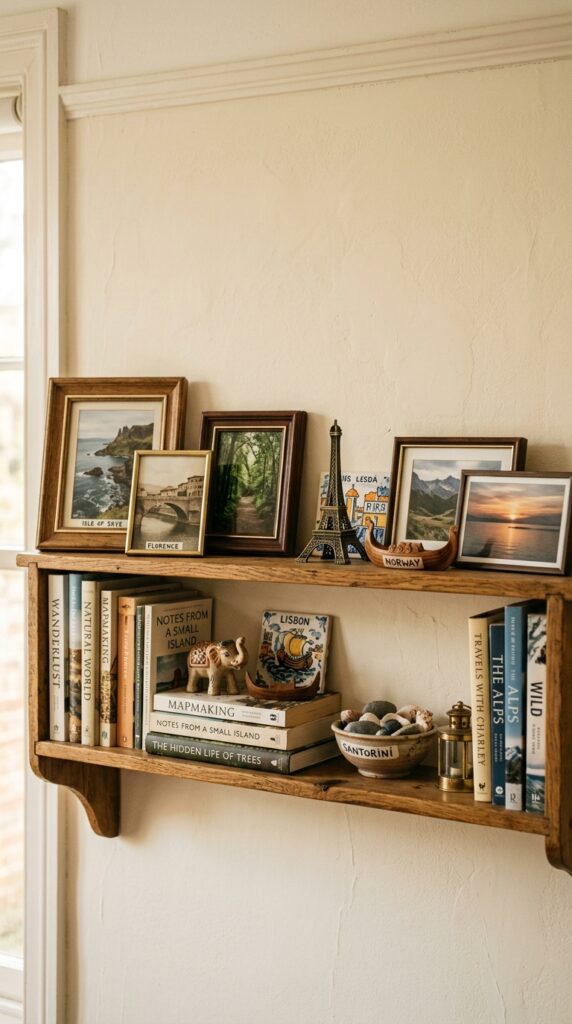
A living room decorated entirely from purchased, catalog-sourced items, however beautiful individually, tends to lack the specific warmth that comes from objects with real personal history or meaning. Family photographs, travel souvenirs, a piece of handmade art, books that actually get read rather than purely displayed for their spines, introduce authenticity that no amount of professionally curated decor fully replicates.
The key to incorporating these elements successfully lies in genuine restraint rather than overwhelming a room with sentiment. A handful of thoughtfully placed personal items, displayed with the same care given to purely decorative objects, does more for a room’s actual character than either extreme, a completely impersonal showroom-style space or a surface every inch of which is covered in memorabilia.
16. Prioritize Comfort in Every Decision, Not Just Visual Appeal
A living room that photographs beautifully but doesn’t function well for actual daily life ultimately fails at its core purpose, regardless of how carefully every individual decorating decision was made. Furniture that supports how people genuinely want to sit, lighting that adjusts to different times of day and different activities, layouts that accommodate real conversation and real relaxation rather than simply looking good in a single styled photograph, these functional considerations matter as much as any purely aesthetic choice covered elsewhere on this list.
The best living room decor ultimately balances both goals simultaneously rather than sacrificing one for the other. A room that’s both genuinely comfortable to spend real time in and thoughtfully designed to look considered achieves something that neither pure function nor pure style alone can accomplish on its own.
A living room that people actually want to spend time in isn’t necessarily the most expensive one or the most perfectly styled one. It’s the room where genuine attention went into the details that matter, texture, lighting, proportion, and a handful of choices that feel like they belong to the person who actually lives there. That’s a different, more achievable goal than chasing a perfectly styled photograph, and it tends to produce a far better result.


