
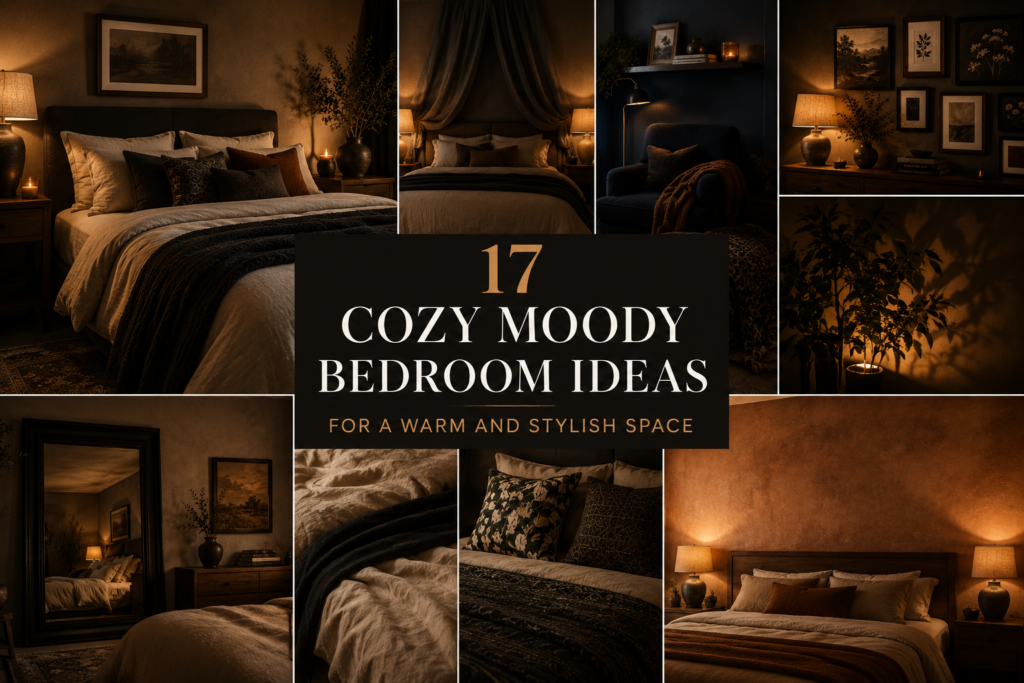
There is a version of moody that feels cold and dramatic and slightly exhausting to live inside. And then there is the version worth actually creating: warm, atmospheric, intimate, and deeply comfortable. The kind of room that feels like the world outside has been deliberately turned down in volume.
I discovered the difference between the two through a mistake. I painted a bedroom wall dark charcoal, added bright white bedding, and wondered why the room felt more like a gallery than a place to rest. The wall was moody. The room was not. Moodiness in a bedroom is not about darkness alone. It is about the quality of the light, the weight of the textiles, the warmth within the shadow. The charcoal wall needed candlelight, deep linen, a rug with texture, and a nightstand that looked like someone actually lived there. Once those things arrived, the wall stopped feeling like a design decision and started feeling like an atmosphere.
A cozy moody bedroom is one of the most genuinely comfortable spaces you can create. It asks for intention but it rewards generously. These 17 ideas are where to begin.
1. Embrace Dusty Blue-Green as Your Wall Tone
Dusty blue-green sits in a tonal territory that is genuinely unique among bedroom colors. It is cooler than sage green but warmer than teal. It reads as calm during morning light and distinctly moody as the evening lamps come on. Unlike deeper, more saturated versions of the same family, dusty blue-green retains a warmth and softness that keeps the room from feeling cold despite its depth.
The color has a particular quality in low light. As daylight fades and warm lamps take over, dusty blue-green walls seem to deepen and shift, becoming richer and more atmospheric without losing their fundamental warmth. Paired with natural timber furniture, cream linen, and warm brass fittings, it creates one of the most quietly sophisticated moody bedroom palettes available.
Key Design Tips
- Choose dusty blue-green with grey-green undertones rather than bright or cool blue versions
- Pair with cream linen and warm brass for a cohesive and genuinely warm result
- Matte finish deepens the color’s atmospheric quality significantly in low evening light
- One test swatch observed across a full day will reveal how dramatically this color shifts in different light

2. Master Dimmer-Controlled Atmosphere
Moodiness in a bedroom is almost entirely a lighting phenomenon. The same room lit with full overhead brightness and lit with three dimmed warm sources at low level looks and feels like two entirely different spaces. One feels functional. The other feels like somewhere worth lingering.
Installing dimmers on every light source in the bedroom is the single most effective atmospheric upgrade available. It is not glamorous and it does not photograph dramatically, but it changes the daily experience of the room profoundly. The ability to reduce every light to its warmest and lowest setting at the end of the day, gradually settling the room into deep amber warmth, creates an atmosphere that no fixed-brightness setup can replicate regardless of the quality of the individual fittings.
Key Design Tips
- Install dimmers on every light source including bedside lamps, overhead fixtures, and wall lights
- Warm amber bulbs between 2200K and 2700K create the deepest and moodiest low-light atmosphere
- A single room with three dimmed warm sources feels dramatically more moody than bright overhead lighting
- Smart bulbs with adjustable warmth settings offer the most flexible atmospheric control available

3. Layer Rich Burgundy and Deep Wine Tones
Burgundy and deep wine are among the most underused tones in bedroom design despite being two of the warmest, richest, and most genuinely cozy colors available. They carry depth without heaviness, warmth without brightness, and a quality of aged luxury that suits a moody bedroom aesthetic as naturally as any color in the palette.
Burgundy cushions among cream and oatmeal ones on the bed. A deep wine velvet throw draped over the chair. A dusty plum-toned blanket folded at the foot of the mattress. These additions deepen the warmth of a neutral bedroom significantly without requiring any change to the wall color or furniture. The room gains a richness that feels deliberate and considered rather than added as an afterthought.
Key Design Tips
- Introduce burgundy through cushions and throws before committing to larger furniture pieces
- Dusty, muted burgundy reads warmer and cozier than bright, saturated wine tones
- Pair with cream, warm oatmeal, and natural timber rather than grey or white for the best result
- One burgundy velvet cushion among neutral ones immediately elevates the warmth of any bedroom

4. Style With Smoked and Dark Glass Objects
Smoked glass carries a quality of mystery and warmth that clear glass and ceramic alternatives do not. When lamplight passes through or rests on a smoked glass surface, the glow it creates is deeper and more amber than any other material. It absorbs some light and reflects the rest back into the room with a quality that feels genuinely atmospheric.
Smoked glass vases on the nightstand and dresser. A dark glass candle vessel on a wooden tray. A smoked glass bottle holding a single dried stem in the corner of the shelf. These objects contribute to the moody atmosphere of the room at a detail level that makes the difference between a room that looks considered and one that genuinely feels atmospheric when the lamps come on in the evening.
Key Design Tips
- Group smoked glass objects in two or three locations rather than distributing them across every surface
- Smoked glass near warm lamp sources creates the most atmospheric effect as light passes through or reflects
- Combine smoked glass with raw ceramic and dark timber for a cohesive moody material palette
- Vary the sizes and forms of smoked glass objects to avoid a repetitive or collected appearance

5. Create a Jewel-Tone Reading Seat
A reading seat in a moody bedroom earns its place most effectively when it commits to the room’s atmosphere rather than sitting beside it as a neutral alternative. A jewel-tone chair, deep teal, rich emerald, dusty amethyst, or dark sapphire, adds a note of considered color that gives the corner both visual presence and genuine warmth.
The jewel tone does not need to be bright or saturated to work. In fact, muted versions in dusty, aged tones work better in a cozy moody bedroom precisely because they read as deep and warm rather than decorative and bright. An enveloping deep teal bouclé chair tucked into a dim corner with a warm lamp behind it creates the most private and genuinely cozy reading space a bedroom can offer.
Key Design Tips
- Choose dusty, muted jewel tones rather than bright saturated versions for a moody, cozy result
- Deep teal, dusty amethyst, and aged emerald are the most atmospheric jewel tone seating choices
- Position the jewel-tone chair in the dimmest corner of the room for maximum moody impact
- One throw and one cushion on the chair in a complementary warm neutral ties the seat to the room palette

6. Use Dark Botanical Wallpaper for Intimate Walls
Dark botanical wallpaper creates an intimacy on the bedroom wall that almost no other treatment achieves. The combination of a deep background tone and organic botanical imagery creates a surface that feels alive, layered, and genuinely immersive. The eye moves across it finding detail without ever being overwhelmed because the organic nature of the pattern feels inherently calm rather than geometrically demanding.
A deep forest green, inky navy, or warm charcoal background with botanical imagery in muted gold, cream, or dusty sage creates a headboard wall that changes the entire atmosphere of the room. In morning light it reveals its detail. In warm evening lamplight it deepens and recedes, creating an enveloping backdrop that makes the bed feel sheltered and completely private.
Key Design Tips
- Apply dark botanical wallpaper to the headboard wall only for focused impact without overwhelming the room
- Deep forest, inky navy, and warm charcoal backgrounds all create different but equally beautiful moody effects
- Pair dark botanical wallpaper with cream linen bedding for the most striking and cozy contrast
- Allow at least 48 hours for dark wallpaper paste to dry fully before evaluating the final tonal result

7. Add Deep Indigo Textiles Throughout
Indigo occupies a rare position among bedroom colors. It reads as cool at first glance but carries a depth and warmth in its darker registers that makes it genuinely cozy rather than cold. Deep indigo-dyed linen has been used in textiles for centuries specifically because of the quality of warmth and depth it carries at low light levels.
Indigo bedding, particularly washed linen in a deep indigo tone, creates a bed that looks simultaneously calm and intensely atmospheric. The color shifts between a deep blue and a warm blue-black depending on the light source, which means the bed looks different and beautiful at every hour of the day. Paired with natural timber and warm brass, indigo linen creates one of the most distinctive cozy moody bedroom aesthetics available.
Key Design Tips
- Washed indigo linen rather than crisp cotton creates the most authentic and warm indigo bedroom look
- Pair indigo textiles with warm timber, cream accents, and brass fittings to prevent a cool atmosphere
- Layer indigo with cream and oatmeal linen pieces rather than using indigo throughout for the richest result
- Indigo fades beautifully with washing, which deepens its character rather than diminishing it

8. Style a Deliberately Moody Nightstand Vignette
A nightstand styled with intention rather than convenience transforms the bedside from a functional surface into the room’s most intimate design detail. In a moody bedroom, the nightstand vignette is where the atmosphere is experienced most closely and most personally, right beside where someone rests every night.
Deep amber candlelight, a smoked glass vase, a dark ceramic object, a single meaningful photograph in a dark frame, a book with a beautiful cover. These elements arranged on a small wooden tray create a nightstand surface that contributes genuinely to the moody atmosphere of the room rather than simply holding the objects of daily routine. The difference between a functional nightstand and an atmospheric one is entirely in the selection and arrangement of what sits on it.
Key Design Tips
- Use a dark wooden or slate tray to anchor and unify the nightstand objects into one considered vignette
- A smoked glass candle vessel and a single dried stem together are the most atmospheric nightstand pairing
- Keep the nightstand to five objects maximum including the lamp for a clean, considered moody look
- A small dark-framed photograph adds the most personal element any nightstand vignette can contain

9. Mix Dark Patterns for Visual Depth
Pattern mixing in a moody bedroom works differently from pattern mixing in a bright, neutral space. In a moody room, the goal is depth rather than personality. Patterns that share a dark background tone but vary in scale and motif create a visual richness that reads as layered and considered rather than busy or chaotic.
A deep botanical print cushion beside a tonal geometric one. A subtly patterned dark throw alongside plain deep linen. A small-scale pattern on the pillowcase beneath a larger-scale pattern on a cushion cover. Each combination creates a surface that rewards closer inspection while reading as a unified, atmospheric whole from across the room. Dark pattern mixing is one of the quietest ways to add significant visual depth to a moody bedroom without introducing additional colors.
Key Design Tips
- Keep all patterns within the same dark tonal family to maintain visual cohesion across the bed
- Mix pattern scales: one large motif beside one small-scale repeat reads most naturally together
- Limit mixed patterns to the bed and one other surface to prevent the room feeling visually complex
- Dark botanical, tonal geometric, and subtle stripe are the most naturally compatible moody pattern mix

10. Use Plaster or Suede-Effect Wall Paint
Plaster and suede-effect paint finishes create a wall surface that reads fundamentally differently from standard flat or eggshell paint. The texture within the finish creates micro-variation across the wall surface, lighter where it catches light and slightly deeper in the very subtle shadows between the textured marks. The result is a wall that appears to have been hand-finished and aged, which contributes a warmth and character that smooth paint surfaces simply do not carry.
In a warm moody bedroom, a plaster-effect wall in dusty clay, warm charcoal, or aged ochre creates a backdrop that looks like it belongs to a centuries-old European room. The texture changes visibly as the lamplight moves across it through the evening, keeping the wall alive and atmospheric rather than simply present.
Key Design Tips
- Apply plaster-effect paint in two layers using a wide spatula tool for the most authentic texture
- Dusty clay, warm greige, and aged ochre are the most beautiful plaster-effect colors for cozy moody bedrooms
- The texture variation in plaster-effect paint means no two areas of the wall look identical, which is the quality
- Seal finished plaster-effect walls with a very light matte topcoat to protect without filling the texture

11. Play With Warm Shadow and Lamp Placement
Most bedroom lighting decisions focus on where to place light. In a moody bedroom, shadow is equally important and deserves the same consideration. The shadow created by a lamp placed in one corner, the warm darkness behind the headboard when the bedside lamps are the only source, the soft shadow of a plant falling across the wall at night. These shadow moments contribute as much to moody atmosphere as the lit areas do.
Deliberately positioning lamps to create interesting warm shadow as well as light transforms the room’s evening atmosphere. A floor lamp placed behind a plant so its warm glow silhouettes the leaves against the wall. A bedside lamp angled to graze the texture of the wall behind it. Shadow is warmth given form, and in a moody bedroom it is one of the most powerful atmospheric tools available.
Key Design Tips
- Place a lamp behind or beside a large plant to create warm leaf-shadow patterns on the wall
- Angle a bedside lamp toward the wall rather than away from it to create a warm grazing shadow effect
- Avoid positioning lamps symmetrically if you want interesting shadow rather than even illumination
- A single lamp in one corner creates more atmospheric shadow across the rest of the room than two balanced ones

12. Combine Charcoal and Warm Rust for a Distinctive Palette
Charcoal and warm rust is one of the most striking and genuinely cozy bedroom palette combinations available. The charcoal provides depth, moodiness, and visual weight. The rust provides warmth, energy, and the quality of firelight that charcoal alone cannot carry. Together they create a bedroom palette that feels simultaneously bold and inviting, dramatic and deeply comfortable.
Deep charcoal walls with warm rust linen cushions among cream ones on the bed. A rust-toned throw draped over a charcoal upholstered chair. Small terracotta and amber objects on dark shelves. The combination works because the two tones are complementary in the way that shadow and warmth are complementary: each makes the other more powerful by contrast.
Key Design Tips
- Use charcoal as the dominant wall and furniture tone with rust as the accent rather than an equal partner
- Muted, dusty rust reads warmer and more sophisticated than bright orange-red in a moody bedroom
- Cream and warm oatmeal neutrals between the charcoal and rust prevent the palette from feeling heavy
- Natural timber furniture provides a third warm tone that ties charcoal and rust together naturally

13. Create a Dark-Framed Art Gallery Wall
A gallery wall in a moody bedroom earns its place when every frame belongs to the same dark family. Mixed frame finishes undermine the cohesive moody quality that a dark bedroom gallery wall needs to create. But a wall of dark walnut, matte black, and deep bronze frames holding varied artwork creates a gallery that reads as collected and considered rather than assembled.
The artwork itself can vary widely in subject and tone while remaining united by the dark framing. Botanical illustrations, abstract prints, sepia photography, landscape studies, and dark watercolors all coexist naturally within dark frames against a moody wall. The gallery creates a surface of genuine visual depth that changes with observation and contributes personality to the room that any single large piece rarely achieves.
Key Design Tips
- Limit frame finishes to two: matte black and dark walnut together create the most cohesive dark gallery
- Vary artwork sizes within the gallery from large anchoring pieces down to small intimate ones
- Lay the arrangement on the floor first to find the composition before committing to wall fixings
- Position the gallery in warm lamplight so the frames catch the glow and the artwork appears at its best

14. Layer Heavy Linen and Dark Cotton Bedding
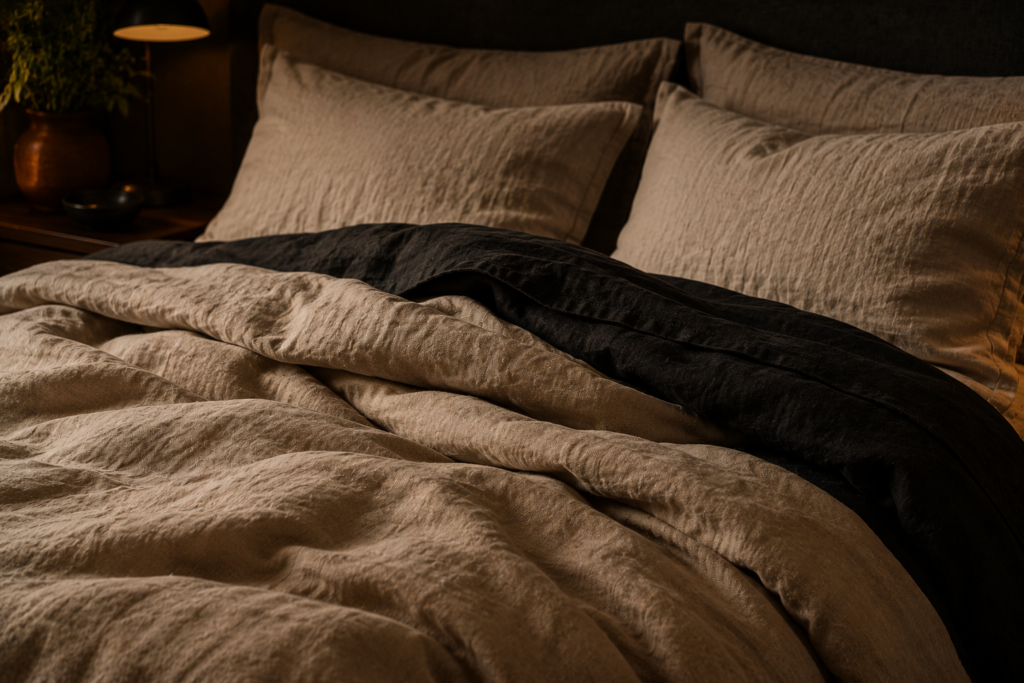
The weight and drape of bedding in a moody bedroom matters more than in brighter, lighter rooms. Substantial, heavy fabrics signal warmth and permanence. They look like they belong in the room rather than sitting on top of it. The combination of heavy washed linen and deep-toned cotton creates a bed that looks genuinely generous and inviting from across the room.
Heavy linen duvet covers in natural, off-white, or warm oatmeal draped over a deep cotton blanket in charcoal or indigo. The contrast between the natural linen tone and the darker cotton layer creates a layered depth at the bed surface that lighter, matched bedding sets never achieve. The bed looks like it took years to accumulate rather than a single afternoon to purchase and arrange.
Key Design Tips
- Choose heavy-weight linen of at least 170 grams per square meter for the most substantial, draped appearance
- Layer a deep cotton blanket between the fitted sheet and the linen duvet for visible depth at the fold
- Allow the top layer to drape imperfectly rather than tucking it for a naturally generous and cozy appearance
- The contrast between natural linen tone and a deeper blanket layer is the key visual element in this combination
15. Use a Low Ceiling Drape for Intimate Enclosure
A fabric drape suspended from the ceiling above the bed, not a canopy in the traditional sense but a length of lightweight fabric anchored at the ceiling and allowed to fall softly on each side, creates a sense of intimate enclosure that changes the character of the entire sleeping area.
In a moody bedroom, the ceiling drape functions as a soft boundary between the sleeping space and the rest of the room. It makes the bed feel private and sheltered. Deep moody linen or a gauze-weight fabric in warm charcoal or dusty indigo creates the most atmospheric version of this effect. As the evening lamps come on below it, the draped ceiling fabric seems to create its own shadow layer above the bed, deepening the sense of warm enclosure significantly.
Key Design Tips
- Use a lightweight linen, muslin, or voile fabric in a deep warm tone rather than a stiff or structured material
- Secure the fabric to a ceiling hook directly above the headboard center and allow it to fall naturally
- Dusty indigo, warm charcoal, and deep forest green are the most atmospheric moody drape colors
- Keep the drape simple and unstyled as the natural fall of the fabric creates all the atmosphere needed

16. Build a Midnight Blue Bedroom Corner
Midnight blue is one of the most genuinely cozy dark colors available precisely because it sits at the meeting point of warmth and coolness in a way that pure black and pure grey do not. It has the depth of darkness without the coldness of grey and the intimacy of night without the harshness of true black. A midnight blue corner creates a room within a room.
A deeply upholstered midnight blue armchair in a corner painted the same tone. A small dark shelf above it with warm amber objects. A floor lamp casting warm light downward into the corner. The corner becomes a specific destination within the bedroom, a place with its own atmosphere and identity that makes the larger room feel more complex and genuinely interesting to inhabit.
Key Design Tips
- Paint the corner wall in midnight blue and choose upholstery in a close but not identical tone for depth
- Warm amber and brass accessories prevent midnight blue from reading as cold in the corner
- A floor lamp positioned directly above and behind the chair creates the warmest possible pool of light in the corner
- Keep the midnight blue contained to one corner to create contrast with the rest of the room

17. Let One Statement Dark Object Define the Room
Every genuinely moody bedroom has one object that announces the room’s aesthetic before anything else registers. It is the piece that makes the visual argument for why this room is moody and cozy rather than simply dark or decorated. One statement dark object, chosen with genuine care and placed with confidence, does this work more effectively than any number of smaller decorative decisions made in the same direction.
A large dark ceramic sculpture on the dresser. An oversized ebony-framed mirror leaning against the main wall. A deep vintage trunk at the foot of the bed. A single dramatically dark painting above the headboard that fills the wall. The object does not need to be expensive. It needs to be significant in scale, deliberate in placement, and genuinely dark in a way that makes the room’s atmosphere unmistakably intentional.
Key Design Tips
- Choose one object of significant scale rather than several smaller dark pieces for maximum impact
- Position the statement dark object at the natural focal point of the room where it is seen immediately upon entry
- Warm lighting directed toward the dark object creates dramatic shadow and highlights its form beautifully
- Build the rest of the room’s styling around the statement piece rather than treating it as an addition


