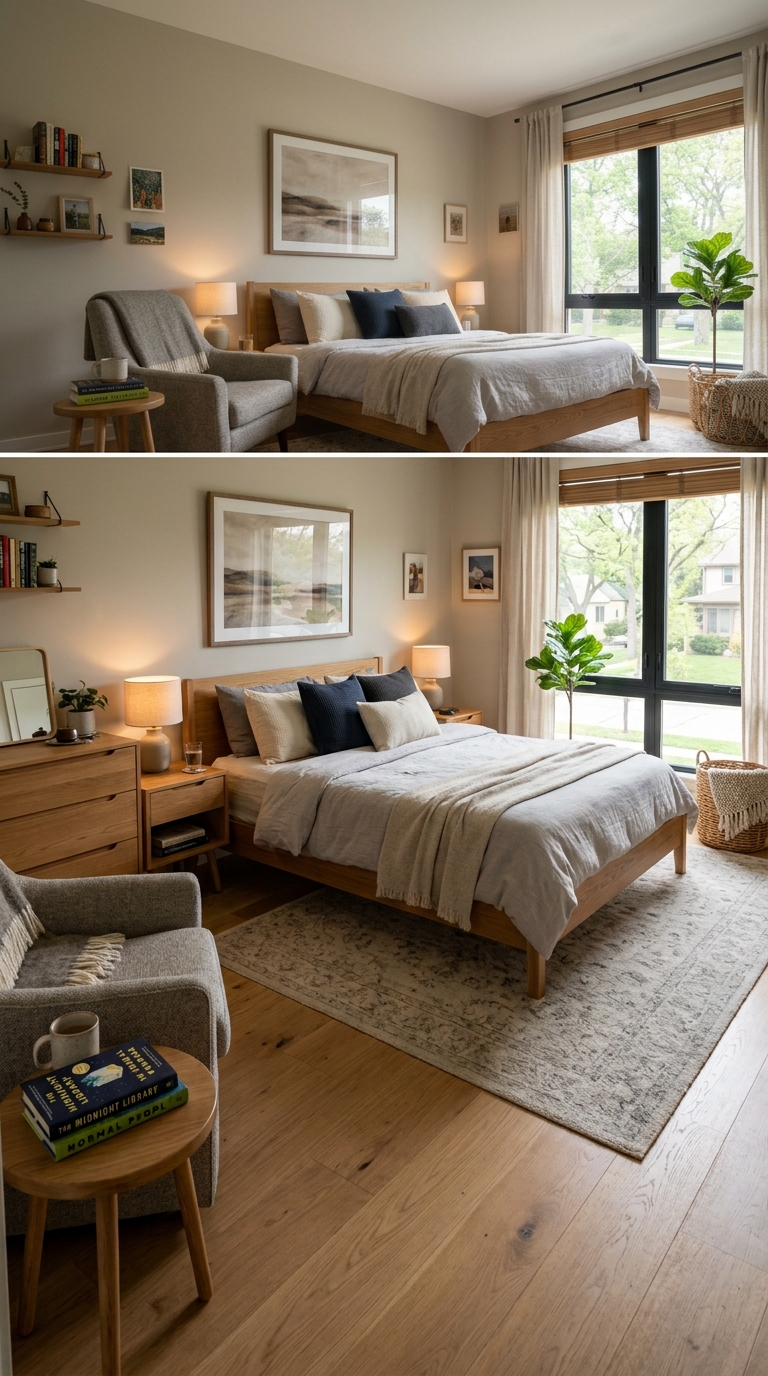

The gap between a minimalist bedroom and an underfurnished one is smaller than most people assume, and a lot of well-intentioned attempts at this style end up landing in the wrong side of that gap. A room with very little in it isn’t automatically calm. Sometimes it just reads as incomplete, a space waiting for more furniture to arrive rather than one that was deliberately edited down to exactly what it needs.
What actually separates a genuinely successful minimalist bedroom from a simply sparse one comes down to a fairly specific set of decisions, how storage gets handled, what quality of materials get chosen for the smaller number of pieces that remain, how negative space gets used deliberately rather than left over by default. A room with three or four genuinely well-chosen elements and real intentional emptiness around them reads as considerably more calm and finished than a room with the same amount of furniture arranged without that same deliberateness.
These eighteen ideas cover the specific decisions that make minimalist bedrooms actually work, not just fewer objects, but the right objects, positioned and finished in a way that reads as genuinely calm rather than simply incomplete.
1. Choose a Low-Profile Bed Frame
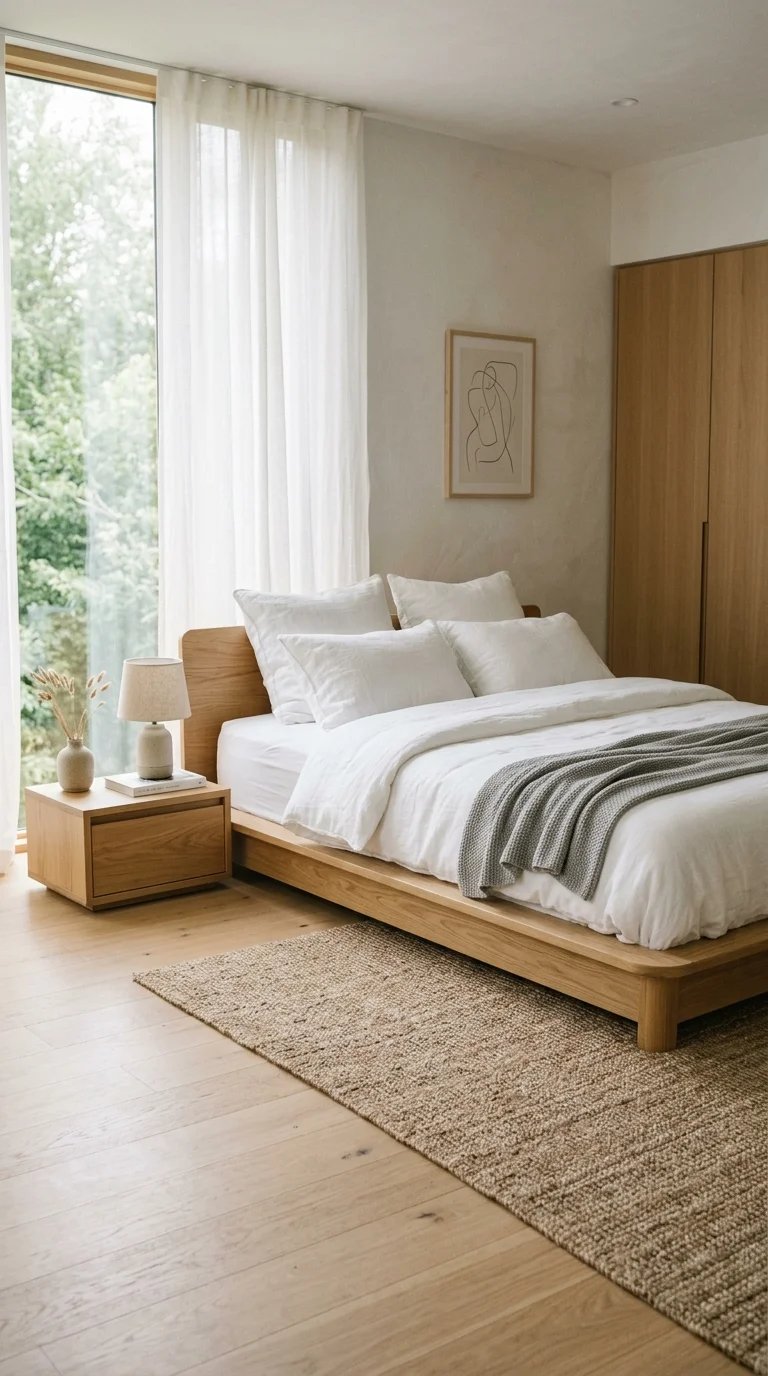
A bed frame with a genuinely low profile, whether a platform frame close to the floor or simply one without a tall, ornate headboard, keeps the room’s largest piece of furniture from dominating the space visually. This matters more in a minimalist bedroom than almost any other style, since one of the core goals is a sense of open, breathable space, and a tall, heavily detailed bed frame works directly against that even when every other element in the room is appropriately restrained.
Platform frames specifically, which eliminate the need for a separate box spring, also reduce the overall height of the sleeping surface, further supporting the room’s sense of openness. This does mean checking mattress compatibility before purchasing, since not every mattress type performs equally well directly on a platform surface without additional support.
2. Commit to a Genuinely Limited Color Palette
A minimalist bedroom typically works from two, at most three, colors throughout the entire room, a dominant neutral, perhaps one secondary tone, and occasionally a single accent color used sparingly rather than repeated throughout. This restraint is what creates the visual calm the style depends on, since even a room with relatively little furniture can feel busy if that furniture spans a wide range of competing colors.
Soft white, warm greige, and gentle oatmeal tend to work particularly well as the dominant tone, since they photograph and feel calm without tipping into the cold, clinical territory that a starker, cooler white can sometimes suggest. Whatever the specific palette, consistency matters more than the exact colors chosen, since the discipline of staying within a genuinely narrow range is what produces the calming effect, not any particular shade itself.

3. Use Concealed Storage Rather Than Open Shelving
Open shelving, however attractively styled, introduces visible objects and potential clutter that works against a minimalist room’s core goals, while concealed storage, closed dresser drawers, a wardrobe with doors, under-bed storage bins, keeps daily items genuinely out of sight without requiring the discipline to maintain a perfectly styled open display indefinitely. This distinction matters enormously for how sustainable the minimalist look actually is over months and years of real daily use.
This is worth prioritizing specifically because open shelving in a minimalist room only stays minimalist as long as someone actively curates what’s visible on it, a habit that tends to erode over time in any genuinely lived-in space, while closed storage removes that ongoing maintenance requirement entirely.

4. Choose Furniture With Visible Legs
Furniture raised on visible legs, whether the bed frame, a dresser, or a nightstand, lets the floor read as continuous beneath it, creating a sense of openness that furniture sitting flush against the floor doesn’t achieve. This detail has an outsized effect on how spacious a minimalist bedroom feels relative to how little it actually costs or changes about the furniture’s function.
This principle extends to nearly every piece in the room. A dresser or nightstand with a solid base touching the floor directly reads as visually heavier than the same piece raised even a few inches on simple legs, regardless of the actual footprint each occupies.

5. Leave At Least a Quarter of Wall Space Genuinely Bare
A completely empty wall reads as intentional in a minimalist bedroom in a way it might not in a busier style, and it’s one of the easier details to accidentally undermine by over-correcting toward filling every available surface. Leaving roughly a quarter of the room’s total wall space without art, shelving, or decor, ideally as one or two genuinely substantial empty stretches rather than scattered thin gaps, does more to establish the room’s sense of calm than almost any individual furniture choice.

6. Select One Piece With Genuine Visual Weight
A minimalist bedroom still benefits from a single element with real presence, a sculptural pendant light, a substantial piece of art, a chair with a distinctive silhouette, since a room with absolutely nothing standing out can tip from calm into simply forgettable. The key constraint is choosing exactly one such piece. A second element competing for the same attention undoes the sense of focus the first one established.

7. Choose Bedding in a Single Solid Tone or Subtle Texture
Patterned or heavily textured bedding introduces visual complexity that works against a minimalist room’s clean lines, while a single solid tone, or a subtle texture like waffle-weave or a simple ribbed knit in a tone-on-tone color, supports the room’s overall restraint without looking flat or uninteresting. This doesn’t mean the bedding needs to be plain in a boring sense, quality material and genuine tactile interest still matter, but pattern specifically is worth avoiding in favor of texture.

8. Use a Low-Pile Rug in a Solid, Complementary Tone
A thick, high-pile rug or a busy pattern introduces texture and visual noise that competes with a minimalist room’s clean aesthetic. A low-pile rug in a solid tone, ideally close to the wall color but a shade or two darker or lighter for subtle contrast, defines the floor space beneath the bed without adding competing visual complexity. Wool or a wool blend in this style typically runs $200 to $500 for a bedroom-sized rug, a worthwhile investment since lower-quality options tend to show wear and flatten unevenly within a year or two.

9. Keep Nightstand Surfaces to Two or Three Objects Maximum
A nightstand covered in decorative objects, however individually attractive, undercuts the sense of restraint the rest of the room is establishing. A small lamp, perhaps a single book or a small plant, and enough remaining open surface to actually set down a phone or a glass of water represents the realistic ceiling for what stays out permanently on a genuinely minimalist nightstand. This requires ongoing discipline rather than a single decluttering pass, since nightstands are a natural landing spot for daily items that accumulate without anyone deciding to put them there.

10. Choose Window Treatments That Disappear When Open
Heavy drapery, even in a neutral color, adds visual bulk that works against a minimalist room’s clean lines. Simple roller shades, or slim linen curtains that stack neatly to one side when open, keep the window itself as the visual feature rather than the treatment covering it. This detail matters especially in a smaller bedroom, where every additional visual element has proportionally more impact on how open the room feels overall.

11. Favor Natural Materials Over Anything Glossy or Synthetic
Wood, stone, linen, and wool all read as calmer and more considered than high-gloss laminate or synthetic finishes, even when the underlying colors are nearly identical between the two options. A minimalist room built from natural materials tends to feel genuinely warm despite containing relatively few individual pieces, since texture does real visual work that color alone can’t replicate. This doesn’t require expensive or artisanal materials specifically, a simple solid wood nightstand from a mainstream retailer accomplishes the same goal as a costlier handmade equivalent.

12. Keep the Lighting Warm and Layered
A single central overhead fixture creates flat, even light that can make even a well-designed minimalist room feel less considered than intended. Two light sources, a bedside lamp on each nightstand, or a lamp paired with a floor lamp in any reading corner, create the kind of depth and shadow that makes a room feel more dimensional in the evening. Warm bulbs in the 2700K to 3000K range support the room’s overall sense of calm far better than cooler, harsher bulb temperatures do.

13. Choose One Plant, Chosen Deliberately
A single well-placed plant, whether a fiddle leaf fig, a snake plant, or something smaller depending on the room’s light conditions, introduces real organic life without adding the visual busyness a larger plant collection would. The pot matters nearly as much as the plant itself here, a simple, matte, neutral-toned vessel supports the room’s overall restraint, while a patterned or brightly glazed pot works against it regardless of how well-chosen the plant might be.

14. Match Metal Finishes Consistently Throughout the Room
A room with matte black lighting, brass door handles, and chrome furniture legs reads as unplanned even when each individual piece is well-chosen. Committing to one metal finish and using it consistently across lighting fixtures, hardware, and any visible furniture frames is one of the simpler ways to make a minimalist room feel genuinely cohesive rather than assembled from unrelated purchases over time.

15. Choose a Wardrobe or Closet System That Closes Completely
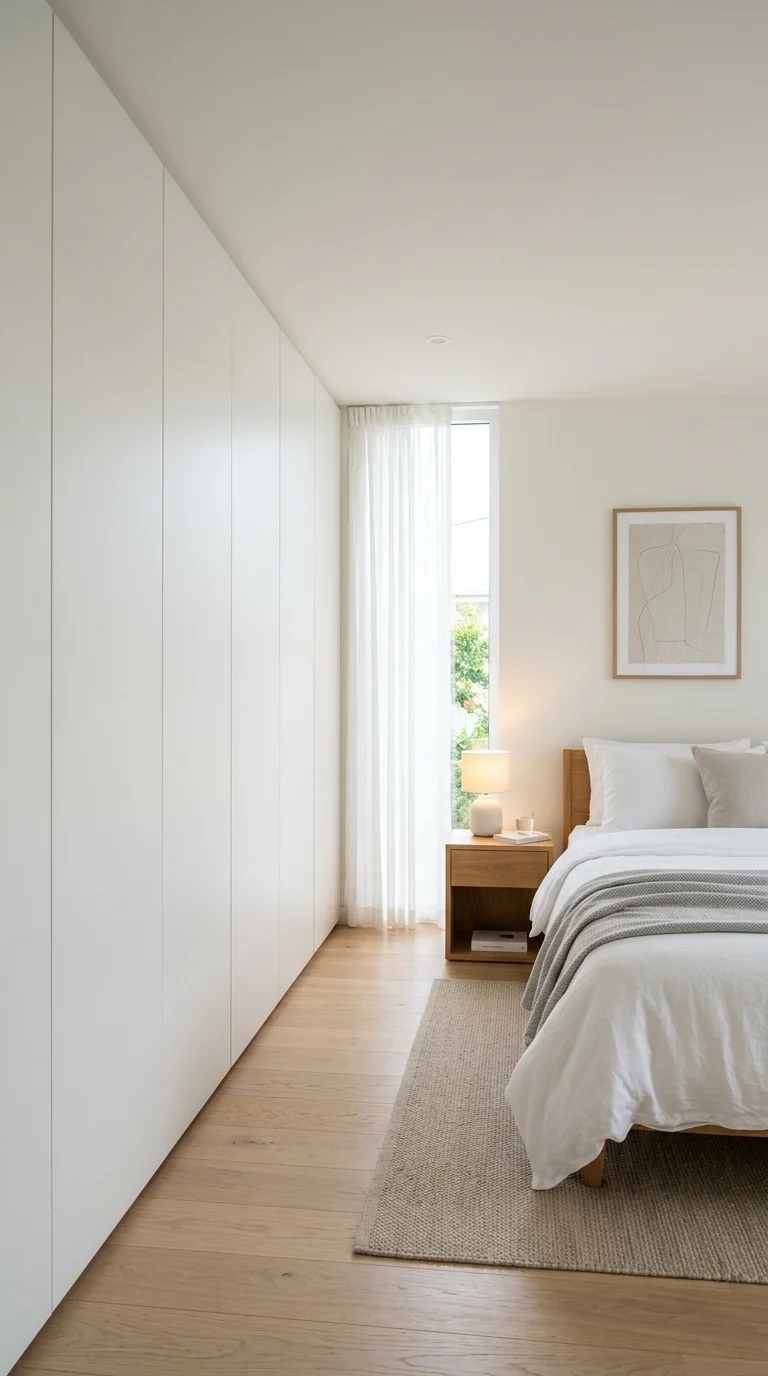
Where the room includes a wardrobe or open closet system, prioritizing one with doors that close fully, rather than an open or partially open system, matters more in a minimalist bedroom than in almost any other style, since visible clothing and hangers introduce the exact kind of visual clutter the room’s other choices are working to avoid. This is worth prioritizing even when a fully enclosed system costs somewhat more or offers marginally less visible organizational satisfaction than an open one.
16. Keep Art to a Single Large Piece or None at All
A gallery wall of several small frames introduces visual complexity that works against a minimalist bedroom’s core restraint. A single large-scale piece, properly scaled to its wall, reads as more deliberate, or alternatively, a genuinely bare wall can work just as well if the room’s other elements already provide sufficient visual interest. Both approaches support the style; a cluster of many small, competing pieces generally doesn’t.

17. Choose a Simple, Unfussy Ceiling Light Fixture
An ornate or heavily detailed overhead fixture draws attention upward in a way that works against a minimalist room’s overall restraint, while a simple, clean-lined fixture, or even a flush-mount option with minimal visual presence, keeps the ceiling from becoming an unintended focal point. This is a detail easy to overlook while focusing on more visually prominent furniture choices, but an ornate fixture in an otherwise restrained room reads as noticeably inconsistent once actually installed.

18. Resist Adding More Once the Room Feels Nearly Finished
The strongest instinct to guard against in a minimalist bedroom is the urge to keep adding once the major pieces are in place and the room starts to feel slightly underfurnished. That feeling of incompleteness is often actually the room working as intended, and sitting with it for a few weeks before assuming more needs to be added tends to prevent the slow drift back toward clutter that undoes a genuinely successful minimalist space. Most minimalist rooms that eventually feel cluttered got there through exactly this pattern, a well-intentioned, gradual accumulation rather than any single decorating mistake.
A minimalist bedroom that succeeds doesn’t feel bare once it’s genuinely understood. It feels edited, every remaining choice made deliberately and nothing asking for more attention than it’s earned. That’s a meaningfully different outcome than simply owning less furniture, and the difference comes down to the specific, considered decisions covered throughout this list.