

Dorm rooms are small. Really small, usually somewhere between a walk-in closet and a studio apartment, and you’re often sharing that space with another person and their stuff too. Most of the “aesthetic dorm room” ideas online skip the hard part: where does everything actually go? Good dorm storage isn’t about buying more bins. It’s about using the space you already have the right way. These 12 ideas focus on real storage and layout problems, not just what looks nice in a photo.
1. Measure Your Room Before You Buy Anything
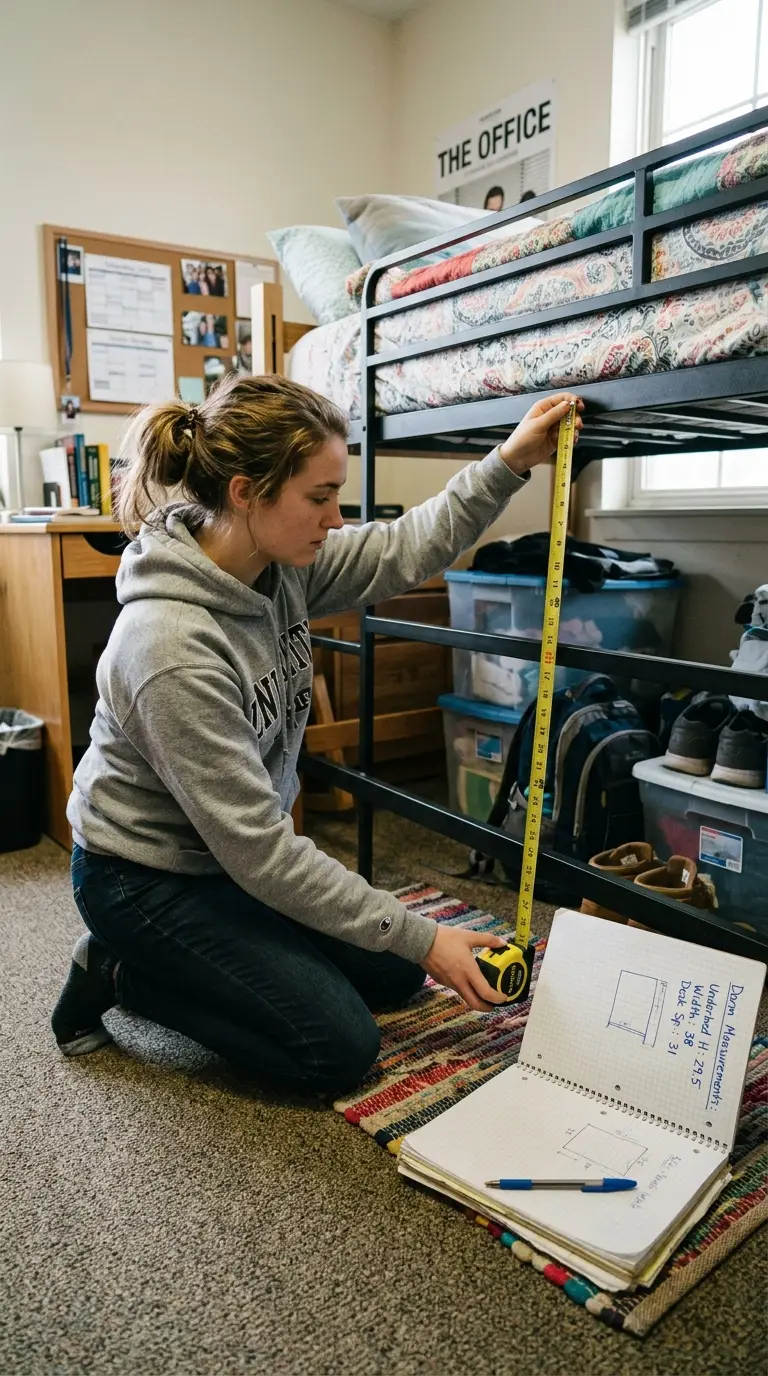
This sounds boring, but it saves so much trouble. Before you order a single storage bin, get the real measurements of your room. Especially the space under your bed and any closet you have. A lot of storage products are made for standard bedrooms, not dorm rooms. They simply won’t fit. Measure the bed frame height too. Under-bed clearance varies a lot between schools, and even between buildings on the same campus, since some use older wood frames with almost no gap and others use metal frames on tall legs with over a foot of open space.
Write these numbers down somewhere you won’t lose them, like your phone notes, before you start shopping. Bring a small notebook with you on move-in day too, in case anything is different from what your school listed online, which happens more often than people expect. A five-minute measuring job now can save you a return shipping headache later, especially if you’re buying storage before you’ve even seen the room in person.
2. Use Every Inch Under the Bed
Under-bed space is usually the biggest storage area you have. A lot of people don’t use it well. Flat storage bins work better than deep ones here, since most bed frames don’t leave much height to work with. Look for bins under 6 inches tall if your clearance is on the tighter side. Check the actual measurement on the listing rather than trusting a photo, since bins can look shallow in pictures and still be too tall in person.
If you can, sort what goes under there by how often you need it. Off-season clothes and extra bedding can go in the back, since you’ll only need to dig those out once or twice a semester. Things you grab often, like shoes or a bag, should stay near the front. That way you’re not pulling everything out just to find one thing. Clear plastic bins make this even easier, since you can see what’s inside without opening every single one.

3. Add Bed Risers for More Room
If your under-bed space is really tight, bed risers are a cheap fix. They lift the bed frame up a few extra inches. That can be the difference between fitting one bin and fitting three. A basic set of four plastic risers usually costs somewhere around $15 to $25, and most add between 3 and 8 inches depending on the style you pick. They’re not exciting to buy, but they solve a real problem that a lot of aesthetic-focused dorm guides skip over completely.
Just double check your school allows them first. A few dorms have rules about raising bed height for safety reasons, especially in older buildings with lower ceilings or if your bed is a loft or bunk style already. It’s better to know before you buy a set than after, since some schools list this in the housing handbook under fire safety or furniture modification rules, not somewhere you’d naturally think to look.

4. Get a Rolling Cart for Things You Use Daily
A small rolling cart is one of the most useful things you can bring to a dorm. It works as extra storage. But because it has wheels, you can also move it wherever you need it, which matters a lot in a room where furniture usually can’t move much at all. Use it near your desk for school supplies. Or in the bathroom area for shower stuff if you share a communal bathroom down the hall, since carrying shampoo and a towel back and forth every day gets old fast without something to roll it on.
Since it rolls, it’s also easy to tuck away in a corner when you don’t need it, which helps on days when you want the room to feel a little more open. Most cost under $30 and fold flat if you need to store one empty over winter break. Look for one with at least three tiers if you can, since a single shelf tends to fill up faster than expected once you start using it daily.

5. Use Wall Space Instead of Floor Space
Floor space in a dorm room disappears fast. That’s what makes walls so important. Command hooks and small floating shelves let you store and display things without taking up any floor space at all, which is one of the few genuinely free wins in a room this small. A shelf above your desk can hold books. Hooks by the door work well for bags, jackets, or a towel, so you’re not tripping over shoes and backpacks every time you walk in.
Just check your dorm’s rules first. Some buildings don’t allow anything that leaves marks on the walls, and a damage fee at move-out is never worth it. Command-brand hooks are usually the safest bet since they’re designed to come off cleanly. But even those can leave a mark on certain painted surfaces if they sit up for a full year. Test one in a low-visibility spot first if you’re worried.

6. Pick a Desk Organizer That Actually Works for You
A messy desk makes a small room feel even smaller. A simple desk organizer, even just a tray or a few small bins, keeps pens, chargers, and papers from spreading everywhere. Try to pick one based on what you actually own, not just what looks nice online. If you have a lot of loose papers, look for something with a flat sorting tray, ideally with two or three slots so bills, assignments, and random flyers don’t all end up in one pile. If it’s mostly small items like pens and sticky notes, a few little cups or bins work better, and you can usually find a decent set for under $15.
Don’t buy a huge organizer just because it looks impressive in photos. A desk organizer that’s too big just becomes its own pile of clutter, and it eats into the small amount of usable desk surface you actually have for studying. A good rule of thumb is picking something that takes up less than a quarter of your total desk space, so there’s still real room left to work.

7. Use a Closet Organizer If Your Closet Is Small
Dorm closets are often narrow and short on shelf space, sometimes with just one rod and nothing else. A hanging closet organizer with several fabric cubbies can double your storage without needing any tools to install, since it just hangs off the existing closet rod. It’s especially useful for folded clothes, shoes, or bags that would otherwise pile up on the floor. A six-shelf version usually runs somewhere between $15 and $25, and it’s one of the better value-per-dollar purchases on this whole list.
These are also easy to take down and pack up at the end of the year, which matters more than people expect on move-out day when you’re trying to clear a room in a few stressful hours. Look for one with adjustable shelf heights if you can. Not everything you own is the same size, and being able to shift shelves around helps a lot more than a fixed layout, especially if you bring bulkier winter items partway through the year that didn’t fit the original setup.

8. Set Up a Small Study Corner, Even If You Don’t Have Much Room
Even a tiny desk can become a real study space if it’s set up right. Keep your most-used school items within arm’s reach. Put anything you rarely need somewhere else, like under the bed or in a closet bin, so your desk surface stays clear for actual work instead of becoming a second storage zone. A small desk lamp helps a lot too, since dorm overhead lighting is usually harsh and not great for reading or studying late at night. A warm-toned bulb, rather than a cool white one, tends to be easier on the eyes during long study sessions.
Try to face your desk toward the wall or a window rather than toward your bed. It sounds small, but a desk facing your bed makes it way too easy to just lie down instead of studying, especially at 9pm after a long day. If your room’s layout genuinely doesn’t allow for that, even angling your chair slightly away from a direct bed view can help more than you’d expect.

9. Keep a Laundry Bag or Hamper That Doesn’t Take Up Much Room
Laundry piles up fast in a small room, and a bulky hamper can eat up space you don’t have. A collapsible or hanging laundry bag works well since it can fold flat or hang on the back of a door when it’s not in use. This keeps dirty clothes contained without needing a big hamper sitting on the floor all the time, taking up space you’d rather use for something else.
Mesh laundry bags are worth considering too, since a lot of shared laundry rooms let you wash directly in the bag for delicates, which saves a step and means fewer stray socks lost in a communal machine. A basic collapsible hamper usually runs $10 to $20. The over-the-door hanging style tends to hold up better over a full year than the ones that just stand on the floor, since floor-standing hampers get knocked around a lot more in a room this size.

10. Split Your Closet in Half If You’re Sharing a Room
If you have a roommate, splitting shared storage clearly from day one saves a lot of stress later. Even something simple, like each person taking one side of the closet or one set of drawers, prevents the slow mess where things get mixed up and nobody knows whose stuff is whose. It also just makes packing up at the end of the year a lot easier, since everything is already sorted instead of needing to be untangled item by item.
Talk about this in the first week, not the third month. Waiting too long usually means things have already started blending together, and untangling a shared mess is a lot harder than starting organized. It also helps to agree early on what counts as shared space, like a mini fridge or a shared shelf, versus what’s strictly one person’s. A quick five-minute conversation on move-in day avoids a lot of the small, annoying friction that builds up over a full semester of living together.

11. Use Drawer Dividers for Small Items
Small stuff like chargers, jewelry, or hair ties tends to end up in one messy pile at the bottom of a drawer. A simple drawer divider, even a cheap plastic or bamboo one, keeps these items sorted and easy to find. It sounds like a small thing, but digging through a junk drawer every morning adds up over a full semester, and losing five minutes hunting for a charger before class gets old fast.
Adjustable dividers are worth the slightly higher price if you can find them, since they let you resize sections as your stuff changes throughout the year. A basic set usually costs under $15 and works in almost any drawer size, from a desk drawer to a dresser. If you don’t want to buy anything at all, a few small boxes or even the lids from shoe boxes work as a free version of the same idea.

12. Don’t Overbuy Storage Before You Move In
It’s tempting to buy a lot of storage bins and organizers before you even see your actual room, but this often backfires. You end up with extra bins that don’t fit anywhere, or the wrong size for your specific closet or under-bed space. Returning bulky storage items is a genuine hassle once you’re already living out of a dorm room with limited packaging on hand.
It’s usually better to bring a few flexible options, like collapsible bins, and buy anything else once you know exactly what your room looks like and how much space you really have. Most college towns have a target or big box store nearby anyway. You can always make a second trip once you actually know what you need. It beats returning three boxes of the wrong-sized bins during your first busy week of classes, when you have far less time and patience for errands than you did before move-in.

Closing thought: A dorm room doesn’t need fancy storage to feel organized. Most of what actually works comes down to using the space you have wisely, especially under the bed and on the walls, and not overbuying before you know your real layout. Get those basics right, and the room will feel bigger than it actually is.


