

A dorm room starts out feeling like nobody’s room at all. White walls, one harsh overhead light, and a bed that looks exactly like the one two doors down. Good dorm lighting and a few personal details are what actually change that. This isn’t about buying a lot of stuff. It’s about picking a few things that make the room feel like yours, without turning move-out day into a nightmare of removing sticky residue from the walls.
1. Swap the Overhead Light for Something Warmer
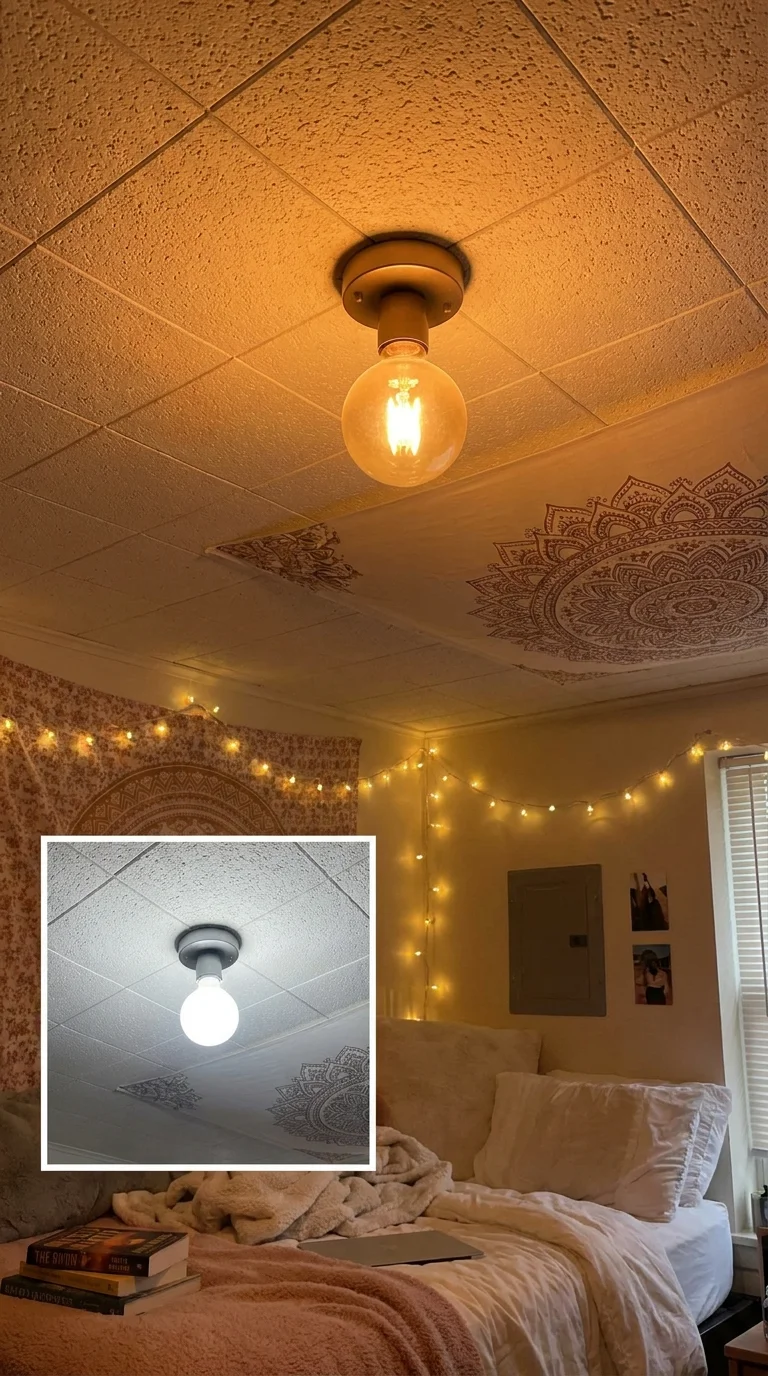
Most dorm overhead lights are bright, white, and pretty unflattering. You usually can’t remove the fixture itself, but you can change what’s inside it. A warm-toned LED bulb, somewhere around 2700K to 3000K on the color temperature scale, makes a huge difference without needing any tools or permission from housing staff. Cool white bulbs, usually 5000K and up, tend to feel more like a hospital hallway than a bedroom, and that difference becomes obvious the moment you switch one out.
Check your lease or housing handbook before swapping anything permanent though. Some dorms don’t allow you to touch the overhead fixture at all. In that case, a lamp becomes your main light source instead, and that’s genuinely fine, since a warm lamp can carry a small room just as well as a ceiling fixture. A basic warm LED bulb costs around $5 to $10, so it’s one of the cheapest fixes on this whole list if your building does allow it, and it takes about thirty seconds to install.
2. Add String Lights the Right Way
String lights are probably the single most common dorm decoration, and there’s a reason for that. They add soft, warm dorm lighting without needing an outlet near your bed, since most run on batteries or a long enough cord to reach a nearby plug. LED string lights run cooler than old-style ones too, which matters since they’ll likely be plugged in for hours at a time, sometimes overnight while you sleep.
Check your school’s fire code before hanging any, since some schools restrict certain types. Older incandescent string lights especially, since they get hot to the touch in a way LED versions don’t. Battery-powered LED strings are usually the safest bet if you’re not sure what your school allows. Use removable adhesive clips instead of nails or tape directly on the wall. Command-brand clips are designed to come off cleanly and won’t leave the sticky residue that regular tape does after eight months on the wall, which matters a lot more than it sounds like on move-in day.

3. Get a Desk Lamp With Adjustable Brightness
A single desk lamp does two jobs at once. It gives you real light for studying, and it becomes a second light source for the room besides the harsh overhead fixture. Look for one with at least two or three brightness settings if you can. Full brightness works for reading small print but feels too intense late at night when you’re winding down before bed.
A decent adjustable desk lamp usually costs somewhere between $15 and $35. Prices depend on whether it has extra features like a USB charging port built in, which is genuinely useful in a room where outlets are often shared with a roommate and everyone’s phone needs charging at once. Warm-toned bulbs work here too, for the same reason they help with the overhead fixture. Look for one with a flexible neck or arm as well, so you can angle the light exactly where you need it instead of it just pointing straight down at one spot on the desk.

4. Try a Himalayan Salt Lamp or Small Accent Lamp
A small accent lamp, like a salt lamp or a simple ceramic table lamp, adds a soft glow to a corner of the room. It doesn’t need to be your main light source to make a real difference. These work well on a nightstand or a shelf. The warm, low light they give off is genuinely different from a lamp meant for reading, since it’s more about mood than function.
Salt lamps specifically run around $15 to $25 for a basic size, and they’re popular in dorm rooms partly because the warm orange glow photographs well. They’re also small enough to fit almost anywhere, even a crowded desk corner or a narrow windowsill. Just don’t rely on one as your only light source if you actually need to see clearly for anything, since they’re genuinely dim, closer to a nightlight than a real lamp. Look for one with a dimmer built into the base if you want a bit more control over how bright it gets.
dorm room storage and layout ideas

5. Build a Photo Wall With Removable Clips or Strips
A cluster of printed photos is one of the fastest ways to make a blank wall feel personal. It costs very little too, if you already have photos saved on your phone. Photo printing kiosks at most drugstores charge around 25 to 35 cents per print. Even fifteen or twenty photos usually costs under $10 total, which makes this one of the cheapest ways to fill wall space on this entire list.
Use photo strips or small removable clips designed for lightweight paper, rather than tape. Tape tends to peel paint when it comes down after a full year on the wall, and that’s exactly the kind of damage that shows up on a move-out inspection. A string with small clips pinned at each end works well too, letting you hang photos like a garland across one section of wall. Leave a little breathing room between photos rather than packing them edge to edge. Some empty wall space actually makes the cluster look more intentional, not less, the same way a gallery wall in a real house has gaps between frames.

6. Add One Piece of Real Wall Art, Not Just Posters
Posters are fine, but one slightly more considered piece of wall art can make a room feel a bit more grown-up. Even a printed art print in a simple frame does this, alongside the more casual stuff like string lights and photos. This doesn’t need to be expensive. A lot of print shops and even some furniture stores sell simple framed prints for $15 to $30, and plenty of artists sell affordable digital prints online that you can print yourself for even less.
Command strips rated for the actual weight of your frame are worth the extra dollar or two over the basic ones. A frame that falls off the wall at 2am is a genuinely bad way to wake up, and it happens more often than you’d think when someone grabs the cheapest strips without checking the weight limit. Check the weight rating on the package and round up if you’re between two sizes, since it’s a small cost difference for a lot less risk.

7. Keep One or Two Real Plants, Not a Whole Collection
A plant or two adds real life to a room in a way that fake decor can’t quite match. But dorm rooms are hard environments for plants. Low light, inconsistent temperatures, and someone who might forget to water for two weeks during finals are all working against you. Pick something genuinely hard to kill, like a pothos or a snake plant, rather than something that needs a lot of direct sun or attention.
A small pothos usually costs $8 to $15 depending on the pot size, and it tolerates missed watering better than almost anything else you could buy. It also grows fast enough that you’ll actually notice progress over a semester, which feels rewarding in a way a plastic plant never will. If your room genuinely gets no natural light at all, a well-made faux plant is a reasonable substitute. Modern ones look far more realistic than they used to, especially the ones with a slightly matte, non-shiny leaf finish.

8. Use a Small Rug to Warm Up the Floor
Dorm room flooring is almost always something hard and cold, whether that’s tile, laminate, or thin industrial carpet. A small rug, even just a 3×5 foot one placed beside the bed, makes a real difference both visually and for your actual feet on a cold morning. It also helps define your side of the room if you’re sharing with a roommate, giving each person a visually separate zone without needing to move any furniture.
Look for one that’s machine washable or at least easy to shake out, since dorm floors get dirty fast with foot traffic in and out all day. A basic rug in that size range usually runs $20 to $40. A jute or braided texture tends to hide dirt better than a plain solid color, especially in a light shade that would otherwise show every mark. Avoid anything with a rubber backing if your floor is a delicate laminate, since some backings can discolor the floor underneath over a long enough stretch of time.

9. Pick a Few Scented Candles or a Reed Diffuser
Smell is an underrated part of making a room feel like home, but a lot of dorms don’t allow open flame candles at all. Check your housing rules before buying any, since this is one of the more commonly enforced fire safety rules in shared housing. A reed diffuser is a safe alternative that gives off a steady, low-key scent without any fire risk, and most last a month or two before needing a refill.
If your dorm does allow candles, keep them away from anything flammable like curtains or paper decorations. Never leave one burning unattended, especially overnight, since that’s exactly the scenario most fire codes are trying to prevent in the first place. A decent reed diffuser costs around $12 to $20. It’s one of the few things on this list that affects how a room feels without taking up any real visual space at all, just a small bottle tucked on a shelf.

10. Personalize Your Door or Whiteboard
The outside of your dorm door is often the first thing anyone sees, including you, every single time you come back to your room. A small whiteboard, a name tag, or even just a few stickers can make it feel less like every other door in the hallway. This is also genuinely useful, not just decorative, since a whiteboard lets roommates or friends leave quick notes when you’re not around.
A basic magnetic whiteboard costs around $8 to $15, and most stick directly to a metal dorm door without any adhesive at all, which sidesteps any concern about damage or sticky residue. If your door isn’t metal, magnetic strips or a small removable hook can hold a whiteboard just as well. A few stickers scattered around it, nothing covering the whole door, usually looks more intentional than either a completely bare door or one covered edge to edge.

11. Don’t Try to Finish the Room in One Weekend
It’s tempting to buy everything on a list like this all at once during move-in weekend. But a room that comes together gradually over the first month or two often ends up feeling more genuinely personal than one assembled all in a single trip to the store. You’ll notice what the room actually needs once you’re living in it day to day, not just imagining it beforehand while scrolling through a shopping list.
Start with the basics, like a decent lamp and maybe one string of lights. Add the smaller personal touches, photos, a plant, a rug, once you’ve spent a week or two in the space and have a better sense of what it’s missing. A room built this way almost always looks more like an actual reflection of the person living in it. That’s a lot different from a one-time shopping trip that happened to include a lot of good dorm lighting but not much thought about how the pieces fit together over time.

Closing thought: A dorm room feels like home once the lighting is warm and a few things in it are genuinely yours, not because of how much you spent decorating it. A warm bulb, a few photos, and one plant that’s still alive by October usually do more than a whole cart of matching decor ever could.


