

Here’s what nobody tells you before move-in day: the bedding you pick in the first week is the one decision that either makes the whole room feel like yours or makes it feel like you’re still borrowing someone else’s dorm. Most beds start the same way — a plastic-wrapped mattress, one thin college-issued sheet, and absolutely no personality. Good dorm bedding is the fastest fix, since it’s the largest visible surface in a room that’s otherwise mostly cinder block and a desk.
The catch is that dorm bedding has to solve two problems most bedroom bedding doesn’t: a nonstandard mattress size, and eight straight months of actual daily use with zero budget for a mid-semester redo. A lot of the “trending” college dorm bedding ideas that show up in a quick search look great in one photo and fall apart by week three. These eleven don’t. Each one is something that either fixes a real fit problem, adds texture that survives real laundry cycles, or fixes a storage issue nobody mentions until they’re already living with it.
1. Get the Twin XL Sizing Right Before Anything Else
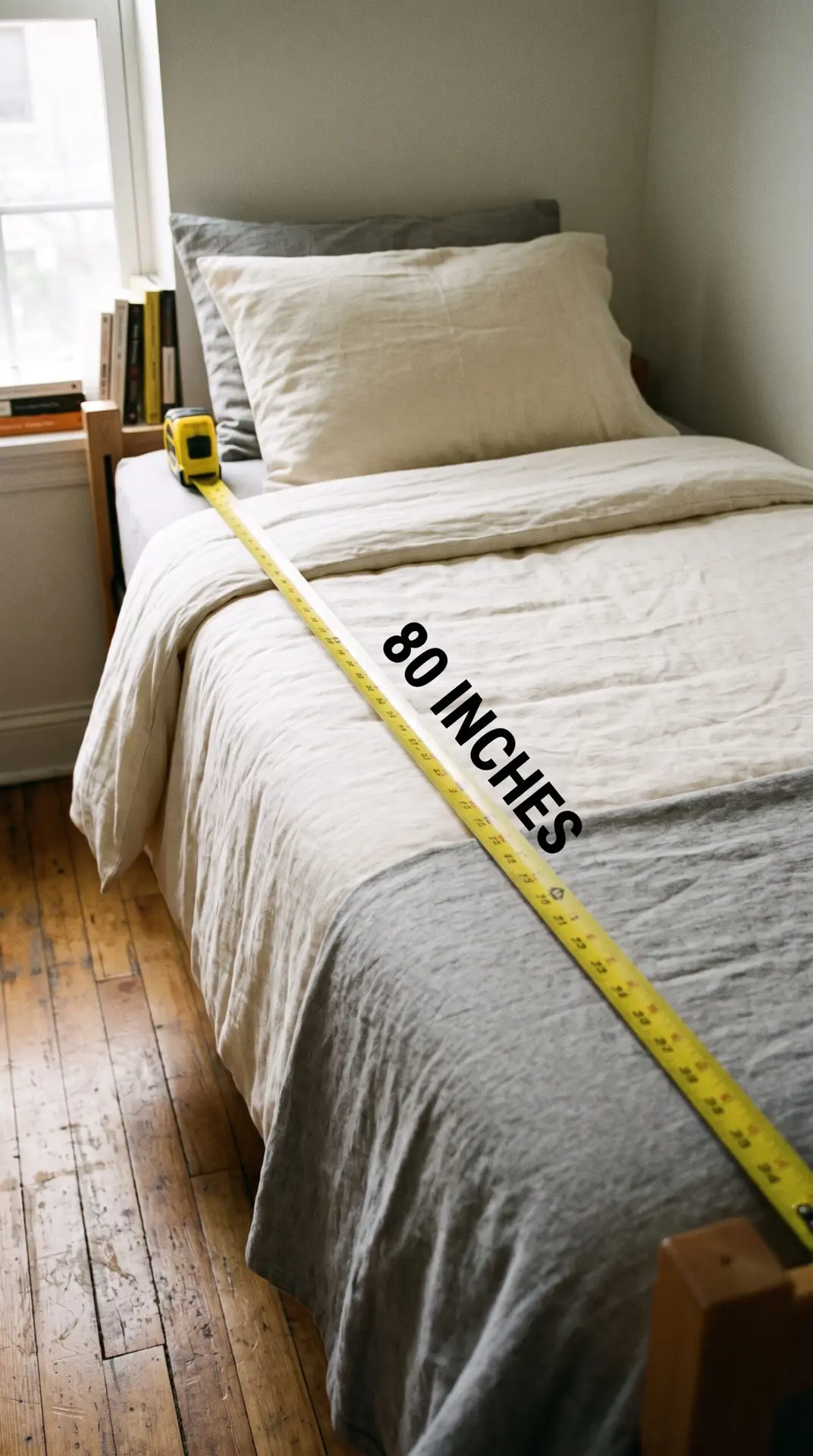
Dorm mattresses are almost always Twin XL — 80 inches long instead of the standard 75-inch Twin. A regular Twin sheet set will be five inches too short and pull off the corners within the first week, usually around the same time as the first real stretch of late-night studying, which is exactly when nobody wants to deal with re-tucking a sheet at 1am. Check your specific school’s housing page before ordering, since a small number of schools — particularly ones with older dorm buildings — use a different length entirely, and returning bedding mid-move-in is a hassle nobody needs during an already chaotic first week. This isn’t a styling choice, it’s the one detail that determines whether anything else on this list actually fits, and it’s worth double-checking even if a sibling or friend at a different school swears their sizing is the same.
2. Prioritize a Mattress Topper Before Anything Decorative
Dorm mattresses are notoriously thin and firm, and it shows within the first month, often as a stiff lower back after a full night’s sleep on what’s essentially a supportive but unforgiving foam block. A 2 to 3 inch memory foam or down-alternative topper genuinely changes how the bed feels to sleep in for the next eight months, and it’s worth buying before spending money on decorative pillows or a matching comforter set. A solid Twin XL topper generally runs somewhere between $30 and $70 depending on thickness and material, which is a small price relative to how much time gets spent in that bed over two semesters. Down-alternative tends to sleep cooler and is easier to wash at a laundromat than dense memory foam, which is worth factoring in if the dorm runs warm. This is the one item on this list that’s about function first — everything layered on top of it will also look better once there’s actual volume under the sheet instead of a flat, thin mattress silhouette, since a topper adds a visible loft that makes the whole bed read as fuller and more finished even before any decorative pieces go on.

3. Layer Textures Instead of Buying One Matching Set
A single bagged comforter set looks fine on day one and flat by week three, mostly because most dorm bedding sold as a matched bundle is designed to look complete in a product photo, not to hold visual interest once it’s the same thing seen every day for months. Layering fixes that: a fitted sheet, a lightweight comforter or duvet, a folded quilt or throw at the foot of the bed, then two to three pillows in varied textures — a knit pillow next to a velvet one next to a plain cotton sham. The specific pieces matter less than the fact that multiple textures are working together rather than one flat, uniform surface. A good rule of thumb is at least three distinct textures visible at once — smooth, ribbed, and something with visible weave or nap — which is usually enough to avoid the flat, one-note look without requiring a large number of pieces. This single shift is the difference between a bed that reads as “matching set from a bag” and one that reads as personally put together.

4. Add a Chunky Knit Throw at the Foot of the Bed
A chunky knit throw blanket earns its reputation as one of the highest-impact, lowest-cost additions for a dorm bed. It adds visible texture without needing to match anything precisely, and it works with almost any color scheme since chunky knits usually come in fairly neutral, versatile tones like oatmeal, cream, or soft gray. Drape it loosely across the foot of the bed rather than folding it into a flat rectangle — a loose drape with a bit of visible texture and some natural folds reads as intentional, while a stiff, hospital-corner fold reads as an afterthought, almost like it’s still in the packaging. A good chunky knit throw typically falls in the $20 to $40 range, and if the budget allows for only one purely decorative item on this whole list, this is the one worth prioritizing, since it does more visual work per dollar than almost anything else here.

5. Choose One Dominant Palette, Not Five Competing Colors
Neutral dorm bedding — cream, oatmeal, warm white, soft gray — is the safer long-term bet, mostly because it means color can be added through pillows and a rug without a full re-buy every semester, and it also tends to photograph more consistently under a dorm room’s often mismatched lighting (fluorescent overheads plus whatever lamp gets added). That said, a fully committed color choice, like blush pink with warm gold accents, or deep sage with cream, can look genuinely distinctive and photograph better, if the rest of the room gets built around it deliberately — meaning the curtains, rug, and desk accessories echo the same one or two tones rather than introducing new ones. The actual mistake isn’t choosing bold color — it’s choosing several unrelated bold colors at once with no single dominant tone tying them together, which is the fastest way to make a small room feel chaotic rather than curated. Pick one color to lead, and let neutrals do the supporting work around it.

lighting and personal touches that finish the room
6. Choose Fabric Based on How You’ll Actually Use It
Cotton percale sheets breathe better and feel cooler against skin, which genuinely matters if a dorm doesn’t have reliable climate control during a hot September or a stuffy shared building with old radiators. Microfiber is cheaper and more wrinkle-resistant, and it holds up well to frequent shared-laundry washing, but it sleeps noticeably warmer, which can be a real problem in a top-floor room with west-facing windows. Sateen sits in between the two — a slight sheen, a smoother hand-feel than percale, and a mid-range price point, though it wrinkles more visibly than microfiber. A decent Twin XL sheet set generally costs $25 to $50, so owning two — one on the bed, one in the wash — is a modest expense that solves a real problem: if laundry happens on a shared machine on a fixed schedule, a second set means never being stuck sleeping on a bare mattress on wash day, a small logistical detail that’s easy to overlook while shopping purely for how something looks in a listing photo.

7. Use Vacuum Storage Bags for Anything Bulky
Under-bed clearance is one of the few genuinely useful storage zones in a dorm room, and vacuum-seal storage bags are worth the small upfront cost for anything bulky — an extra comforter, off-season clothes, spare pillows. They compress items down to a fraction of their original size, which matters when under-bed clearance might only be six to eight inches depending on how tall the bed frame’s risers are. This is a detail that rarely shows up in styling-focused advice but makes a real practical difference by week two of actually living there.

8. Add Risers If Storage Space Is Tight
Bed risers are a small, inexpensive addition that solves a real problem: most standard dorm bed frames sit low enough that under-bed storage bins barely fit, if at all. A set of risers adds another 4 to 6 inches of clearance, which is often the difference between fitting one storage bin or fitting three. They’re rarely mentioned in dorm decor content because they’re not visually exciting, but they directly affect how much of the layering and storage advice above is even possible to execute.

9. Pick a Bed Skirt or Leave the Frame Visible on Purpose
A bed skirt hides under-bed storage completely, which some people prefer for a cleaner look, while others prefer leaving the frame and storage bins visible and simply keeping them tidy and matched in color. Neither choice is more “correct” — a bed skirt tends to suit a softer, more traditional bedding style, while a visible frame suits a more minimal or industrial look. The mistake is doing neither and ending up with mismatched bins in random colors visible underneath an otherwise carefully styled bed.

10. Know Which Trending Items Are Actually Worth Buying
Not every trending dorm item earns its space in a small room. Elaborate bed canopies look good in a single photo but tend to become a dust magnet and, in a lot of dorm handbooks, a genuine fire-code gray area — worth checking a school’s actual housing policy before buying one. Overly matched bedding-curtains-rug bundles from a single retailer often end up looking more like a hotel chain than a personal space; mixing sources, even slightly, tends to read as more considered. A canopy skipped and a throw pillow from a different store than the comforter are both small choices that add up to a room that looks lived-in rather than shrink-wrapped.

11. Build for November, Not Just Move-In Day
The actual goal with dorm bedding isn’t a photo-perfect room on move-in day — it’s a bed that still looks and feels good after three exam weeks and a dozen loads of shared laundry. That mostly comes down to picking a smaller number of genuinely durable, well-chosen pieces over a large number of matching but flimsy ones. A good topper, two solid sheet sets, one great throw, and pillows in materials that hold up to actual use will still look intentional in the middle of a stressful December, which is really the only real test a dorm room styling choice needs to pass.

Closing thought: Good college dorm bedding doesn’t need to look like a catalog spread to feel good to come back to after a long day of classes. Getting the Twin XL sizing right, layering real texture, and skipping the items that only work for one photo will do more for a room over eight months than any single trending purchase.


