

My bedroom used to be the last room I thought about. Every decorating decision went toward the living room, the kitchen, the spaces guests would actually see. The bedroom got whatever was left over. A mismatched duvet. Furniture from three different periods of my life. A lamp that worked but did nothing for the atmosphere. The room was fine in the practical sense. It had a bed. It had storage. It had absolutely no warmth.
It was not until a particularly difficult winter that I started paying attention to it properly. I was spending more time in there reading, resting, taking the evenings slowly, and I realized the room was not supporting any of that. Everything about it felt temporary, like I had never quite decided to commit to the space.
Slowly, without spending a great deal, I started changing things. The bedding came first. Then the lighting. Then small details that felt personal and deliberate. The difference was not dramatic in the way a renovation is dramatic. It was quieter than that. The room started to feel like somewhere I actually wanted to be, not just somewhere I ended up at the end of the day.
These 17 ideas reflect what actually made the difference, in a real bedroom, over real time.
1. Layer Your Bedding Thoughtfully
The bed is the most important surface in the bedroom, which means it deserves more thought than most people give it. A single duvet in a single fabric tone, regardless of how well chosen, rarely creates the warmth and visual depth that a properly layered bed achieves.
Layering means combining textures and tones intentionally. A fitted sheet in crisp cotton beneath a linen duvet, a lighter blanket folded at the foot, a knit or waffle throw draped casually across one corner. Slightly varied neutral tones read richer than a perfectly matched set. The slight variation between warm white, soft cream, and pale linen is what creates depth rather than flatness.
Key Design Tips
- Combine at least three different textures: cotton, linen, and a knit or waffle weave work beautifully
- Stay within two to three tones of the same warm neutral family for a cohesive, layered result
- Fold the top sheet down over the duvet for a hotel-inspired but genuinely approachable finish
- Add euro shams behind standard pillows to build height and softness at the headboard
- Allow the throw to drape naturally and slightly off-center rather than folding it with precision

2. Invest in Warm Bedside Lighting
Overhead bedroom lighting is one of the most common decorating mistakes made in otherwise thoughtfully designed spaces. A single ceiling fixture illuminates the room evenly and harshly, which is the opposite of what a bedroom atmosphere actually needs in the evenings.
Bedside lamps change everything. They create a lower, warmer, more intimate level of light that suits the way people actually use their bedrooms after dark. Reading, winding down, resting. The scale of a bedside lamp matches the scale of the activity, unlike overhead fixtures which feel more suited to kitchens than sleeping spaces.
Choose warm amber bulbs, generous lamp shades in cream or linen, and bases in ceramic, wood, or warm-toned metal for the most effective result.
Key Design Tips
- Use bulbs between 2700K and 3000K for the warmest, most flattering bedside light
- Choose lampshades in cream or warm linen rather than white to diffuse light softly rather than brightly
- Match bedside lamps loosely in style even if they differ slightly in height for an editorial asymmetric look
- Add a dimmer switch if possible for flexible brightness control throughout the evening
- A wall-mounted sconce beside the bed frees up nightstand surface space while adding light at the right height

3. Choose Natural Wood Furniture
Wood introduces a quality of warmth and organic character into a bedroom that painted or lacquered furniture rarely achieves. The natural grain variation, the slight imperfection in timber surfaces, the way wood tones shift in different light throughout the day all contribute a visual richness that manufactured finishes cannot fully replicate.
A wooden bed frame is the most impactful single investment. A walnut nightstand, a simple timber dresser, a wooden tray on the bedside surface. These elements accumulate into a room that feels grounded and genuinely warm rather than assembled from a catalogue. Wood also ages well inside a well-used bedroom, which means it only becomes more characterful with time.
Key Design Tips
- Walnut, natural oak, and warm-toned pine are the most versatile choices for cozy bedroom furniture
- Mix one dominant wood tone with a secondary complementary tone for depth without visual confusion
- A wooden bed frame is the single most impactful timber investment available in any bedroom
- Pair natural wood consistently with linen, cotton, and wool fabrics for a cohesive warm result
- Avoid mixing natural wood with chrome or cold metal finishes as they interrupt the warmth immediately

4. Add a Generous Soft Rug
Stepping onto cold hard flooring first thing in the morning sets a tone for the start of the day that has nothing to do with warmth or comfort. A soft rug beneath and beside the bed changes this entirely and it changes it before a single other decorating decision needs to be made.
Beyond the physical comfort, a rug visually anchors the bed and the surrounding space. Without one, furniture tends to look like it is floating above the floor without connection or intention. A generously sized rug that extends well beyond the bed on each side makes the entire sleeping area feel unified, grounded, and considered.
Key Design Tips
- Extend the rug at least 18 to 24 inches beyond each side of the bed for a generous, grounded effect
- Warm ivory, oatmeal, cream, and soft taupe tones work beautifully in most cozy bedroom palettes
- High-pile and bouclé rugs add the most physical softness underfoot on cold mornings
- Layer a smaller textured rug over a larger natural jute base rug for added depth and visual interest
- Avoid rugs that are too small as they make the bed look visually disconnected from the floor

5. Hang Soft Floor-Length Curtains
The windows of a bedroom have a bigger influence on atmosphere than most people account for in their decorating decisions. Short curtains or blinds alone can make a bedroom feel unfinished, slightly clinical, and lacking in the softness that a genuine sleep and rest environment needs.
Floor-length curtains hung as high as possible, ideally close to the ceiling line, change the proportions of the entire room. The ceiling appears higher. The window feels more generous. The fabric softens the hard lines of the wall and filters light in a way that suits the quieter pace of a bedroom.
Linen, cotton voile, and soft velvet all work depending on how much privacy and light control the room needs daily.
Key Design Tips
- Mount curtain rods as close to the ceiling line as possible to maximize the sense of height
- Choose curtains at least one and a half to double the window width for a full and generous hang
- Warm cream, soft white, and dusty linen tones work best for a cozy, light-enhancing bedroom
- Allow curtains to just touch or slightly pool at the floor for the most elegant, settled finish
- Layer a sheer curtain behind heavier drapes for flexible light control at different times of day

6. Create a Dedicated Reading Corner
A reading corner does something to a bedroom that goes beyond providing a place to sit. It creates a sense of intention. It signals that this room is designed for more than sleeping. It gives the space a second focal point and a second reason to be in the room that adds genuine daily value.
The corner does not need to be large or expensive to achieve this. A comfortable armchair with a soft cushion and a good lamp beside it is genuinely enough. A floor cushion with a wooden tray beside it works too. The important part is that it feels dedicated to the purpose of slowing down, which is what a cozy bedroom is fundamentally built around.
Key Design Tips
- Choose a deep, enveloping chair over a slim decorative one for genuine everyday comfort
- Position the lamp directly beside and slightly behind the chair for the most comfortable reading angle
- A small side table is essential even if it is only large enough for one book and one drink
- Drape a throw over the chair arm for both visual warmth and practical cozy use
- Even a corner with only a floor cushion, a lamp, and a plant creates the same quality of intention

7. Mix Textures Deliberately
A bedroom decorated in a single texture, no matter how beautiful that texture is, almost always feels flat. Texture is what carries warmth on a sensory level in a way that color alone does not. It is felt as much as seen. It changes how lamplight falls across surfaces in the evening and how the room reads during natural daylight hours.
The goal is deliberate contrast. Smooth cotton sheets beside a rough linen duvet. A velvet cushion beside a woven one. A polished wooden nightstand beside a chunky knit throw. Each contrast creates a small moment of visual interest that accumulates across the room into a genuine sense of warmth and richness.
Key Design Tips
- Aim for at least four visibly different textures across the bed, the floor, the walls, and the furniture
- Velvet, linen, cotton, knit, and natural wood are the most effective cozy bedroom texture combination
- Contrast smooth and rough surfaces deliberately as intentional contrast is what creates visual depth
- A textured rug beneath the bed grounds the entire texture conversation happening above it
- Avoid matching textures too closely as the similarity removes the warmth that contrast creates

8. Use Candles and Soft Scent
A bedroom that smells right feels right in a way that purely visual decorating never fully achieves. Scent is one of the most underused tools in bedroom styling despite being one of the most powerful contributors to the overall sense of calm and comfort.
Candles contribute both scent and atmosphere. The warm glow of a lit candle on the nightstand, the subtle fragrance building slowly in a small room, the way the flame moves gently against the wall. These sensory details signal to the body that the space is for resting. Unlit candles also work as decorative objects with warmth and texture even when they are not burning.
Key Design Tips
- Choose warm, grounding scents like sandalwood, cedar, vanilla, and amber for bedroom use
- Group two or three candles together rather than placing single ones alone for a more considered look
- Use ceramic, matte glass, or natural stone holders that complement the bedroom palette
- A reed diffuser provides continuous scent without requiring daily lighting
- Keep candles at safe distances from bedding and curtains and always extinguish before sleeping

9. Paint Walls in a Warm, Inviting Tone
Wall color sets the emotional temperature of a bedroom before a single piece of furniture or textile enters the space. Cool grey and stark white walls are safe and neutral but they rarely feel genuinely warm or cozy regardless of what is added around them.
Warm wall tones do something fundamentally different. Soft cream, warm white with yellow undertones, dusty blush, warm taupe, terracotta, and sage green all contribute a sense of grounded comfort that cool tones simply cannot replicate. The room starts feeling warm as soon as you open the door, which is the quality a bedroom most needs to achieve.
Paint is one of the most affordable and most impactful changes available in any bedroom.
Key Design Tips
- Test paint tones in both natural daylight and warm evening lamplight before committing to the full room
- Warm white with yellow or red undertones reads far more cozy than cool or blue-based whites
- Sage green, warm taupe, and soft terracotta are the current most popular cozy bedroom palette choices
- Paint one wall a slightly deeper version of the main color for a subtle, considered tonal variation
- Matte and eggshell finishes on bedroom walls absorb light softly and look more atmospheric than gloss

10. Style the Nightstand With Care
The nightstand is one of the most personally used surfaces in the entire home. It holds the things that accompany the beginning and end of every day. It is also one of the most over-cluttered or under-considered surfaces in most bedrooms, tipping either into a dumping ground or an empty afterthought.
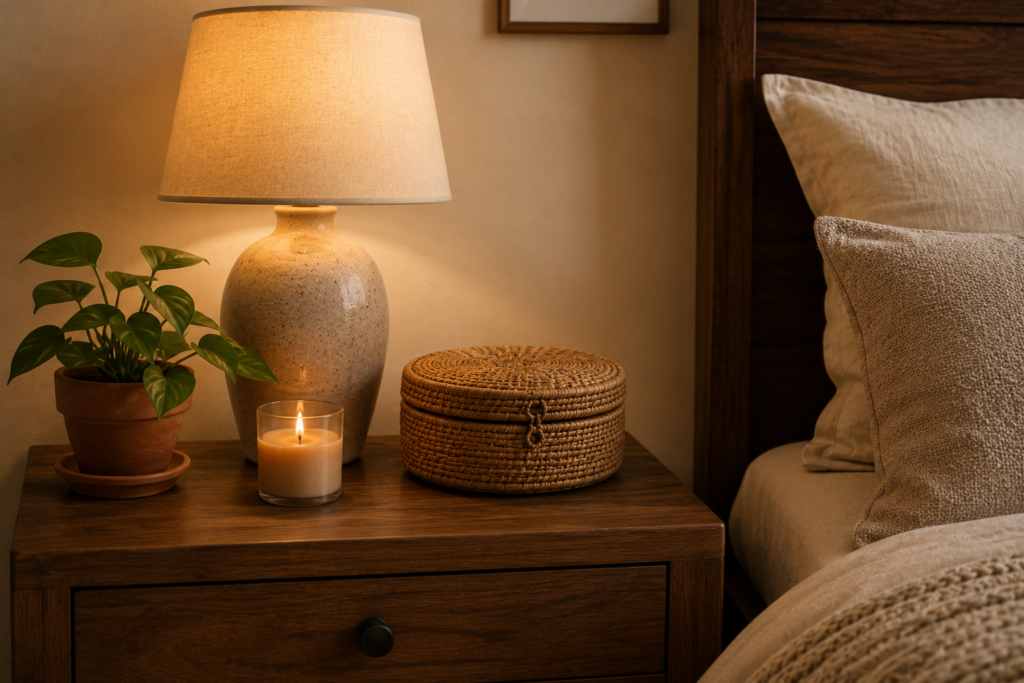
A thoughtfully styled nightstand contributes meaningfully to how the bedroom feels. A lamp that works at the right height. A small plant or a stem in a simple vase. A book that is genuinely being read. A candle or a small ceramic object. A tray to organize and contain. None of these need to be expensive. All of them matter more than people expect.
Key Design Tips
- Use a small wooden or ceramic tray to organize items and prevent the surface feeling scattered
- Limit the nightstand to five or six objects at most for a clean, considered, and calm look
- A small trailing plant or a simple stem in a bud vase adds genuine life to the surface
- Choose a lamp that sits at roughly shoulder height when lying down for the most comfortable reading light
- Rotate nightstand objects occasionally to keep the surface feeling fresh and personally relevant

11. Bring Plants Into the Bedroom
Plants in a bedroom are one of those additions that earn their place through the quality of presence they bring rather than through any specific practical function. They introduce organic movement, a sense of living warmth, and a quiet freshness that manufactured decorative objects cannot replicate in the same way.
A trailing pothos on a shelf above the bed. A large snake plant in the corner beside the window. A small succulent on the nightstand in a warm terracotta pot. None of these require significant maintenance and all of them change the feeling of the bedroom in a direction that feels natural and genuinely calming.
Key Design Tips
- Snake plants, pothos, peace lilies, and Boston ferns all thrive in typical bedroom light conditions
- Use terracotta, ceramic, and woven pot covers that align naturally with warm bedroom palettes
- A large statement plant in one corner adds more visual impact than several small scattered plants
- Trailing plants on high shelves cascade beautifully and fill vertical wall space naturally over time
- Position plants near the window but away from direct harsh sunlight for the most balanced growth

12. Invest in a Statement Headboard
A headboard shapes the visual experience of the bedroom’s most important wall. It sits at the center of the room’s primary focal point and influences how the entire sleeping area feels, whether it reads as considered and complete or as assembled and unfinished.
An upholstered headboard in a warm fabric adds softness and a sense of luxury that wood slats or bare walls behind the bed cannot provide. Height matters significantly. A taller headboard draws the eye upward, gives the wall more presence, and makes the bed feel like a genuine destination in the room rather than simply a piece of furniture placed against a wall.
Key Design Tips
- Upholstered headboards in linen, bouclé, or velvet add warmth and softness to the main bedroom wall
- Choose a headboard height that fills at least two thirds of the wall from mattress level upward
- A neutral headboard in cream, warm grey, or soft sage suits most cozy bedroom color palettes
- Panel or tufted detailing adds tactile interest that remains beautiful and visible in low evening light
- Ensure the headboard is proportionate to the bed width, extending slightly beyond each side reads most elegant

13. Use Mirrors to Expand and Warm the Space
Mirrors in a cozy bedroom serve a different purpose than mirrors in other rooms. Rather than simply reflecting light to brighten the space, a well-placed mirror in a warm bedroom creates depth, makes the room feel larger than it measures, and reflects the warm lamplight back across the space in a way that contributes to the overall atmosphere.
An oversized leaning mirror in a warm-toned frame against the wall beside the wardrobe. A round mirror with a rattan or brass surround above the dresser. A small decorative mirror catching the bedside lamp glow on the shelf. Each one adds a moment of warmth and visual complexity that the room benefits from quietly.
Key Design Tips
- Antique or lightly aged mirror glass suits cozy bedroom aesthetics far better than sharp modern glass
- Lean a large floor mirror against the wall rather than mounting it for an effortless, editorial look
- Position mirrors to reflect lamplight rather than windows for the warmest possible evening effect
- Rattan, warm brass, and natural wood frames complement cozy bedroom palettes most naturally
- Avoid placing a mirror directly opposite the bed where reflections can disrupt sleep quality

14. Keep Technology Minimal and Hidden
Every piece of technology left visible in a bedroom pulls the room slightly in the direction of function and away from the direction of rest. Charging cables on the nightstand, a bright television screen on the opposite wall, a laptop left open on the bed. Each of these is a small but consistent reminder that the space is connected to productivity and demands rather than exclusively to rest.
Removing or concealing technology changes the bedroom’s emotional quality in a way that is surprisingly immediate. Cables in a basket. Screens turned away or covered when not in use. Phones charged outside the room. The bedroom breathes differently when it is protected from the visual noise of daily digital life.
Key Design Tips
- Store chargers and cables inside a small lidded basket or decorative box on the nightstand
- Consider charging phones outside the bedroom to reduce both distraction and disruptive light
- If a television is present, mount it on the wall and run cables inside the wall for a clean look
- Enable night mode on all screens after sunset to reduce harsh blue light in the sleeping environment
- A simple woven or wooden box on the dresser corrals technology out of sight effectively and neatly
15. Add Soft, Personal Wall Decor
Bedroom walls contribute significantly to how the space feels emotionally even when they are not the primary focus of attention. Bare walls in a bedroom feel unfinished and slightly impersonal. Overly busy walls feel loud and restless. The right amount of thoughtful wall decor strikes a balance between warmth and calm.
Simple prints in warm earth tones, a framed photograph that means something real, a single botanical illustration, a small woven wall hanging in natural fibre. These additions do not need to be expensive or grand to be effective. They need to feel like they belong to the person and the room rather than having been placed there purely to fill space.
Key Design Tips
- Choose artwork with warm, muted, or earthy tones that support the bedroom’s calming atmosphere
- A single large piece reads stronger and more intentional than multiple small pieces scattered across the wall
- Hang art at eye level when standing, most people hang art too high instinctively
- Lean larger framed prints against the wall rather than mounting them for an easy, editorial feel
- A small gallery of three to five framed pieces above the dresser adds character without overwhelming the wall

16. Introduce Warm Scented Details
Beyond candles, there are quieter ways to bring natural warmth and scent into a bedroom that become part of its daily character. A sachet of dried lavender tucked behind a pillow. A small bowl of dried botanicals on the dresser. A wooden diffuser on the nightstand with a calming essential oil blend.
These small scented details do not demand attention the way a lit candle does. They work in the background, contributing to the feeling of the room in a way that registers almost subconsciously. Walking into a bedroom that smells naturally warm and clean triggers a sense of comfort that purely visual decorating cannot fully replicate or replace.
Key Design Tips
- Lavender, chamomile, and eucalyptus are the most calming natural scents for bedroom use
- A ceramic or wooden reed diffuser suits bedroom surfaces more elegantly than plastic alternatives
- Dried lavender sachets tucked between pillowcases add scent that releases gently through the night
- Avoid overly strong or synthetic fragrances in bedrooms as they can disrupt rather than support sleep
- Replace or refresh scented elements regularly as they lose potency and can become unpleasantly stale

17. Let the Bedroom Feel Genuinely Yours
A bedroom can be beautifully decorated and still feel like it belongs to nobody in particular. That is a specific kind of decorating failure that arrives when every decision has been made according to what looks good rather than what feels personally true.
A cozy bedroom is ultimately a personal one. The books on the nightstand that are actually being read. The plant that someone has genuinely been watering for months. The worn throw that is loved precisely because it has been used so often. These details cannot be purchased or arranged perfectly. They accumulate through honest daily use of the space.
The most inviting bedrooms are always the most honest ones.
Key Design Tips
- Display one or two genuinely meaningful personal objects rather than purely decorative ones
- Allow the room to develop its character gradually rather than forcing a finished, staged look immediately
- Let favorite objects remain visible even when they do not perfectly match the rest of the palette
- Avoid over-styling to the point where the room stops reflecting the person sleeping in it each night
- Revisit the room seasonally and remove anything that no longer feels personally meaningful or right


