

I spent about three months saving bedroom inspiration images before I realized none of them were actually helping me. Every photo looked beautiful. Every room looked warm and considered and exactly like the kind of space I wanted to wake up in. But when I tried to recreate even small pieces of what I was seeing, something always felt off. The textures looked right in isolation but flat together. The colors worked on screen but felt cold on the wall. The room looked like an attempt rather than a result.
The problem was that I was chasing an aesthetic without understanding what actually created it. Cozy bedroom aesthetics are not about copying a specific look. They are built from a series of small decisions that work together to create a particular feeling. Warmth. Shelter. Quiet. The sense that the room belongs entirely to the person living inside it.
Once I started thinking about feeling rather than appearance, the decisions became easier and the results became more consistent. The bedroom stopped looking like a work in progress and started feeling like a genuine space. Not a styled one. A lived one.
These 19 ideas focus specifically on the aesthetic building blocks of a cozy bedroom, the details that create atmosphere rather than simply filling space.
1. Commit to a Hygge-Inspired Atmosphere
Hygge is a Scandinavian concept that roughly translates to a quality of coziness and comfortable conviviality. In bedroom terms, it means designing the space around comfort, warmth, and the pleasure of simply being there rather than around visual perfection or impressive design statements.
A hygge bedroom prioritizes soft blankets over perfectly matched bedding. It keeps the lighting low and warm. It has books nearby and candles within reach. It feels slightly imperfect in the way that genuinely comfortable spaces always do. The aesthetic is deliberate but the feeling is effortless.
This philosophy is worth understanding before any other decorating decision is made because it shifts the entire goal of the room from looking cozy to genuinely being cozy.
Key Design Tips
- Prioritize physical comfort in every furniture and textile decision over purely visual appeal
- Keep lighting sources low, warm, and multiple rather than relying on a single bright overhead fixture
- Allow intentional imperfection: a rumpled throw, a half-read book, a used candle all belong here
- Edit the room down to only what brings genuine comfort and remove anything that feels obligatory
- A hygge bedroom should feel slightly different from how it photographs, warmer and more personal

2. Build a Tonal Monochromatic Palette
A monochromatic bedroom does not mean a boring one. It means a room where every element lives within the same color family, varying in tone and shade rather than introducing competing hues. Done well, it is one of the most quietly sophisticated and genuinely cozy approaches to bedroom color available.
Imagine every surface, from the walls to the bedding to the rug to the lampshade, sitting within a range of warm cream through soft caramel through muted biscuit. The eye moves across the room without interruption. Nothing pulls attention away from the whole. The room feels unified in a way that multi-color approaches rarely achieve, and that unity reads as calm and deeply restful.
Key Design Tips
- Choose one warm base tone and vary it by at least three shades from light to slightly deeper
- Introduce variation through texture rather than color, smooth beside woven beside knit
- Use the lightest tone on the walls and ceiling to keep the space feeling open rather than closed
- Bring in the deepest tone through small accents like cushions, a throw, or a plant pot
- Avoid introducing a single contrasting color as it will immediately disrupt the tonal calm

3. Add Soft String Lights for a Gentle Glow
String lights are one of those details that can look either genuinely beautiful or slightly juvenile depending entirely on how they are used. The difference is placement and restraint. A tangled ball of fairy lights around a headboard reads as an afterthought. String lights draped thoughtfully along a shelf, wound gently through a plant, or hung in a single soft line above the bed read as something else entirely.
In a cozy bedroom aesthetic, string lights contribute the softest possible layer of warm ambient light. They sit below the level of lamps and candles in terms of brightness, which makes them ideal for the final moments before sleep when even a bedside lamp can feel too bright and too direct.
Key Design Tips
- Choose warm white or amber-toned string lights rather than cool or multicolored options
- Drape along the top edge of a floating shelf or headboard rather than bunching in one spot
- Use string lights with small globe or Edison bulb shapes for a more considered, editorial look
- Pair with a simple timer so they turn off automatically without requiring attention at bedtime
- Avoid overusing string lights in a single room as they lose their atmospheric quality when overdone

4. Use Wallpaper to Create an Intimate Backdrop
A painted wall is beautiful and versatile. A wallpapered wall is something more. Wallpaper behind the bed, used on the headboard wall only, creates a focal point with depth and texture that paint alone cannot achieve. It gives the room an interior design quality that feels considered and complete rather than simply decorated.
For a cozy bedroom aesthetic, the right wallpaper choices are botanical prints in soft earthy tones, textured grasscloth in warm neutral, subtle linen-effect papers, or tonal abstract patterns in cream and warm greige. The wallpaper does not need to be bold to be effective. Quiet wallpaper in the right tone transforms the wall into a warm, atmospheric backdrop for the bed.
Key Design Tips
- Limit wallpaper to the headboard wall for impact without overwhelming a smaller bedroom
- Grasscloth and linen-texture wallpapers add warmth and tactile interest without a strong pattern
- Botanical and nature-inspired prints in muted earth tones suit cozy bedroom aesthetics beautifully
- Match wallpaper paste color to the background tone for seamless seams on patterned papers
- Choose a wallpaper that works in both natural daylight and warm lamplight before committing

5. Add an Upholstered Bench at the Foot of the Bed
A bench at the foot of the bed is one of those additions that seems like a purely aesthetic choice until you have one and realize how practically useful it is daily. A place to sit while putting on shoes. Somewhere to lay out tomorrow’s clothing. A surface for the throw that inevitably migrates off the bed through the night.
Beyond its function, a well-chosen bench completes the bed visually in a way that nothing else quite does. It gives the sleeping area a sense of formality and intention without feeling stiff. An upholstered bench in linen, bouclé, or velvet adds softness and another layer of texture to a room already built around tactile warmth.
Key Design Tips
- Choose a bench length roughly two thirds of the bed width for the most proportional look
- Upholstered finishes in linen, bouclé, or velvet add the most warmth and visual softness
- Natural wood or simple metal legs keep the bench feeling grounded and not too decorative
- Use the bench surface to style a neatly folded throw and one or two cushions for a finished look
- Keep the bench surface edited and practical rather than using it purely as additional display space

6. Transform a Window Into a Cozy Nook
A window seat is one of the most desired features in a bedroom and one of the most underused when it exists. Most people use a window ledge for plant storage at best. Transforming that window area into a dedicated cozy nook, a cushioned seat with a view and soft pillows propped against each side, creates one of the warmest and most personal corners a bedroom can contain.
Even without an architectural window seat, a low bench pushed against a window with cushions and a throw achieves something similar. The combination of natural light, a comfortable sitting position, and a view outward creates a space that feels separate from the rest of the bedroom in the most inviting way.
Key Design Tips
- A custom foam cushion cut to fit the window ledge depth makes any window seat genuinely comfortable
- Use two or three cushions propped against the side walls for a comfortable, supportive lean
- Keep the window nook palette light and airy to complement the natural light it receives
- Add a small side table or a wall-mounted shelf nearby for a book and a drink
- Sheer curtains that can be drawn around the nook create a genuinely private, sheltered feeling

7. Hang Woven and Textile Wall Art
Woven wall hangings and macrame panels bring something to a bedroom wall that framed prints cannot replicate. They introduce genuine texture into a vertical surface. They move very slightly in air currents in a way that animates the wall without requiring anything electronic. They absorb sound softly, which contributes to the quieter, more settled acoustic quality that cozy bedrooms benefit from.
A large woven piece in natural fibre above the bed works as a headboard alternative or as a complement to one. Smaller woven pieces grouped with framed prints on a gallery wall add organic dimension. The key is choosing pieces in natural, warm tones that belong to the room’s palette rather than competing against it.
Key Design Tips
- Choose woven pieces in natural cotton, wool, and jute in warm cream, oatmeal, and earthy brown tones
- A large single woven piece reads stronger and calmer above the bed than multiple smaller ones
- Mix woven wall art with framed pieces on a gallery wall for an interesting combination of textures
- Hang woven pieces at the same center height as surrounding framed artwork for visual consistency
- Natural fibre pieces age and soften beautifully over time, adding character that new pieces lack

8. Introduce One Vintage or Antique Accent
New rooms can feel slightly flat in a way that is difficult to identify until a single older object enters the space and changes everything. A vintage piece, whether it is a worn leather chair, an antique wooden mirror, a pair of old brass candlesticks, or a ceramic lamp with a history, introduces a quality of depth and character that brand new objects consistently lack.
In a cozy bedroom aesthetic, one genuine vintage accent grounds the room in a way that prevents it from feeling like a catalogue page. It signals that the space was assembled over time by a person with taste and history rather than purchased as a complete set. That quality is one of the most sought after in interior design and one of the most difficult to fake.
Key Design Tips
- Antique markets, estate sales, and online vintage platforms are the best sources for genuine pieces
- A single significant vintage piece works harder than multiple small ones scattered across the room
- Antique brass, worn timber, aged ceramic, and vintage glass all suit cozy bedroom aesthetics naturally
- Clean and care for vintage pieces properly but allow their natural patina to remain intact
- Pair vintage accents with new pieces rather than filling the entire room with old objects

9. Create a Botanical Corner With Natural Elements
A botanical corner is a small dedicated area of the bedroom, typically beside a window or in a quiet corner of the room, where plants, dried stems, natural objects, and organic materials gather together into a cohesive natural vignette. It is not simply a collection of plants placed in the same vicinity. It is a considered arrangement of living and natural elements that feels curated rather than accumulated.
A large trailing plant in a woven basket pot. Dried pampas grass in a tall ceramic vase beside it. A small shelf above holding a few smaller succulents and a dried botanical wreath. Together these elements create a corner that feels genuinely alive and organically warm in a way that no manufactured decoration achieves.
Key Design Tips
- Group three to five elements of varying heights together for the most natural and considered arrangement
- Combine living plants with dried botanicals for a mix of textures, movement, and longevity
- Use consistent pot and vessel materials, terracotta, ceramic, and woven baskets, for visual cohesion
- Position the botanical corner near a natural light source for both plant health and visual beauty
- Allow the corner to evolve gradually as plants grow and new pieces are added over time

10. Style the Ceiling With a Warm Pendant Light
Most bedrooms rely entirely on wall-mounted or table-level light sources and leave the ceiling entirely unaddressed as a design surface. A warm pendant light, dropped from the ceiling above the bedside area or centered above the bed, changes the entire vertical experience of the room.
A pendant light introduces an architectural quality that a table lamp cannot provide. It moves the eye upward. It fills the vertical space between the furniture level and the ceiling with warmth and visual interest. And in a cozy bedroom aesthetic, a pendant in rattan, woven linen shade, aged brass, or ceramic brings both warmth and character to the room from above in a way that genuinely completes the space.
Key Design Tips
- Hang the pendant at roughly 18 to 24 inches above the nightstand surface for practical task lighting
- Rattan, linen, and ceramic pendant shades emit the softest, most atmospheric warm glow
- A pendant above each bedside instead of table lamps frees up the entire nightstand surface
- Aged brass and matte black fittings suit cozy bedroom aesthetics most naturally
- Ensure the pendant hangs high enough that it does not interrupt movement beside the bed

11. Use a Bed Canopy for Intimate Shelter
A canopy over the bed creates something that almost no other bedroom detail achieves: a genuine sense of shelter within a room. Even without walls or enclosure, the presence of fabric above and around the sleeping area creates a psychological feeling of being held and protected that connects directly to the deepest quality of coziness.
A simple sheer canopy panel suspended from the ceiling above the headboard, gauze-weight fabric draping on each side, is the most accessible version. A four-poster frame with linen panels at each corner is the most complete. Either approach creates a visual boundary around the bed that makes it feel like a room within a room, which is one of the most cozy effects achievable in any bedroom.
Key Design Tips
- Sheer linen and light cotton in cream or warm white create the softest, most romantic canopy effect
- Mount a single ceiling hook above the headboard center and drape fabric panels on each side
- Keep canopy fabric simple and unstructured for a relaxed, natural feel rather than a formal one
- A wooden or metal four-poster frame with loose linen panels creates the most architectural canopy option
- Avoid heavy or stiff fabrics as they create a formal effect that works against bedroom coziness

12. Layer the Bedside With Personal Story
A bedside table tells the story of how a person actually lives inside their bedroom. It holds the objects of the last hour before sleep and the first moments of waking. In a cozy bedroom aesthetic, the bedside is one of the most important styling surfaces in the room because it contributes both visual warmth and genuine personal character.
The goal is not a perfectly curated display. The goal is a considered one. A lamp that works at the right height. A book that is genuinely being read. A small plant that someone is genuinely tending. A candle that gets used regularly. A ceramic dish for jewelry. These objects together create a bedside surface that feels lived in and personal rather than arranged for a photograph.
Key Design Tips
- Use a small wooden tray to anchor and organize the bedside objects without constraining them rigidly
- Limit the surface to six to eight objects at most, including the lamp, for a calm and considered look
- A small trailing plant or single stem in a bud vase adds organic warmth to the bedside surface
- Rotate books seasonally to keep the bedside feeling current and personally relevant
- Avoid digital devices on the bedside surface where possible to keep the area feeling restful

13. Create a Warm Accent Wall With Limewash Paint
Limewash paint is one of the most beautiful and underused wall treatments available for a cozy bedroom. Unlike standard flat or eggshell paint, limewash creates a natural variation in tone across the wall surface, lighter where it catches the light and slightly deeper where it sits in shadow. The result is a wall that appears to have depth and age and genuine character.
In warm cream, dusty terracotta, warm greige, and soft sage, limewash transforms the headboard wall into something that looks as though it has been part of an old European farmhouse for decades. The texture is subtle but unmistakable and it contributes warmth to the room that flat painted walls simply cannot replicate.
Key Design Tips
- Apply limewash to the headboard wall only for focused impact without overwhelming the room
- Warm cream, dusty terracotta, and soft sage are the most cozy and atmospheric limewash color choices
- Two coats of limewash applied in slightly different directions creates the most natural, varied finish
- Limewash walls pair beautifully with natural timber furniture and linen textiles
- The variation in tone means the wall looks different in morning light versus warm evening lamplight, both versions are beautiful

14. Use Oversized Floor Cushions for Relaxed Seating
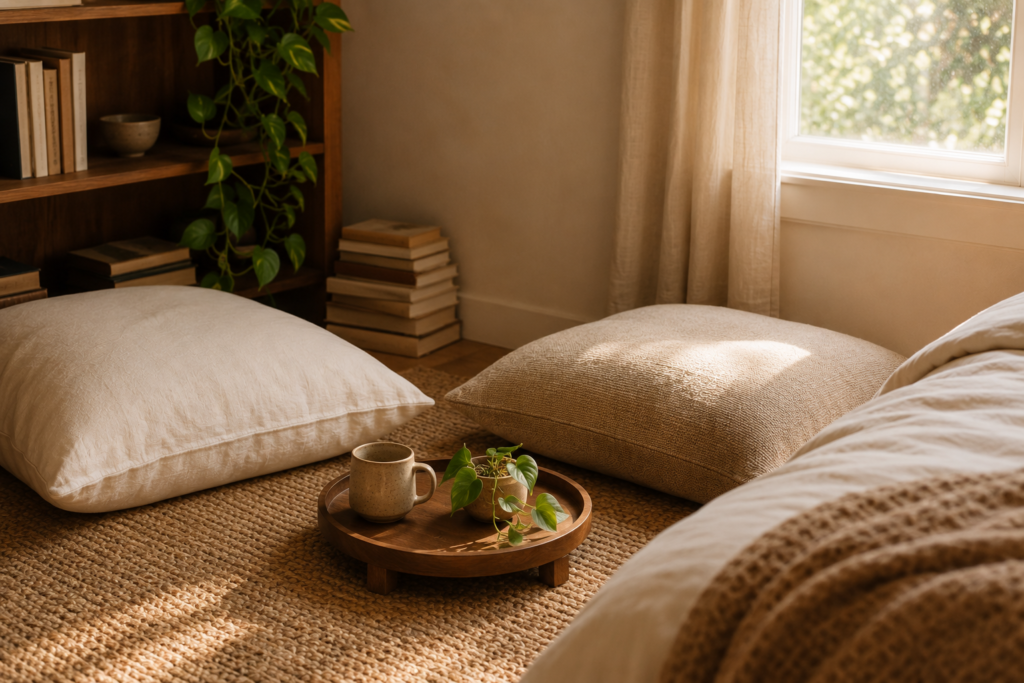
Not every bedroom has room for an armchair or a reading seat. But most bedrooms have a floor, and the floor is one of the most underused cozy surfaces available. A pair of large floor cushions in natural linen or woven cotton, positioned beside the bed or in front of a low bookshelf, creates a relaxed, informal seating area that suits a cozy bedroom aesthetic perfectly.
Floor cushions lower the room’s visual center of gravity in a way that makes the entire space feel more relaxed and less formal. They invite genuinely horizontal and casual use of the space. And they work particularly well in rooms with a bohemian, Japandi, or natural aesthetic where low, close-to-ground living feels intentional rather than simply convenient.
Key Design Tips
- Choose floor cushions in natural linen, cotton canvas, or woven fabric in warm neutral tones
- Size matters significantly: large cushions of at least 60 by 60 centimeters feel generous and intentional
- Stack two cushions together for a more comfortable and visually substantial floor seating option
- Position floor cushions consistently rather than leaving them scattered randomly across the room
- A low side tray or small wooden platform beside the floor cushions adds practical surface space nearby
15. Style With Dried Botanicals and Natural Stems
Dried botanicals have become genuinely beautiful and sophisticated decorating tools in contemporary interior design. Pampas grass in a tall ceramic vase. Dried eucalyptus stems in a slim bottle on the dresser. A bundle of dried lavender tied with linen twine on the nightstand. Dried wheat or cotton stems in a woven basket on the shelf.
These additions require no watering, no maintenance, and no particular care beyond occasional gentle dusting. They bring organic warmth and natural texture into the bedroom without the commitment that living plants require. And in a cozy bedroom aesthetic built around natural, warm, earthy materials, dried botanicals fit seamlessly into the visual language of the space.
Key Design Tips
- Pampas grass, dried eucalyptus, dried lavender, and cotton stems are the most versatile choices
- Use ceramic, glass, or woven vessels that complement the room’s existing color and material palette
- Group varying heights of dried stems together for a more natural, considered arrangement
- Dried botanicals last for months to years when kept away from direct sunlight and humidity
- Replace when they become brittle, faded, or begin shedding significantly to maintain the room’s quality

16. Add a Decorative Ladder for Throws and Blankets
A decorative blanket ladder is one of the most practical and visually effective additions in a cozy bedroom. It solves the problem of where throws and extra blankets belong when they are not on the bed, which in most bedrooms means a chair, the floor, or a drawer that is never used because the blankets never actually make it that far.
A blanket ladder displays throws as decorative objects rather than hiding them. A tall slim timber ladder leaning against the wall beside the wardrobe, layered with two or three folded throws in varying textures and warm tones, adds vertical interest and genuine visual warmth simultaneously. The throws are accessible, organized, and contributing to the room’s aesthetic rather than working against it.
Key Design Tips
- Choose a ladder in natural timber or matte black metal depending on the room’s overall palette
- Layer three throws of different textures: a waffle weave, a chunky knit, and a smooth linen work beautifully
- Position the ladder beside the wardrobe or in a corner where vertical wall space is underused
- Vary the fold and drape of each throw slightly for a naturally arranged rather than rigidly styled look
- A blanket ladder also works beautifully for displaying extra pillows when they are not on the bed

17. Use the Floor as a Design Surface
Most bedroom decorating decisions focus entirely on the walls and the furniture and leave the floor as a purely functional surface. But the floor of a cozy bedroom is one of its most important atmospheric elements. How it looks, how it feels underfoot, and what objects are placed at floor level all contribute significantly to how the room feels when you walk in and look around.
Beyond a rug, the floor level is where plants live, where stacked books create informal bedside tables, where floor cushions invite relaxed sitting, where a low wooden tray holds candles and small objects at a ground level that changes the room’s visual center of gravity. Thinking about the floor as a design surface rather than just a background opens up the room’s cozy potential considerably.
Key Design Tips
- Place one or two plants directly on the floor in generous pots for an organic, grounded feel
- A small wooden tray at floor level beside the bed creates an informal and visually interesting bedside surface
- Stack two or three hardcover books on the floor as an impromptu low side table where space is tight
- A low floor lamp or lantern-style light at floor level adds warmth from the ground upward
- Keep floor-level styling minimal and intentional to avoid the space feeling cluttered rather than considered

18. Create a Morning Light Ritual Corner
A morning light corner is a deliberately created area of the bedroom designed for the first quiet moments of the day before the demands of routine begin. It is part aesthetic choice and part lifestyle intention. A comfortable place to sit with morning light, a small surface for coffee or tea, perhaps a journal or a few pages of reading. Nothing productive. Just a transitional space between sleep and the day.
This corner works best beside or near the window where natural morning light enters the room. Even a floor cushion with a small tray on the floor beside it and good natural light qualifies. The styling is secondary to the intention: creating a physical space in the bedroom that supports a slower, warmer start to the day.
Key Design Tips
- Position the morning corner beside an east-facing window to receive the best natural morning light
- Keep the styling minimal: one comfortable seat, one small surface, one warm light source is enough
- A ceramic mug, a journal, and one small plant are the only decorative objects this corner needs
- Sheer curtains allow morning light to enter warmly without harsh direct sun on the sitting area
- The corner does not need to be used every day to justify its presence, it changes the room’s feeling simply by existing

19. Let One Signature Detail Define the Whole Room
Every genuinely memorable cozy bedroom has one signature detail. Something that makes the room distinctly itself rather than a well-executed version of a style that could belong to anyone. A specific piece of artwork that means something real to the person sleeping there. An inherited piece of furniture that carries history. A particular textile sourced from somewhere meaningful. A color on the walls that was chosen because it creates a specific feeling rather than because it was trending.
This signature detail gives the entire room its identity. It is the thing guests notice and remember. It is the thing the person living there chose with more care than anything else. And it is the thing that makes the room feel genuinely cozy rather than simply aesthetically assembled.
Key Design Tips
- Identify one object, color, or material choice that is distinctly personal and build the room outward from it
- The signature detail can be small: a single meaningful photograph, a specific plant, a beloved textile
- Resist the urge to update or replace the signature detail simply because trends change around it
- Use the signature detail as the decision filter for other choices: does this new addition support it or compete with it
- A room with one genuinely personal anchor point always feels more cozy and complete than a room without one


