

Brown carries a reputation problem in decorating that it doesn’t entirely deserve. For a long time it got treated as the default color of a room nobody had really decorated, the beige carpet and brown furniture combination associated more with builder-grade apartments than deliberate style choices. That reputation has shifted considerably as warm, earthy tones have come back into genuine favor, but a brown bedroom done without real intention can still tip into that flat, undecorated territory the color spent years being associated with.
The difference between a brown bedroom that reads as genuinely warm and considered versus one that reads as simply beige-adjacent and forgettable comes down to specific choices around which brown, how it’s layered with texture and other tones, and how much visual depth gets built into a color that can otherwise read as fairly flat and one-dimensional if handled without much thought.
These nineteen ideas cover exactly that range of decisions, from selecting the right specific brown for a given room’s light conditions through the layering and pairing choices that turn brown from a default, undecorated color into a genuinely rich and deliberate design choice.
1. Choose a Brown With the Right Undertone for the Room’s Light
Brown spans an enormous range, from cool, almost gray-toned taupe through warm chocolate and rich chestnut, and the specific undertone matters considerably depending on a room’s actual light exposure. A north-facing room with limited warm natural light tends to benefit from a brown with a warmer undertone, since cooler light can make an already cool-toned brown read as somewhat flat or muddy. A south-facing room with abundant warm light has more flexibility to work with a cooler, more neutral brown without it losing warmth entirely.
Testing actual paint samples in the room at different times of day matters more with brown than with many other colors, since it’s a color that shifts noticeably depending on both the specific undertone chosen and the quality of light hitting it throughout the day.
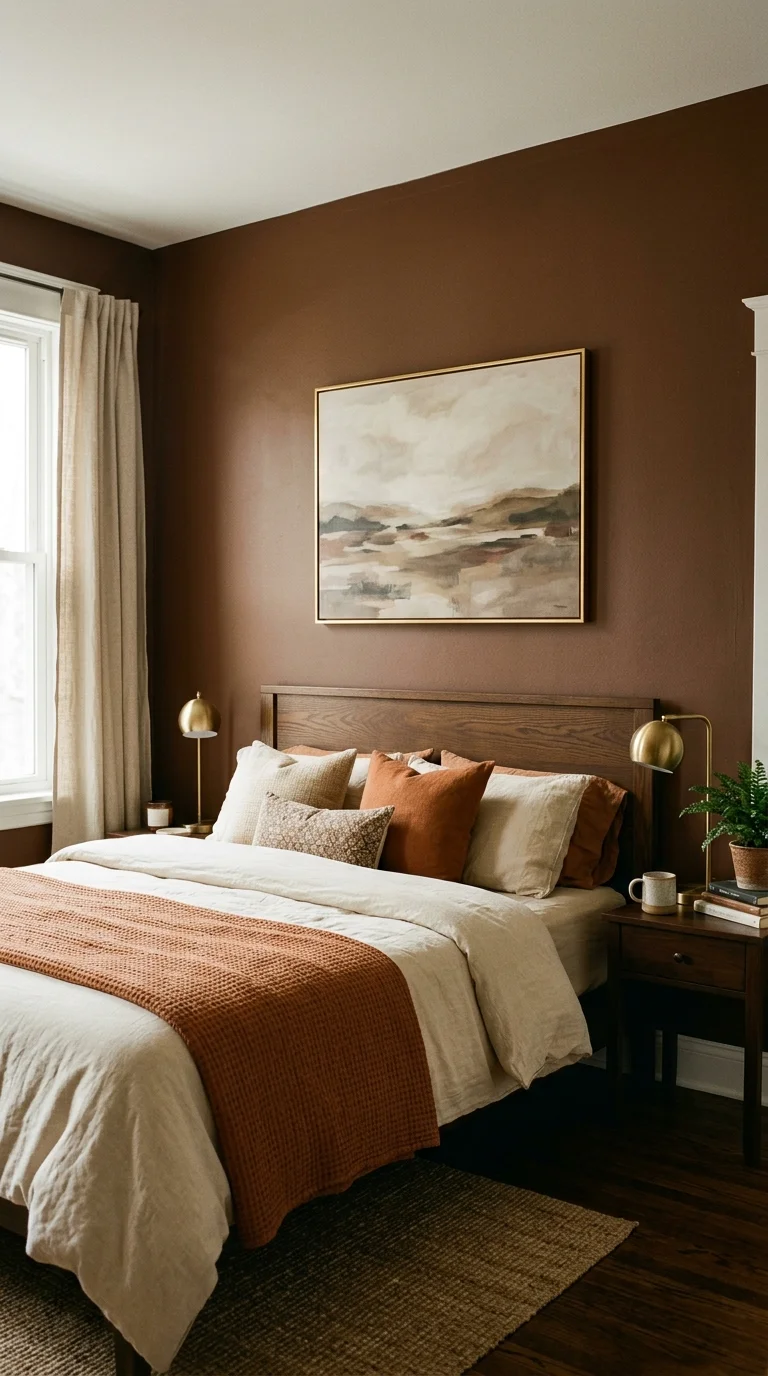
2. Layer at Least Three Distinct Shades of Brown
A single flat brown across walls, bedding, and furniture reads as considerably less sophisticated than a room built from several related but genuinely distinct shades, a deep chocolate headboard, warm caramel bedding, a lighter tan or camel accent chair. This tonal layering is what gives a brown room real depth rather than the flat, one-note quality that gave the color its dated reputation in the first place.

3. Introduce Genuine Texture Through Natural Materials
Brown pairs particularly well with texture, since materials like woven rattan, nubby boucle, natural linen, and raw wood grain all read as warmer and more considered than a smooth, flat brown surface alone. A woven rattan headboard, a boucle accent chair, or simply linen bedding in a warm brown tone all contribute real tactile depth that keeps a brown room from feeling flat regardless of how carefully the color itself was chosen.

4. Pair Brown With Cream or Warm White, Not Stark White
A stark, cool white paired with brown can create an unflattering contrast that emphasizes brown’s potential to read as dull, while a warmer cream or ivory tone complements brown’s natural warmth far more effectively. This pairing, brown furniture or walls against warm cream bedding or trim, tends to read as considerably more cohesive and intentional than the same brown paired with a colder white.

5. Add Brass or Warm Gold Metallic Accents
Warm metallics, brass specifically, share an underlying warmth with brown that makes the pairing feel naturally cohesive rather than accidentally coordinated. Lighting fixtures, mirror frames, and drawer hardware in brass or aged gold catch available light in a way that adds a sense of richness and polish to an otherwise fairly matte, earthy color palette.

6. Introduce a Single Bold Accent Color
While brown works beautifully as a foundation, a room built entirely from brown and its related neutral tones can start to feel visually flat without at least one bolder accent color introduced deliberately. Deep forest green, burnt orange, or a rich terracotta all pair particularly well with brown, since they share a similar earthy warmth rather than clashing with the base palette.

7. Choose Furniture With Visible Wood Grain
Furniture that shows genuine wood grain, rather than a painted or heavily lacquered brown finish, adds authentic texture and visual interest that a flat, uniform brown surface doesn’t achieve. This works particularly well for a bed frame, nightstands, or a dresser, where the natural variation in real wood grain contributes real depth to the room’s overall brown palette without requiring any additional decorating effort beyond the material choice itself.

8. Use a Substantial Rug in a Complementary Tone
A thin or poorly chosen rug can undermine an otherwise well-executed brown bedroom, while a substantial rug in a complementary tone, whether a deeper brown, a warm cream, or a subtle pattern incorporating both, extends the room’s color story down to the floor. Wool or a wool blend in this warmer tonal range holds color richness particularly well over years of regular use.

9. Layer Warm, Low Lighting Throughout the Room
Brown depends more than many colors on warm lighting to read as rich rather than muddy. Bulbs in the 2700K to 3000K range support the color’s natural warmth, while cooler bulb temperatures can make even a well-chosen brown read as somewhat flat or gray. Multiple lower light sources, bedside lamps, a floor lamp, contribute to this warmth more effectively than a single central overhead fixture would.

10. Add Genuine Greenery to Contrast the Earthy Palette
Plants introduce a genuine color and texture contrast against a predominantly brown room, and the pairing works particularly well since both brown and green read as naturally earthy tones that complement rather than compete with each other. A substantial plant, positioned somewhere it genuinely gets adequate light, adds real organic life that a purely brown and neutral palette can otherwise lack.

11. Choose Bedding With Subtle Pattern or Texture
While solid brown bedding works well as a base layer, incorporating subtle pattern or texture, a woven stripe, a jacquard weave, a botanical print in complementary earthy tones, adds visual interest that keeps the bed from reading as a single flat brown block. This doesn’t require bold or busy pattern, subtle textural variation within the same general color family achieves the intended effect without disrupting the room’s overall cohesive palette.

12. Use Leather Accents in Small, Deliberate Doses
Real or quality faux leather, whether on a bench, an accent chair, or smaller accessories, introduces a material that naturally complements brown’s earthy warmth while adding genuine textural variety. This works particularly well in smaller doses rather than throughout the entire room, since leather’s visual impact tends to be most effective as a deliberate accent rather than the room’s dominant material.

13. Choose Curtains in a Complementary Warm Neutral
Curtains in a warm cream, soft camel, or a subtly patterned fabric incorporating brown and cream both work well against brown walls or brown furniture, extending the room’s cohesive palette to the windows without introducing a jarring contrast. Avoiding a stark white or cool-toned curtain fabric matters here for the same reasons it matters with bedding and trim, since cooler tones can create an unflattering contrast against brown’s natural warmth.

14. Introduce Woven Baskets for Both Storage and Texture
Woven storage baskets, whether for blankets, laundry, or general organization, contribute genuine texture while serving real practical function. Natural fiber materials like seagrass or rattan pair particularly well with a brown palette, since they share a similar earthy, organic quality that manufactured plastic storage simply doesn’t replicate.

15. Balance Dark Brown With at Least One Genuinely Light Element
A room built entirely from deep, dark brown tones throughout can tip from cozy into genuinely heavy without at least one lighter element providing contrast and relief. This might be cream bedding against dark brown walls, a light wood accent piece, or simply abundant natural light through appropriately chosen window treatments. This single lighter element does considerable work toward keeping a dark brown room feeling balanced rather than oppressive.
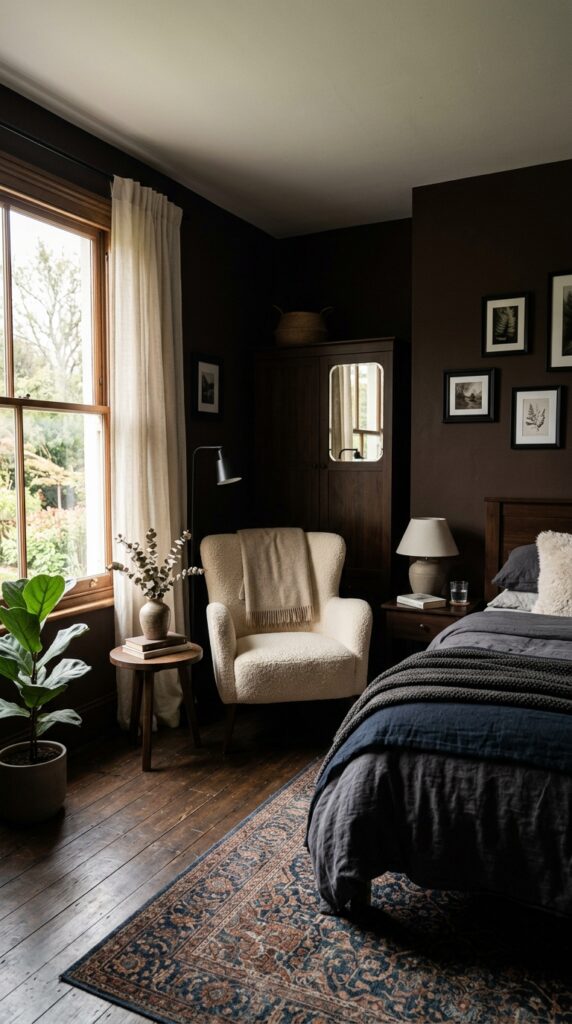
16. Choose Ceramic or Ceramic-Adjacent Accessories in Earthy Glazes
Small decorative accessories in warm, earthy ceramic glazes, terracotta, warm ivory, a deep rust, extend the room’s overall color story into its smaller details. A single well-chosen vase or decorative bowl in one of these tones does more for the room’s cohesive feeling than a larger collection of accessories in unrelated colors that don’t relate to the established brown palette.

17. Use Wood Tones That Genuinely Complement the Wall Color
Where the walls themselves are painted brown, the wood furniture throughout the room should be chosen deliberately to complement rather than compete with that specific wall shade. A cooler-toned wall brown paired with warm honey-toned wood furniture can create an unintentional clash, while coordinating the wood’s undertone with the wall’s undertone produces a considerably more cohesive, intentional-looking result.

18. Add Fresh or Dried Botanicals in Warm, Earthy Tones
Fresh eucalyptus, dried pampas grass, or florals in warm rust and terracotta tones all complement a brown bedroom’s overall palette particularly well, extending the earthy, organic quality established through the room’s other material choices. Dried arrangements specifically suit this palette well beyond their low-maintenance appeal, since their naturally muted, aged coloring often echoes brown’s own earthy quality more closely than the brighter tones of fresh-cut flowers might.

19. Edit the Final Room to Prevent It From Reading as Flat
The biggest risk in a brown bedroom isn’t choosing the wrong shade, it’s under-layering the final result so the room reads as a single flat brown rather than a rich, considered palette built from genuine tonal and textural variety. Stepping back once the major decisions are in place and honestly checking whether enough texture, tonal variation, and contrast exist throughout the room is what ultimately determines whether the finished space reads as warm and intentional or simply beige-adjacent and forgettable.
A brown bedroom that succeeds moves past the color’s dated reputation by treating it the way any other genuinely considered palette gets treated, with real tonal variation, deliberate texture, and thoughtful pairing rather than a single flat shade applied without much additional thought. Done that way, brown holds up as one of the genuinely warmest, most cozy-reading colors available for a bedroom.


