

There’s a specific, easy-to-miss difference between a bedroom that looks expensive in photos and one that actually feels luxurious to spend real time in, and it almost never comes down to how much anything cost. A room built from convincing imitation materials, printed marble laminate, plated hardware, synthetic velvet, can photograph nearly identically to one built from the genuine versions of those same materials. But the difference shows up the moment someone actually touches a drawer pull, sits on the fabric, or spends enough evenings in the room to notice how the light behaves after dark.
Genuine luxury in a bedroom comes down to a fairly specific set of material and finishing decisions, done with real attention, rather than a broader collection of expensive-looking purchases assembled quickly. Some of these decisions genuinely cost more. Several of them cost about the same as the alternative and just require choosing the better option rather than defaulting to whatever’s most convenient or most heavily marketed.
These seventeen ideas focus specifically on the materials, lighting, and finishing details that separate a genuinely elevated bedroom from one that simply resembles an elevated bedroom in a well-lit photograph. Layout and furniture arrangement matter too, but that’s a separate consideration covered elsewhere. This list is entirely about what the room is actually made of and how it’s finished.
1. Choose Genuine Natural Stone Over Printed Imitations
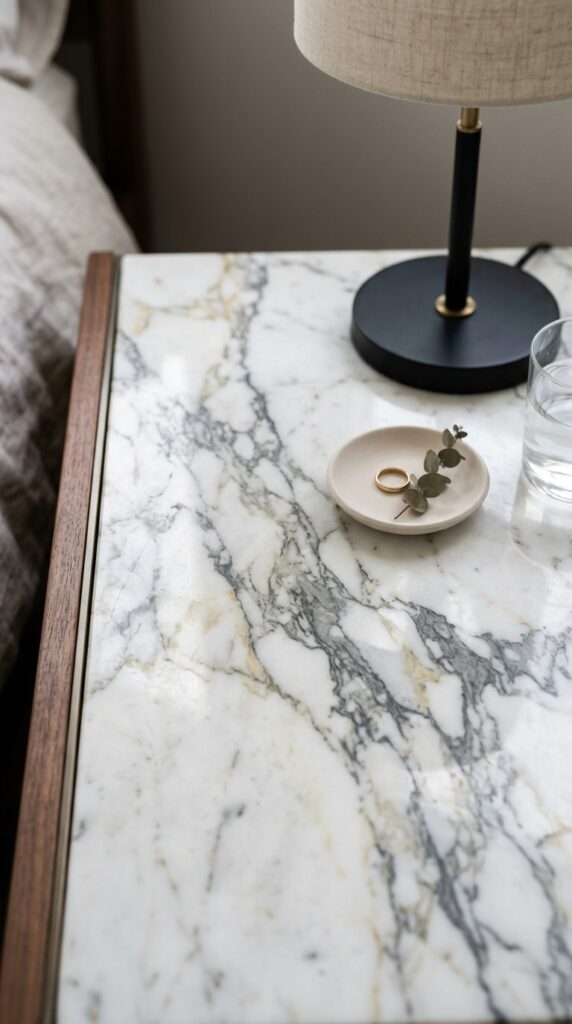
Marble, travertine, and similar natural stones carry a specific visual depth and irregularity that printed laminate or porcelain imitations, however convincing at a glance, don’t fully replicate up close. A real stone nightstand, a stone-topped dresser, or even a smaller decorative object in genuine stone introduces both authentic texture and the subtle veining variation that a manufactured pattern repeats identically rather than genuinely varying.
This doesn’t require furnishing the entire room in stone to achieve the intended effect. A single authentic stone element, positioned somewhere it will actually be seen and touched regularly, does more for a room’s genuine sense of quality than a larger quantity of the cheaper imitation material would. Real stone furniture typically costs two to four times as much as a comparable printed alternative, a difference worth understanding clearly before defaulting to the less expensive option purely for convenience.
2. Layer at Least Four Distinct Light Sources
A bedroom relying on a single overhead fixture creates flat, uniformly even lighting that photographs adequately but feels considerably less luxurious in person than a room with genuine lighting layers working together. Combining a central fixture with table lamps on each nightstand, a floor lamp in any seating area, and possibly wall sconces or picture lighting creates the kind of warmth and depth associated with genuinely well-designed spaces.
Bulb temperature affects this outcome as much as the fixtures themselves. Warm white bulbs in the 2700K to 3000K range read as inviting and considered, while bulbs above 4000K tend toward a more clinical, commercial feeling regardless of how attractive the light fixtures themselves might be. This is a detail easy to overlook even after investing real money in beautiful lighting hardware.

3. Choose Bedding in Genuinely High Thread Count Cotton or Linen
Bedding quality affects a bedroom’s actual luxury far more directly than most decorative choices, since it’s the material people spend the most cumulative hours in direct contact with. Egyptian or Pima cotton in the 400 to 600 thread count range, or genuine linen, which doesn’t rely on thread count as its primary quality measure but instead on weave density and fiber quality, both outperform lower-quality cotton blends significantly in how they feel, drape, and hold up to years of regular washing.
Genuine quality sheets in this category typically run $150 to $400 for a full set, a real expense relative to a basic big-box alternative, but one that affects daily experience of the room more directly than almost any purely visual decorating decision would.

4. Introduce Genuine Velvet, Chosen With Fabric Performance in Mind
Real velvet, whether cotton, silk, or a quality synthetic blend engineered specifically for performance, introduces a tactile richness that photographs and feels genuinely luxurious in a way that thinner, flatter fabrics don’t achieve. This works particularly well on an upholstered headboard or a bedroom bench, pieces that get regular physical contact and where fabric quality becomes immediately apparent through touch.
Performance velvet, specifically engineered to resist crushing and wear better than natural velvet alone, is worth prioritizing in a bedroom that sees regular use rather than assuming natural velvet is automatically the superior choice in every context. Natural velvet does offer a specific tactile quality that’s difficult to fully replicate, but it also crushes and shows wear patterns more readily than a well-engineered performance alternative.

5. Choose Solid Wood Furniture Over Veneer or Particleboard
Furniture construction affects both how a piece looks initially and how it holds up over years of actual use, and this difference becomes considerably more apparent over time than it is when comparing options side by side in a showroom. Solid wood furniture, whether a nightstand, dresser, or bed frame, resists the swelling, chipping, and structural issues that particleboard and lower-quality veneer construction tend to develop within just a few years of regular use.
This doesn’t mean every piece of furniture in the room needs to be solid wood to achieve a genuinely elevated feel, but prioritizing this for at least the pieces that see the most regular contact and wear, nightstands especially, given how frequently drawers get opened and surfaces get used, makes a meaningful difference in how the room actually holds up.

6. Use Warm Metal Finishes Consistently Throughout the Room
Brass, warm bronze, and aged gold finishes tend to read as more genuinely luxurious than bright chrome or overly polished nickel in most bedroom contexts, and consistency across every metallic element, lighting fixtures, drawer hardware, mirror frames, matters considerably more than which specific warm finish gets chosen. A room with brass lighting, chrome hardware, and a nickel mirror frame reads as unplanned even when each individual piece is well-chosen, since the inconsistency registers even without being consciously identified.
Committing to a single metal finish and applying it deliberately across every visible metallic surface in the room is one of the more overlooked details that separates a genuinely cohesive, considered space from one that simply contains several individually attractive pieces that don’t quite work together as a whole.

7. Choose a Substantial, Well-Constructed Area Rug
A thin, low-quality rug undermines a room’s sense of luxury regardless of how well-chosen the pattern or color might be, since the material and construction quality become immediately apparent underfoot in a way that’s difficult to disguise. A genuine wool or wool-silk blend rug, substantial enough to feel supportive rather than thin, holds its shape and develops a subtle sheen over years of use that lower-quality synthetic alternatives generally don’t achieve.
Sizing matters as much as material quality here. The rug should extend at minimum 18 to 24 inches beyond the sides and foot of the bed, providing a genuinely soft landing underfoot on waking rather than a narrow strip that leaves most of the actual floor space around the bed still hard and cold.

8. Add a Genuinely Well-Made Mirror in a Considered Frame
A substantial mirror in a genuinely well-constructed frame, whether a warm metal, real wood, or another quality material, functions as both a practical addition and a piece of considered decor in its own right. Beyond its decorative function, a mirror positioned to reflect a window brings real additional natural light into the room, a genuine functional benefit beyond its visual contribution.
Frame quality matters considerably more than most people initially assume when comparing mirror options. A frame with genuine weight and solid construction reads as noticeably more substantial than a lightweight, hollow-feeling alternative, even when both mirrors are visually similar from a photograph, a difference that becomes immediately apparent the moment the piece is actually handled or installed.

9. Choose Curtains in a Substantial, Quality Fabric
Curtain fabric affects a room’s overall sense of quality more than people typically expect while shopping for window treatments. Substantial linen or a quality cotton-linen blend drapes with real weight and texture that thinner, lower-quality fabric alternatives simply don’t replicate, regardless of how similar the colors might appear in a product photograph. This weight also affects how the curtains actually move and hang in the room, a detail that becomes apparent the moment they’re installed rather than something that shows up clearly in online shopping.
Floor-length curtains, hung from a rod positioned close to the ceiling rather than directly at the window frame, extend this sense of substance further, creating the illusion of higher ceilings and a more generously proportioned window than the room’s actual architecture might otherwise suggest.

10. Use Genuine Leather in Small, Deliberate Doses
Real leather, whether on a bench, a chair, or smaller accessories like a jewelry box or valet tray, introduces a material quality that synthetic alternatives don’t fully replicate, developing a natural patina over time that many people find more genuinely appealing than a uniform, unchanging synthetic surface. This works particularly well in smaller doses rather than throughout the entire room, since leather’s visual and tactile impact tends to be most effective as a deliberate accent rather than the room’s dominant material.
Full-grain leather specifically, rather than bonded or heavily processed leather, ages considerably better and develops the kind of natural character over years of use that makes genuine leather worth the additional cost relative to lower-quality alternatives that tend to crack or peel within just a few years of regular contact.

11. Choose Ceramic or Glass Accessories With Real Craft Behind Them
Small decorative accessories, a vase, a decorative bowl, a candle holder, benefit from the same material honesty that applies to larger furniture pieces throughout this list. Genuinely well-made ceramic or hand-blown glass, even in a relatively simple, unadorned design, tends to read as more considered and more luxurious than a larger quantity of mass-produced decorative objects, regardless of how similar they might appear from a distance.
This is one of the more affordable ideas on this entire list relative to its actual impact, since a single well-chosen ceramic or glass piece, even at a modest individual price point, contributes more to a room’s genuine sense of craft and consideration than several cheaper, less carefully made decorative objects accumulated over time without a clear guiding principle.

12. Install Dimmable Lighting Throughout the Room
The ability to adjust brightness throughout the day and evening extends a room’s sense of considered design into how it actually functions daily, not just how it appears in a single well-lit photograph taken at one specific moment. Dimmer switches, whether on the main overhead fixture, bedside lamps, or both, are a relatively modest additional cost and installation effort that meaningfully improves how livable and genuinely luxurious a bedroom feels across different times of day and different activities within the space.
This is particularly worth prioritizing on any lighting positioned near the bed specifically, since the ability to dim bedside lighting considerably lower than daytime brightness levels supports the kind of relaxed, unwinding atmosphere that harsh, single-brightness lighting simply can’t replicate regardless of how attractive the fixture itself might be.

13. Choose a Headboard With Genuine Upholstery Construction
An upholstered headboard’s actual construction quality, the density and quality of the foam or padding beneath the fabric, the structural frame underneath, affects both how it looks initially and how well it holds its shape over years of regular contact. A properly constructed headboard maintains its shape and support considerably longer than a poorly padded alternative, which tends to flatten and lose its structured appearance within just a couple of years of regular use.
This construction quality is genuinely difficult to assess from photographs alone, making it worth prioritizing brands and retailers known specifically for quality upholstery construction, or physically testing the actual density and structure in person before committing to a specific piece, rather than judging purely on how a headboard appears in professional product photography.

14. Add Fresh or Genuinely High Quality Faux Florals
A bedroom without any organic elements can feel somewhat sterile even when every other material and finishing decision has been handled with real care, while fresh flowers or a genuinely well-made faux arrangement introduces organic softness that hard surfaces and fabric alone don’t provide. Where fresh flowers aren’t practical for ongoing maintenance reasons, quality faux arrangements have improved considerably in recent years and can achieve much of the same visual effect, provided they’re chosen deliberately rather than defaulting to an obviously artificial-looking option purely for convenience.

15. Choose Window Hardware That Matches the Room’s Metal Finish
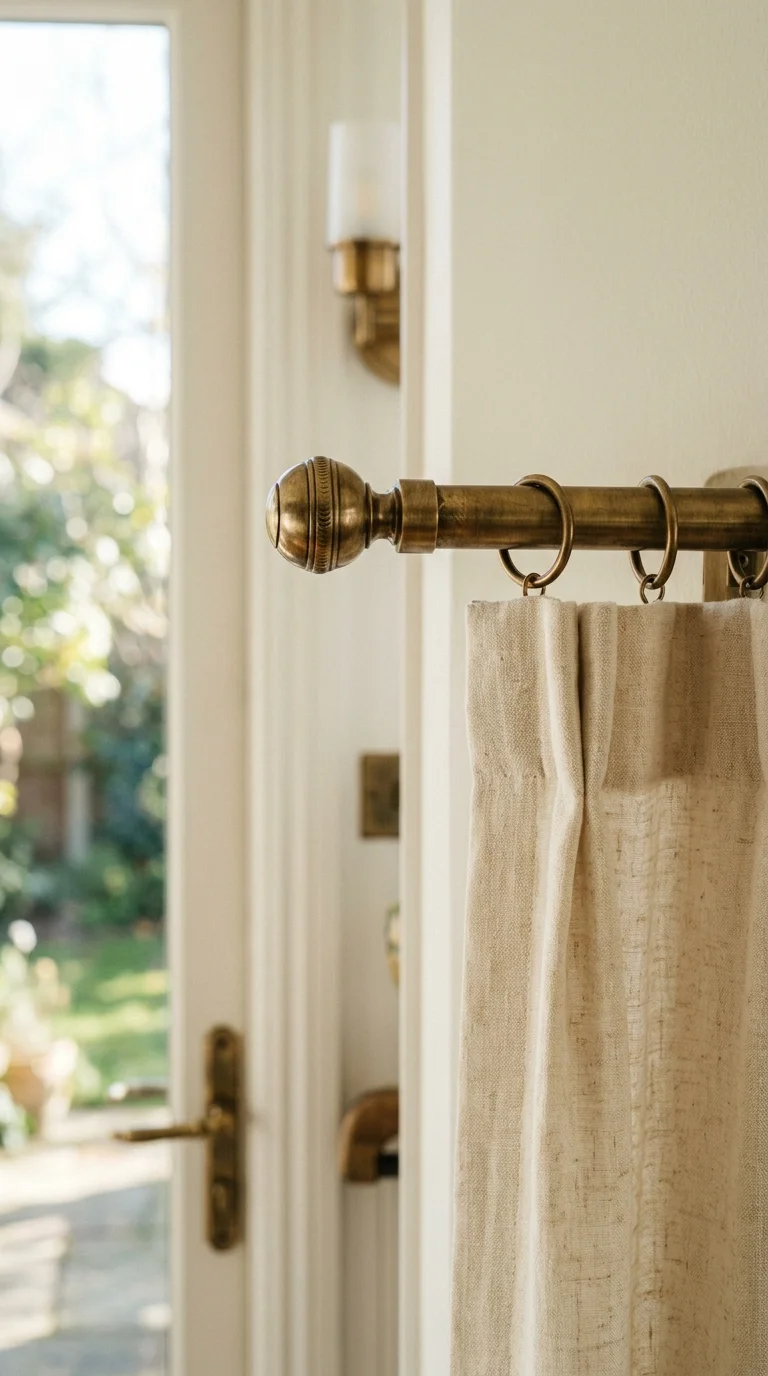
Curtain rods, finials, and other window hardware are easy to treat as a purely functional afterthought, but their finish should genuinely match the metal finish established elsewhere in the room, whether that’s warm brass, aged bronze, or another chosen tone. Mismatched window hardware, a bright chrome rod against otherwise warm brass fixtures throughout the room, undermines the careful consistency established through the other material choices on this list, even when the hardware itself is well-made and attractive on its own terms.
This is a genuinely small detail relative to the larger decisions covered elsewhere in this list, but it’s also one of the easier ones to overlook while focused on more visually prominent choices, making it worth a deliberate check once the room’s other finishes have been established.
16. Select a Genuinely Substantial Throw Blanket in Natural Fiber
A throw blanket at the foot of the bed contributes real texture and warmth to a room’s overall material story, and the difference between a substantial natural fiber option, wool, cashmere, or a genuine cotton knit, and a thin synthetic alternative is immediately apparent both visually and through touch. This is a relatively small individual purchase relative to some of the larger decisions covered elsewhere in this list, but it’s also one of the more frequently touched objects in the room, making material quality here disproportionately noticeable relative to its actual cost.

17. Resist Adding Decorative Objects Beyond What’s Genuinely Considered
The instinct to keep adding once a room feels nearly finished works against the restraint that genuinely luxurious spaces depend on. A smaller number of carefully chosen, genuinely high-quality objects consistently outperforms a larger collection of pleasant but ultimately unremarkable decorative items, regardless of how much individual thought went into each purchase along the way. This is worth treating as an ongoing discipline rather than a single decision made once during the initial decorating process, since surfaces in a genuinely lived-in room naturally accumulate additional items over time.
Material quality, done consistently and with genuine attention across every element covered in this list, does more for a bedroom’s actual sense of luxury than any single expensive purchase in isolation. A room built from a smaller number of genuinely well-made choices, considered with real care rather than assembled quickly to achieve a certain look, holds up as authentically elevated in a way that a larger collection of merely expensive-looking materials never quite manages.


