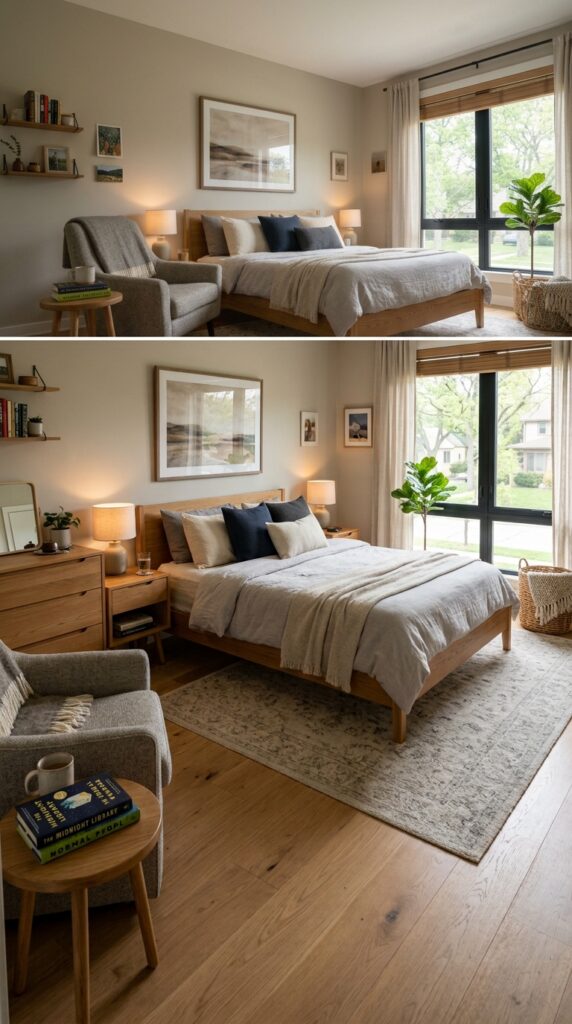

Contemporary and modern get used almost interchangeably in most decorating conversations, but they’re actually pointing at somewhat different things. Modern design refers to a specific historical movement with its own established rules, clean lines, minimal ornamentation, a particular relationship to function. Contemporary is looser and more current by definition, whatever’s genuinely reflecting today’s design sensibility rather than a fixed set of principles from decades past, which means a contemporary bedroom borrows some elements from modern design while staying more flexible about mixing in whatever else currently feels fresh.
That flexibility is actually the harder thing to execute well. A strict modern room has clear rules to follow. A contemporary room requires more judgment, understanding what currently reads as fresh versus what’s starting to feel dated, and blending materials and finishes in a way that feels considered rather than simply eclectic. Getting this right comes down to a specific set of choices around color, material, and proportion that hold up better than following any single rigid formula.
These fifteen ideas focus on the decisions that actually keep a bedroom feeling genuinely current, the material pairings, the color approach, the furniture proportions, that distinguish a contemporary room from one that’s either stuck in a previous design era or trying so hard to be trendy that it will look dated again within a year or two.
1. Choose a Neutral Base With One Confident Accent Color
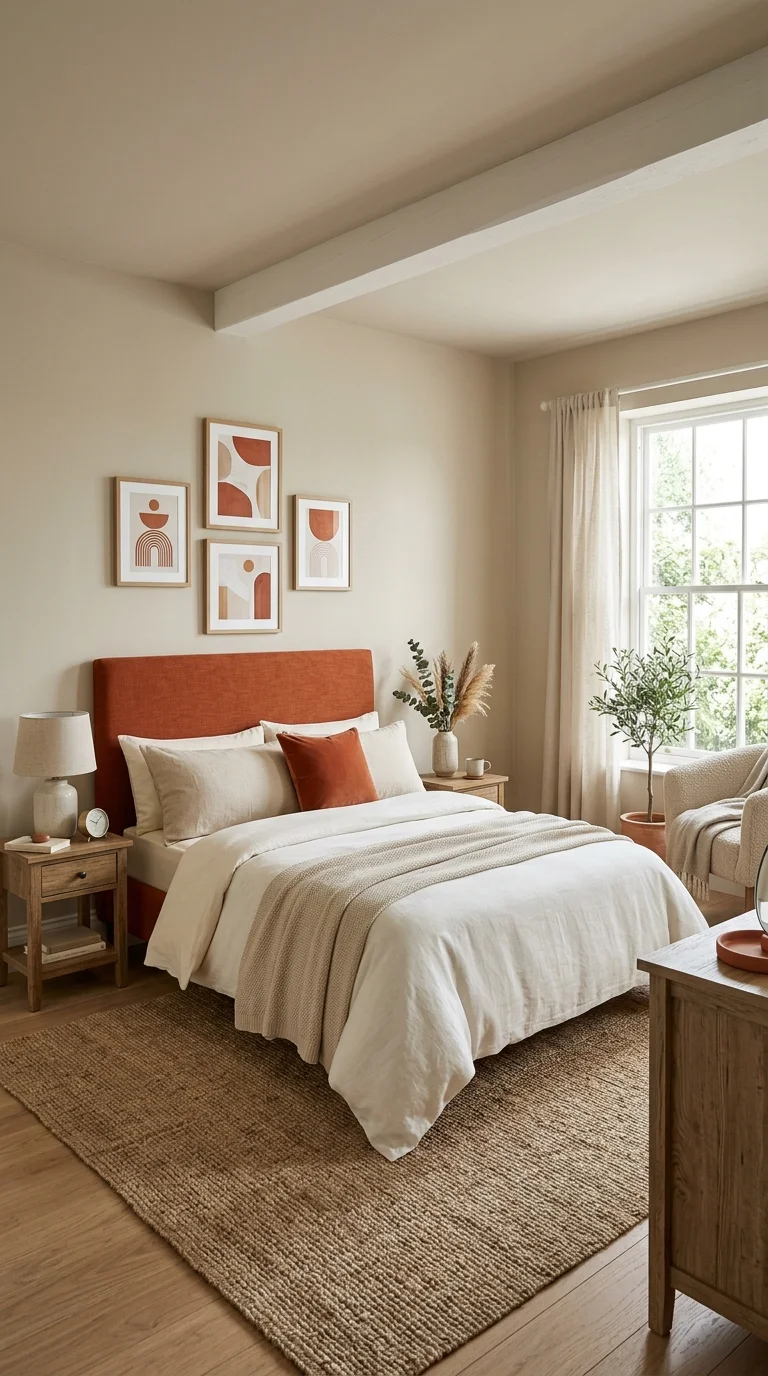
Contemporary bedrooms typically work from a neutral foundation, soft white, warm gray, greige, paired with a single confident accent color used deliberately rather than scattered throughout the room. This might be a deep terracotta headboard against otherwise neutral walls, or a rich navy accent wall paired with warm wood furniture. The specific color matters less than the discipline of choosing one and using it consistently rather than introducing several competing accent tones.
This approach reads as considerably more current than either an entirely neutral room, which can feel slightly flat without any real color statement, or a room with many different accent colors competing for attention, which tends to read as more traditional or maximalist than genuinely contemporary.
2. Mix Warm and Cool Materials Deliberately
A defining quality of genuinely contemporary design is deliberate material contrast, pairing warm elements like wood or leather against cooler ones like metal, glass, or polished stone. A wood bed frame paired with a sleek metal-framed mirror, or a leather bench against a smooth plaster wall, creates the kind of textural tension that keeps a room from feeling one-dimensional, which happens easily when every material in a room shares the same general temperature and texture.
This mixing works best when it’s genuinely intentional rather than accidental, choosing specific pairings rather than simply accumulating whatever materials happen to be available across different furniture purchases made at different times without a coordinating plan.

3. Choose Furniture With Clean Lines but Genuine Comfort
Contemporary furniture favors simpler, cleaner silhouettes than more traditional or ornate styles, but this shouldn’t come at the expense of actual comfort, particularly for a bed frame or any upholstered seating in the room. A clean-lined upholstered headboard in a quality fabric achieves the streamlined look without sacrificing the tactile comfort a bedroom genuinely benefits from. This balance, visual simplicity paired with real physical comfort, is part of what separates contemporary design from a colder, more purely minimalist approach.

4. Introduce Organic Shapes as a Counterpoint to Straight Lines
While contemporary design leans toward cleaner geometry overall, a room built entirely from straight lines and sharp angles can start to feel rigid rather than genuinely current. Introducing one or two organic, curved elements, a rounded nightstand, a curved accent chair, an irregularly shaped mirror, softens the room’s overall geometry and reads as more current than a room committed entirely to straight edges throughout.
This works best as a deliberate counterpoint rather than scattered unevenly. One curved element against an otherwise clean-lined room reads as an intentional design choice, while several competing organic shapes throughout the space dilutes the clarity that makes contemporary design effective.

5. Use Statement Lighting as a Genuine Focal Point
Lighting fixtures in a contemporary bedroom often function as sculptural elements in their own right, not purely functional additions handled with whatever fixture happens to fit. A striking pendant, a sculptural table lamp, or an architectural floor lamp introduces genuine visual interest and reads as considerably more current than a purely utilitarian fixture chosen without much consideration. A well-chosen statement fixture in this category typically runs $150 to $500 depending on scale and material, and this is one of the more efficient ways to introduce real personality into an otherwise fairly restrained room.

6. Choose Bedding in Solid Tones or Subtle Texture
Heavily patterned bedding tends to read as more traditional than contemporary, while solid tones or subtle texture, a waffle weave, a ribbed knit, a tone-on-tone jacquard, support the room’s overall clean aesthetic without looking flat or uninteresting. This doesn’t mean bedding needs to be plain in a boring sense, quality material and genuine tactile interest still matter considerably, but pattern specifically tends to push a room toward a more traditional feeling than a genuinely contemporary one usually calls for.

7. Select an Area Rug With a Simple, Geometric Pattern or None at All
Busy, ornate rugs work against the cleaner visual language contemporary bedrooms typically favor, while a solid-colored rug, or one with a simple, restrained geometric pattern, supports the room’s overall sense of considered simplicity. Where pattern appears, keeping it clean and geometric, subtle stripes, a simple grid, rather than florals or more ornate traditional motifs, keeps the rug consistent with the room’s broader design language.

8. Prioritize Negative Space as an Active Design Choice
Contemporary design treats empty space as a deliberate element rather than simply unused area waiting to be filled. A bedroom with a few genuinely empty stretches of wall, some uncluttered floor space, and surfaces that aren’t packed with objects reads as considerably more sophisticated than a room where every available inch has been put to decorative use. This is worth treating as an ongoing habit rather than a single decision made once, since the natural tendency over time is to gradually add more until the negative space that originally defined the room’s fresh feeling has quietly disappeared.

9. Choose Window Treatments That Support Clean Lines
Heavy, ornate drapery works against the streamlined aesthetic contemporary bedrooms depend on. Simple roller shades, clean panel curtains in a solid fabric, or minimal linen drapes support the room’s overall restraint far better than elaborately layered or heavily patterned window treatments would. Where curtains are used, hanging them from a simple, unobtrusive rod rather than an ornate traditional one keeps the detail consistent with the room’s broader aesthetic.

10. Use Warm Metal Accents to Balance Cooler Elements
Contemporary design has a real tendency to lean cool if not deliberately balanced, chrome, glass, polished surfaces. Introducing warm metal finishes, brass, bronze, or a warm-toned black rather than a stark, cold black, in lighting fixtures, hardware, or decorative accents prevents the overall space from tipping into a sterile, showroom-like feeling that can undermine an otherwise well-executed contemporary room.

11. Choose a Media or Storage Console With a Lighter Visual Footprint
A heavy, boxy console sitting directly on the floor works against the visual lightness contemporary design generally favors. A console with visible legs, or one that’s genuinely wall-mounted and floating, maintains a sense of openness that heavier, grounded furniture pieces undermine. This detail matters more than it might initially seem, since storage furniture is often one of the largest single pieces in a bedroom and disproportionately affects the room’s overall visual weight.

12. Layer Warm, Adjustable Lighting Rather Than One Overhead Source
A single central ceiling fixture creates flat, even light that reads as less considered than a room with genuine lighting layers working together. Combining a central fixture with bedside lamps and possibly a floor lamp creates the depth and warmth associated with genuinely well-designed contemporary spaces. Dimmer switches are worth the modest additional cost and effort, since the ability to adjust brightness throughout the day extends the room’s sense of considered design into how it actually functions, not just how it photographs at a single moment.

13. Keep Decorative Accessories to a Genuinely Curated Few
Contemporary bedrooms depend on restraint in decorative styling as much as in furniture choice. A small number of carefully chosen objects, a single sculptural piece, one meaningful art print, does more for a room’s sense of contemporary sophistication than a larger collection of pleasant but ultimately interchangeable decorative items. This requires ongoing discipline rather than a single decluttering pass, since surfaces naturally accumulate additional items over time in any genuinely lived-in home.

14. Choose Nightstands That Match the Room’s Material Story
Nightstands should echo the same material and color decisions established elsewhere in the room rather than existing as an unrelated afterthought. A room built around warm wood and brass benefits from nightstands in that same material family, rather than a mismatched piece that happened to be available or convenient. This consistency matters more than any single furniture choice in isolation, since it’s the coherence across every element that ultimately makes a contemporary bedroom read as genuinely considered rather than assembled piece by piece.

15. Let Function Drive at Least a Few Key Decisions
Genuinely successful contemporary design isn’t purely about visual style, it’s also about furniture and layout choices that support how the room actually gets used daily. A nightstand sized appropriately for what actually needs to sit on it, storage that accommodates what genuinely needs storing, lighting positioned to support real reading and daily routines rather than purely photogenic staging, these functional considerations matter as much as any purely aesthetic choice covered elsewhere on this list. A visually striking room that’s genuinely impractical to actually live in ultimately fails at its core purpose, regardless of how well it photographs.
A contemporary bedroom that succeeds doesn’t chase every passing trend, and it doesn’t rigidly follow a fixed historical style either. It reflects genuine current sensibility, clean lines balanced with real warmth, restraint balanced with comfort, updated regularly enough to stay fresh without requiring a complete overhaul every time design preferences shift slightly.